
What to Feed a Bearded Dragon
Insects or greens, pellets or gels: how a bearded dragon's diet changes with age, and the calcium it can't do without.
A bearded dragon's diet changes as it grows, and that's most of the answer.
Prepared pellets and gels make feeding much easier, but they're one part of the diet. Insects, fresh greens and calcium powder are the rest.
 Healthy
At a glance
- How often Under a year insects every day; adults greens every day
- Insects vs plants Young about 70% insects, adults about 70% plants
- Every day Leafy greens; squash and fruit only sometimes
- Supplements Calcium every time, D3 at most feedings, weekly multivitamin
- UVB Calcium only works with good UVB
- Avoid Iceberg, spinach, beet greens, avocado, rhubarb, fireflies
Insects or greens? It depends on age
Under a year: mostly insects, every day. Adult: greens every day, insects every other day or less.
A sample week
Under a year
Adult
Feed Optional Rest day
Show as a table
| Age | Insects | Plants (greens + prepared food) | How often |
|---|---|---|---|
| Under a year | about 70% | about 30% | Insects every day, greens offered too |
| Adult | about 30% | about 70% | Greens every day, insects every other day or less |
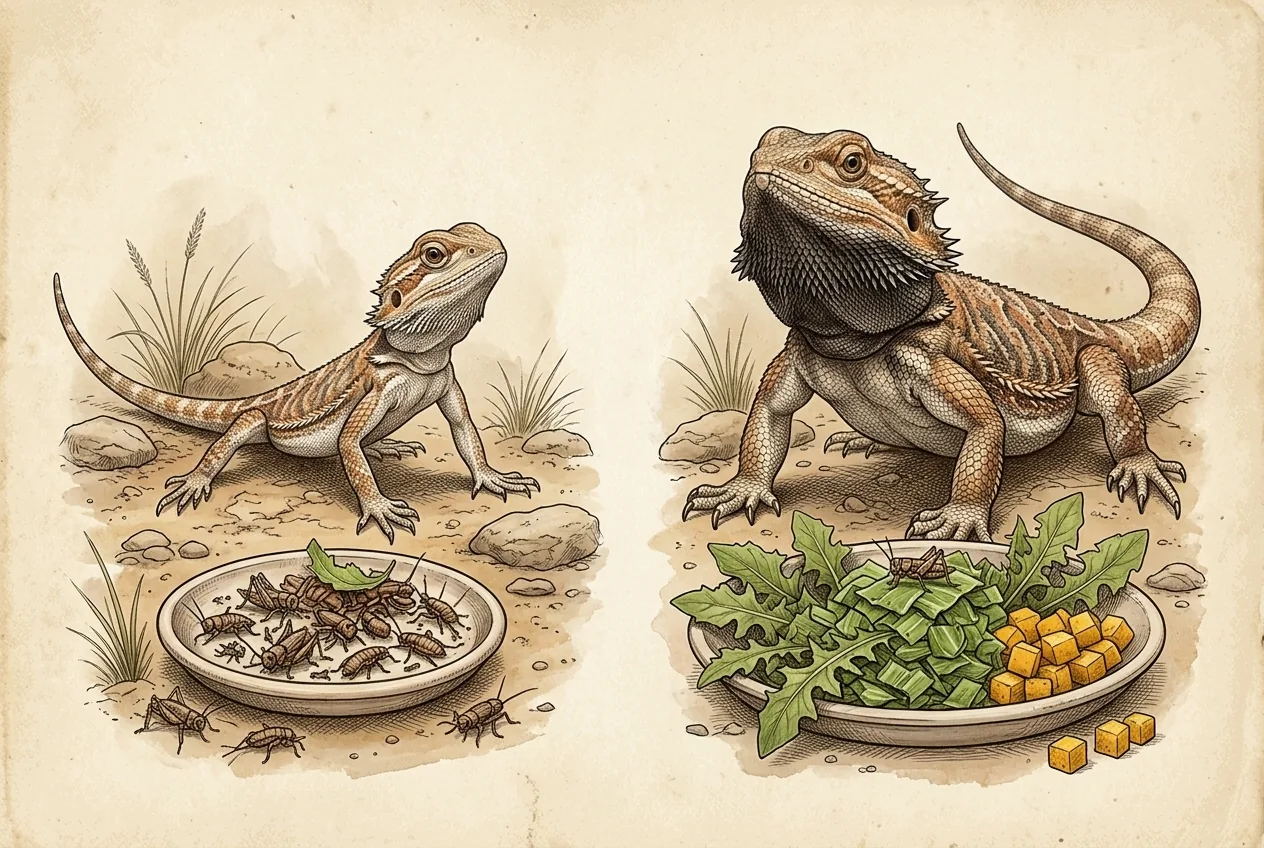
- Under a year
- Adult
- Under a year
- About 70% insects, fed every day.
- Adult
- About 70% greens and prepared food. Greens every day, insects every other day or less.
- These are Exo Terra's published numbers, the only maker that gives them.
- Our care sheet says the same thing in words: mostly insects for babies, mostly greens for adults.
- Keep fruit to an occasional treat. Zoo Med says fruit should be no more than 5% of the diet.
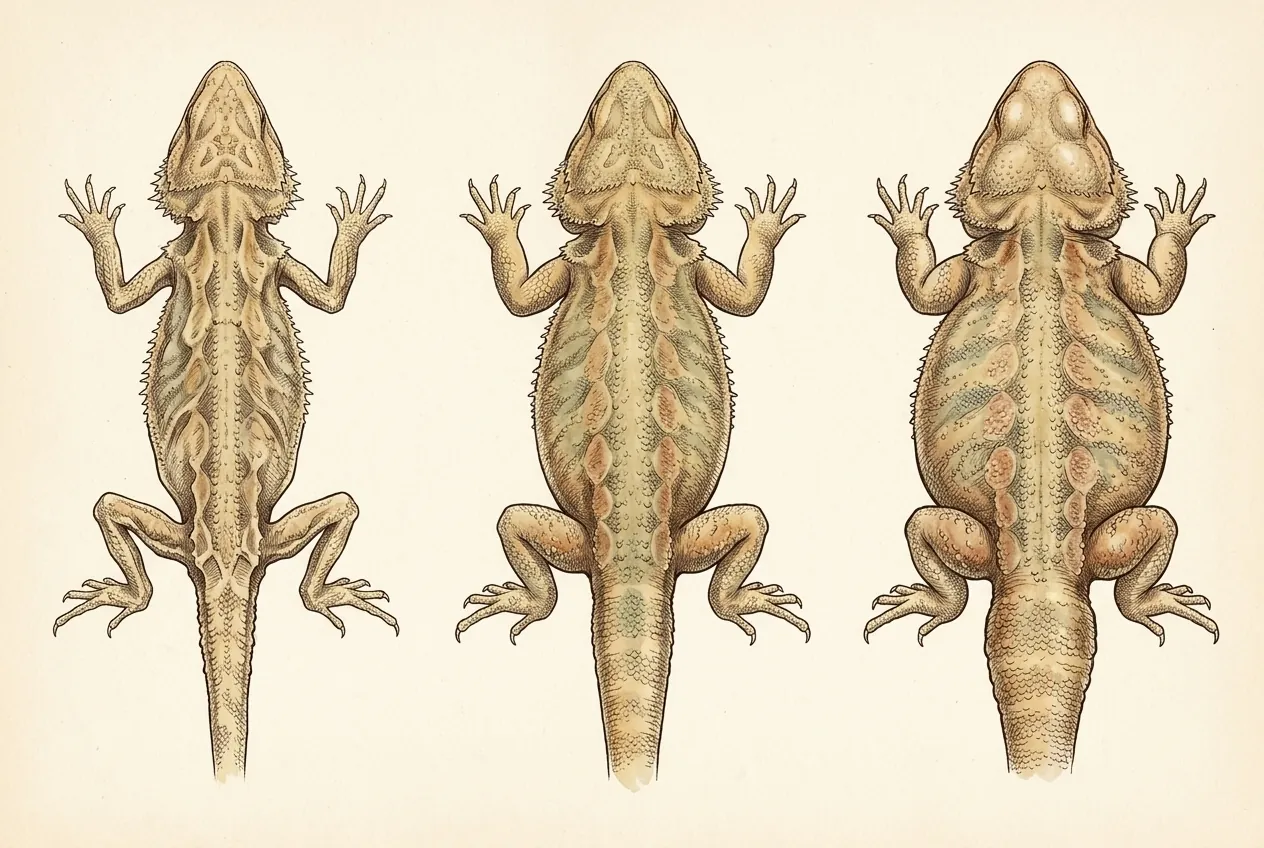
- An adult kept mostly on insects tends to get overweight.
- Too thin
- Healthy
- Overweight
- Too thin
- Thin tail base, hip bones showing.
- Healthy
- Full and rounded, no hip bones, no fat rolls.
- Overweight
- A bulging belly. An adult kept mostly on insects tends to end up here.
Greens and fruit
Leafy greens every day. Squash, bell pepper and carrot sometimes. Fruit only as a treat.
- Do: offer leafy greens every day: collard, mustard, turnip and dandelion greens, endive or escarole.
- Sometimes: squash, bell pepper and carrot. Squash is a vegetable, not a green.
- Treat only: fruit.
- Never: iceberg lettuce, spinach, beet greens, avocado or rhubarb.
- Never: wild-caught insects or fireflies.
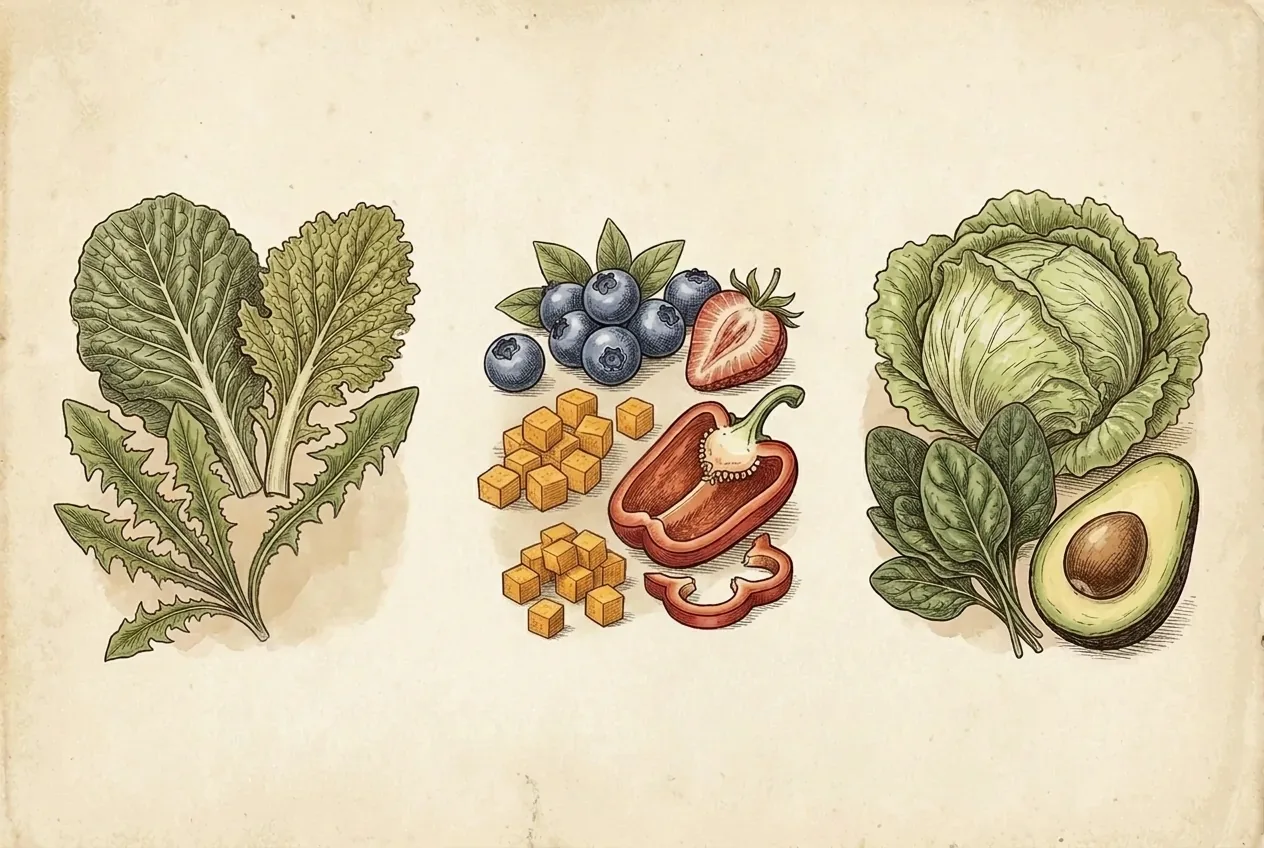
- Every day
- Sometimes
- Never
- Every day
- Collard and mustard greens, dandelion.
- Sometimes
- Butternut squash, berries and red bell pepper.
- Never
- Iceberg lettuce, spinach and avocado.
Comparing prepared foods
Pick a formula made for your dragon's life stage. Zoo Med's two adult foods are not the same.
Zoo Med makes two different adult foods. "Bearded Dragon Food – Adult Formula" and "Adult Dragon Food" have different calcium and fiber.
Already on one? If your dragon is used to one, stick with that one or switch slowly.
Juvenile vs adult. Each brand's table row lists its life stage. Some adult blends aren't for juveniles.
Compare all 9 prepared foods: protein, fat, fiber, calcium, phosphorus
| Food | Life stage | Protein | Fat | Fiber | Calcium | Phosphorus |
|---|---|---|---|---|---|---|
| Zoo Med Bearded Dragon Food – Adult Formula | Adult | 16% min | 2.5% min | 16% max | 0.8–1.2% | 0.4% min |
| Zoo Med Bearded Dragon Food – Juvenile Formula | Juvenile | 24% min | 2.5% min | 13% max | 0.8–1.2% | 0.5% min |
| Zoo Med Adult Dragon Food | Adult | 19% min | 2.5% min | 20% max | 1.3–1.6% | 0.5% min |
| Zoo Med Juvenile Dragon Food | Juvenile | 29% min | 3% min | 13% max | 1.7–2.0% | 0.5% min |
| Exo Terra Soft Pellets Adult | Adult | 18% min | 4% min | 12% max | 0.8–1.2% | 0.5% min |
| Exo Terra Soft Pellets Juvenile | Juvenile | 30% min | 4% min | 12% max | 0.8–1.2% | 0.5% min |
| Repashy Beardie Buffet (gel) | All | 34% min | 6% min | 7% max | 1.5% min | not listed |
| Hikari Dragon Delite | Sub-adult and adult | 24% min | 3% min | 10% max | not listed | 0.3% min |
| Arcadia OmniGold (gel) | All | 31% min | 7% min | 6% max | not listed | not listed |
Figures are each maker's guaranteed analysis. Some brands, including Fluker's and Zilla, don't publish one we could read, so they aren't in the table.
How to feed
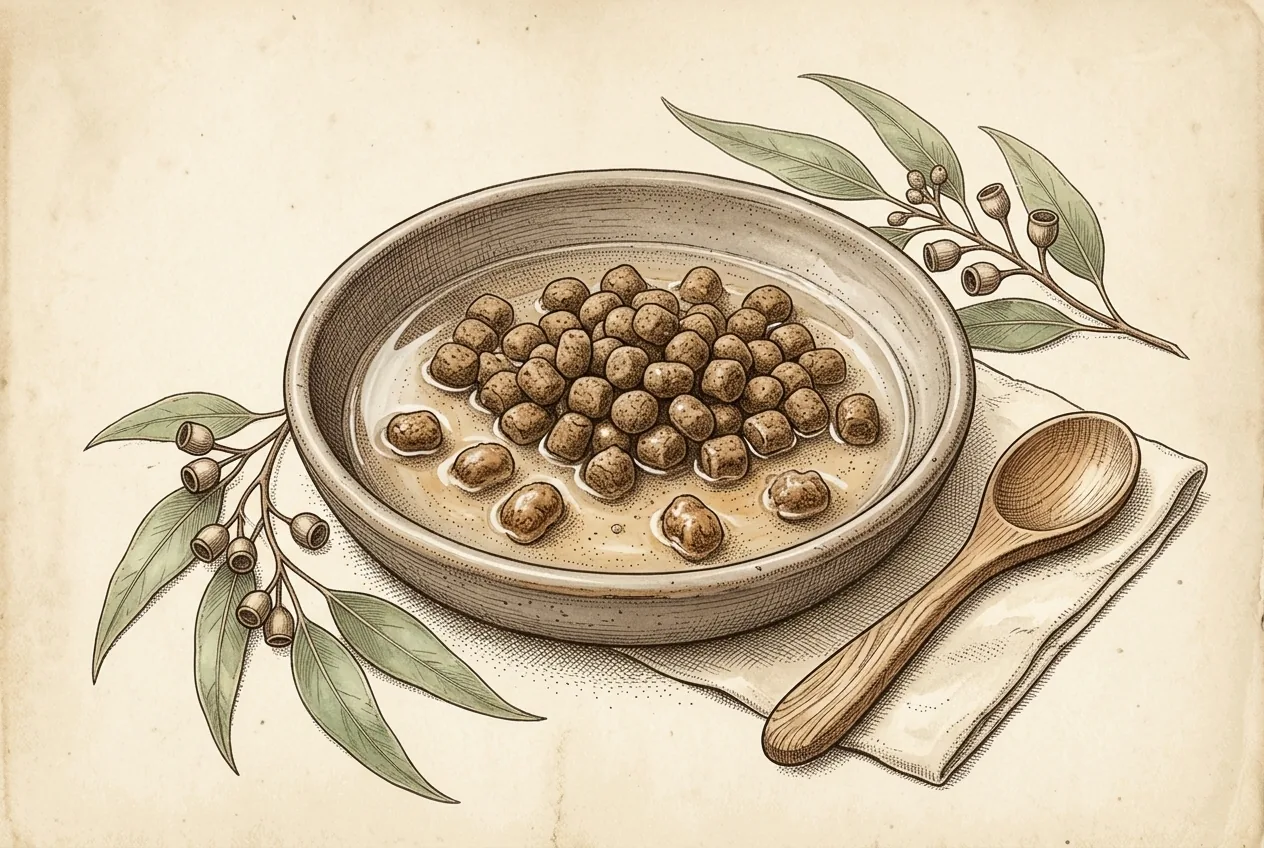
Soak pellets, serve in a dish, and take out leftovers at the end of the day.
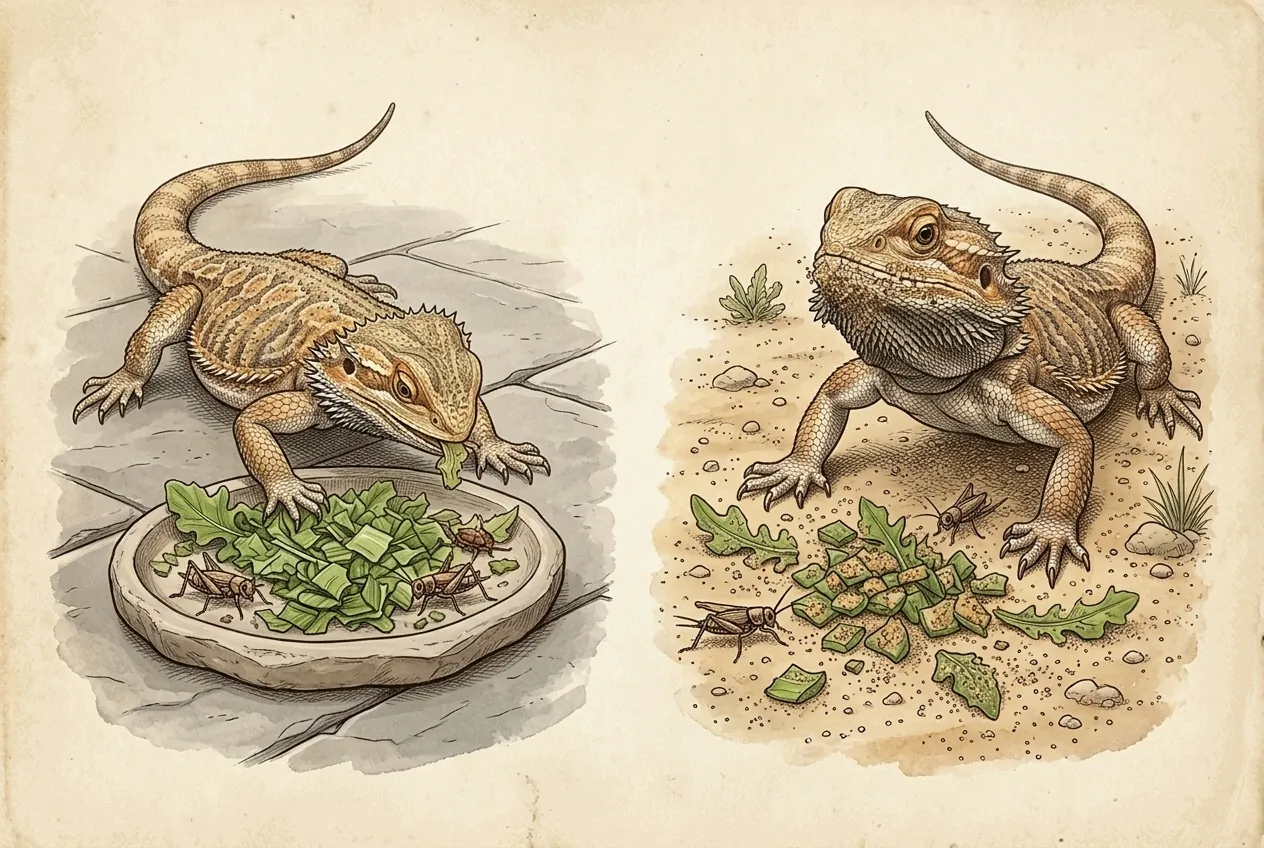
- In a dish
- On loose sand
- In a dish
- A shallow dish or flat stone. Never loose substrate.
- On loose sand
- A dragon that grabs food off sand swallows sand with it.
- Moisten dry pellets in a splash of warm water for a few minutes. One maker requires it, others make it optional.
- Use a shallow dish or flat stone. Never scatter food on loose substrate.
- Take out uneaten food at the end of the day.
- Mix gels as the label says. Usually one part powder to two or three parts hot water, cooled before serving.
- Keep insects in the plan, dusted with calcium and gut-loaded 24 to 48 hours before feeding.
- Fresh greens every day for an adult.
Safety
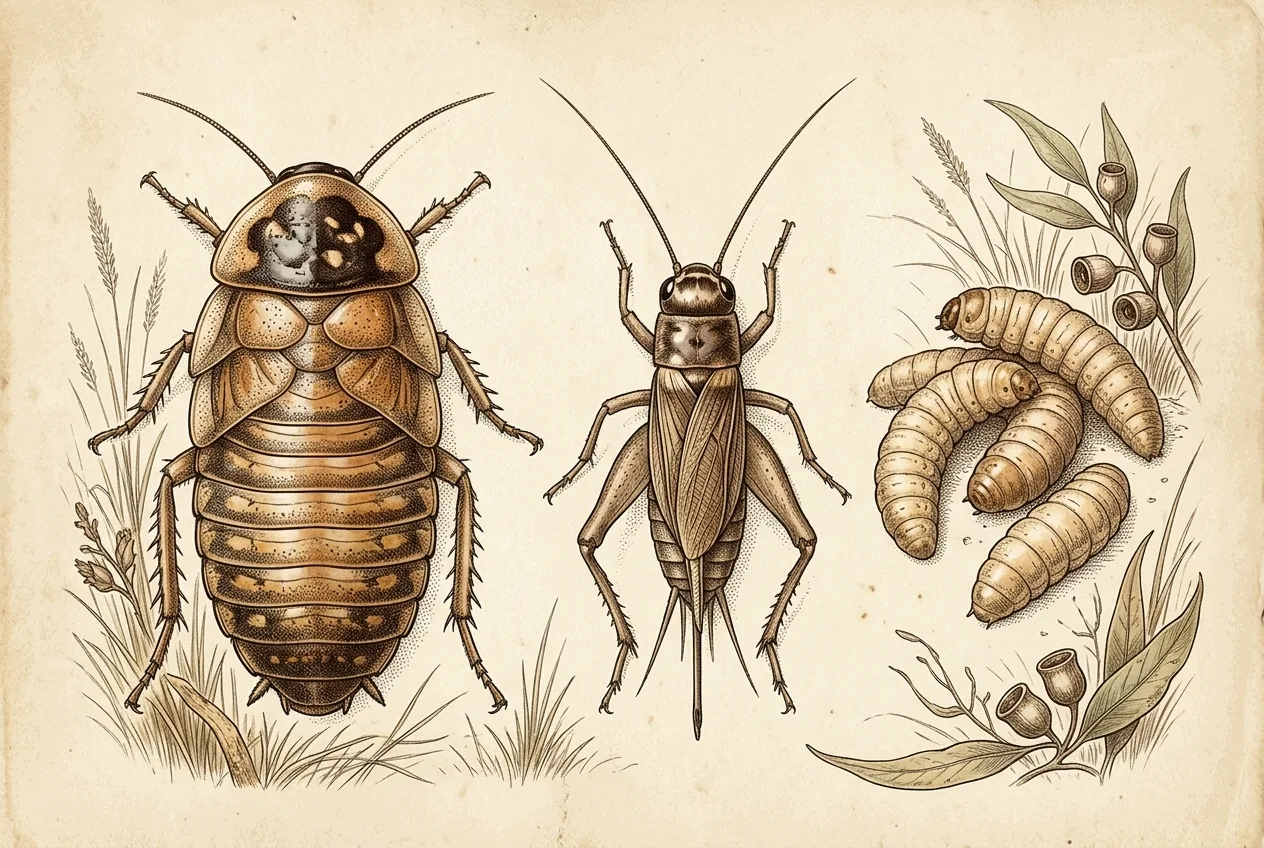
Insects no bigger than the space between your dragon's eyes. No wild-caught insects.
Do
- pick insects no bigger than the space between your dragon's eyes.
- check the age on the label. Some foods aren't meant for hatchlings under about 8 inches, and some adult blends aren't for juveniles.
Don't
- feed wild-caught insects. They can carry harmful bacteria and garden chemicals. Never fireflies.
- keep food that smells off. Throw it out.
Keeping it fresh
Dry pellets in a closed cupboard. Wet food, insects and mixed gel in the fridge.
| Type | After opening |
|---|---|
| Dry pellets | Cool, dry cupboard, lid closed |
| Canned food and insects | Fridge, about a week |
| Mixed gel | Fridge up to two weeks, freezer up to six months |
What else you'll need
Calcium powders, a multivitamin, gut-load, a shallow dish and good UVB.
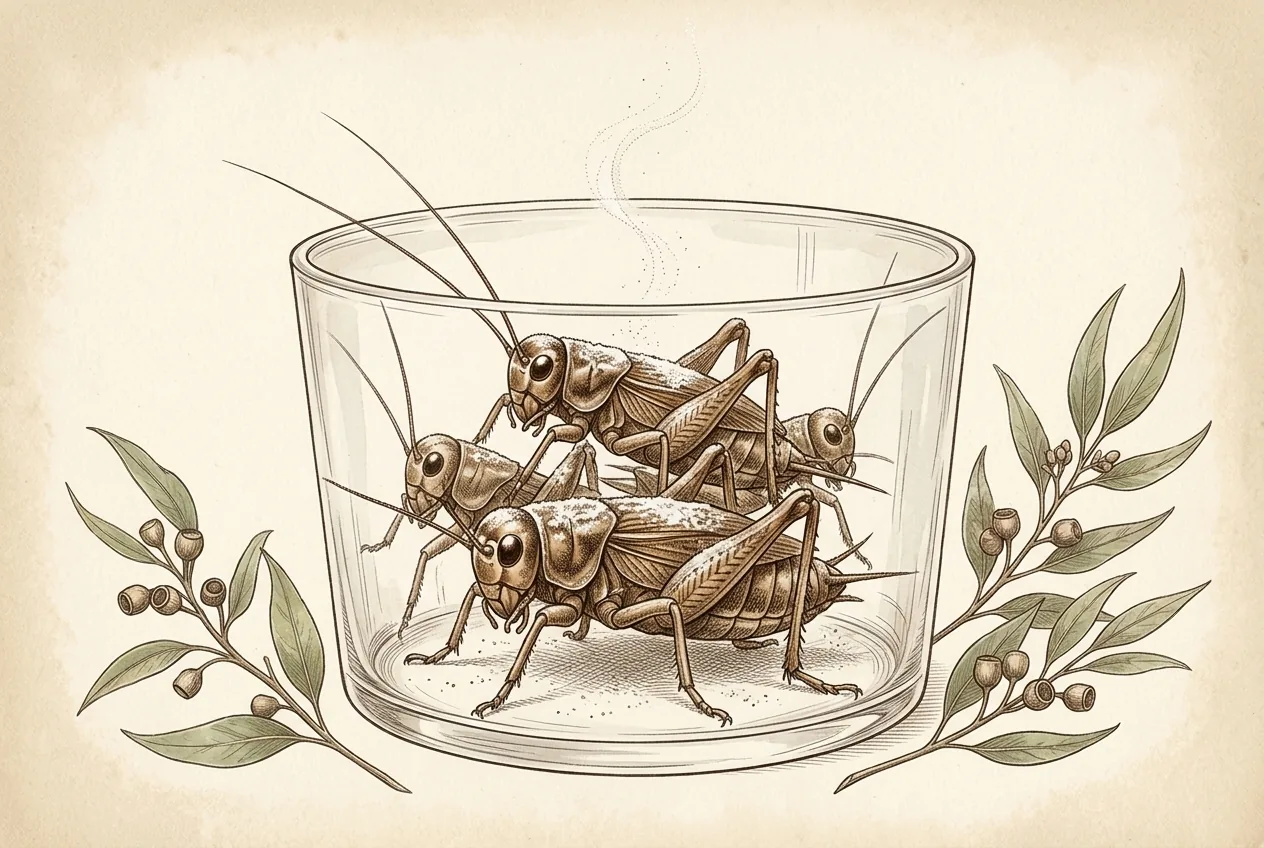
- Calcium powder. Dust insects with calcium every time you feed. Use calcium with D3 at most feedings, and follow the label on the powder. No pellet replaces this, especially for a young dragon.
- A reptile multivitamin, about once a week, as its label says.
- Gut-load for the insects. An insect is only as nutritious as its last meal.
- A shallow dish or flat slab.
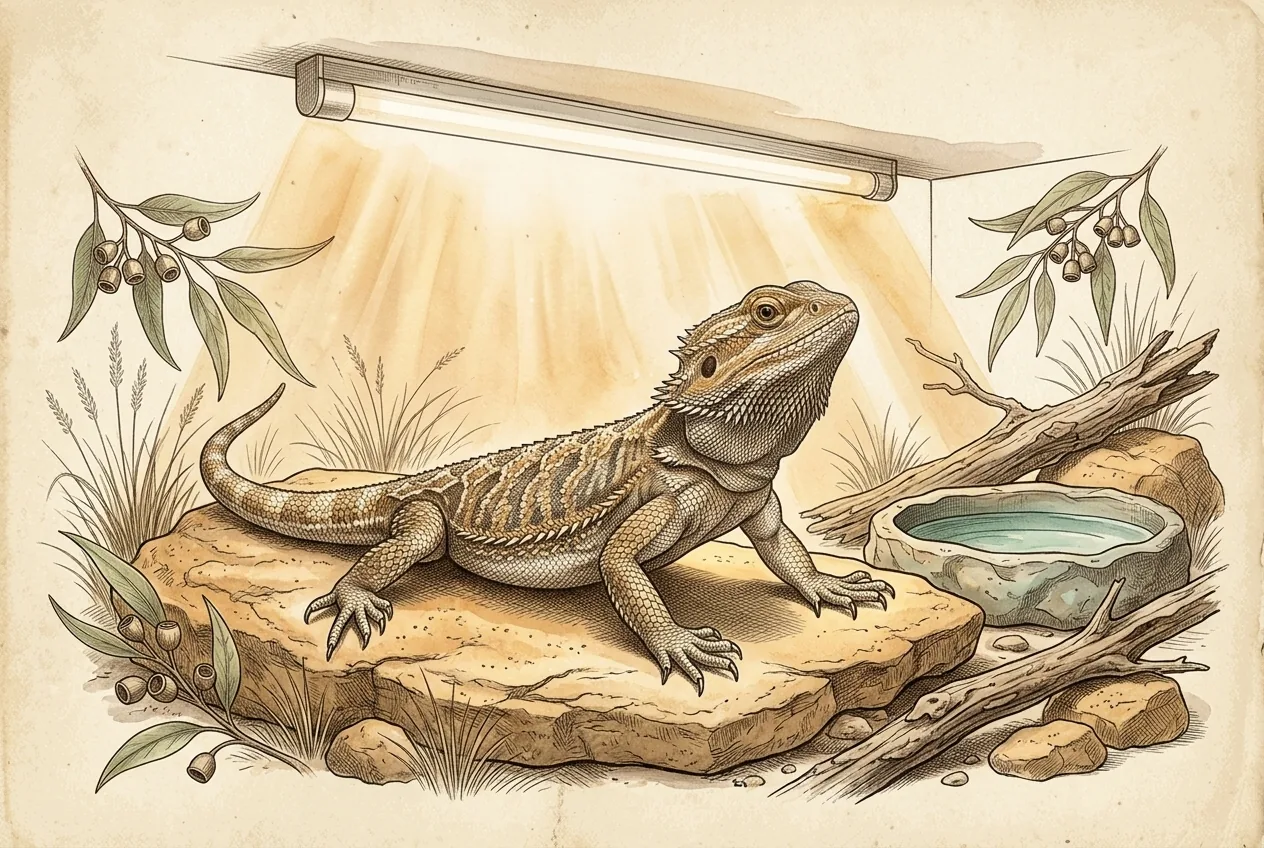
- UVB tube: a long UVB tube runs over the basking end, so your dragon soaks up UVB while it basks. It gives UV, not heat. Calcium only works with good UVB.
- Basking spot: a separate heat bulb warms this flat rock. The UVB tube doesn't heat it. Temperatures are on the care sheet.
- UVB tube: a long UVB tube runs over the basking end, so your dragon soaks up UVB while it basks. It gives UV, not heat. Calcium only works with good UVB.
- Basking spot: a separate heat bulb warms this flat rock. The UVB tube doesn't heat it. Temperatures are on the care sheet.
Quick answers
The bag says complete. Can I just feed this? For an adult, a good prepared food plus fresh greens and insects a couple of times a week is a healthy routine. For a growing dragon, no: juveniles need lots of insects.
Is "complete" a certified claim? No. There's no official nutrition standard for reptile food the way there is for dog and cat food, so "complete" on a reptile label isn't a certified claim.
Do I still need calcium powder? Yes, every time you feed insects, especially for a juvenile.
Can I stop buying crickets? You can cut way back for an adult. A juvenile still needs plenty, and chasing live insects is good exercise at any age.
Should I soak pellets? We recommend it: a little warm water for a few minutes.
Shop this
Pick up in store or have it shipped.
Reviewed by our team 2026-11-07. Nutrition figures are each maker's published guaranteed analysis.