
Seed to Pellets: Switching a Budgie or Cockatiel, Step by Step
How to move a seed-eating budgie or cockatiel onto pellets safely: two dishes, a gram scale, steps instead of a calendar, and when to stop and go back.
Lots of budgies and cockatiels have only ever eaten seed. Moving them to pellets is one of the best things you can do for them, and it's a diet project, not an emergency.
Go slowly, weigh your bird, and never take away the food it knows before it's eating the new one. No maker gives a set number of days, so this guide gives steps, not a calendar.
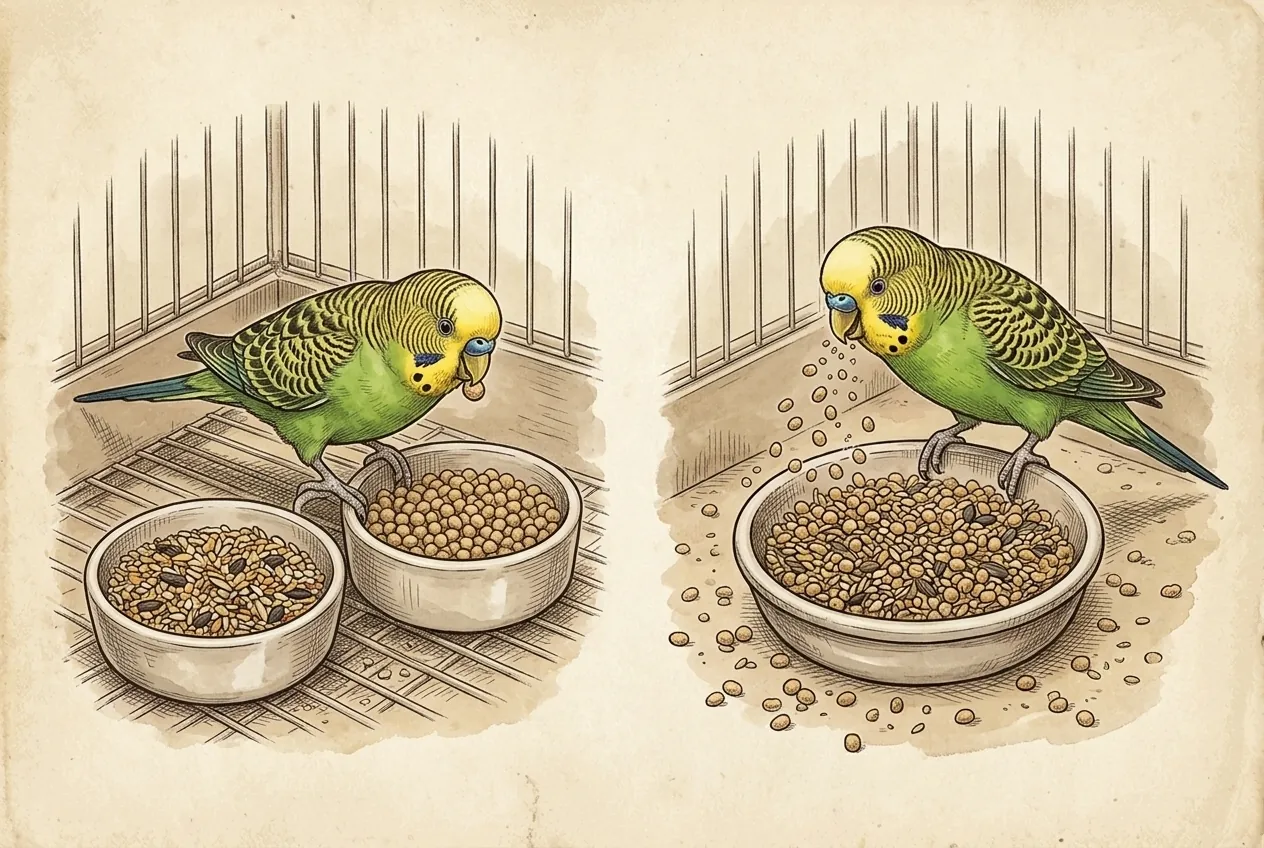
- Right
- Wrong
- Right
- Pellets in their own dish, beside the usual food.
- Wrong
- Pellets mixed into the seed. The bird eats the seed and tosses the rest.
At a glance
Before you start
Start with a healthy bird, a gram scale and a pellet sized for its beak.
- A healthy bird only. A bird that is thin, fluffed up or not eating needs an avian vet first. The switch waits.
- A kitchen scale that reads in grams. This is the one tool that makes switching safe. Lafeber says to weigh in grams, not ounces.
- The right pellet size. Roudybush says to match pellet size to beak size. Pick the smallest size for a budgie, and a small or "medium for cockatiels" size for a cockatiel.
- Your pellet bag's directions. If the bag you bought has switching steps, follow them. Makers disagree on method, and the bag is written for that food.
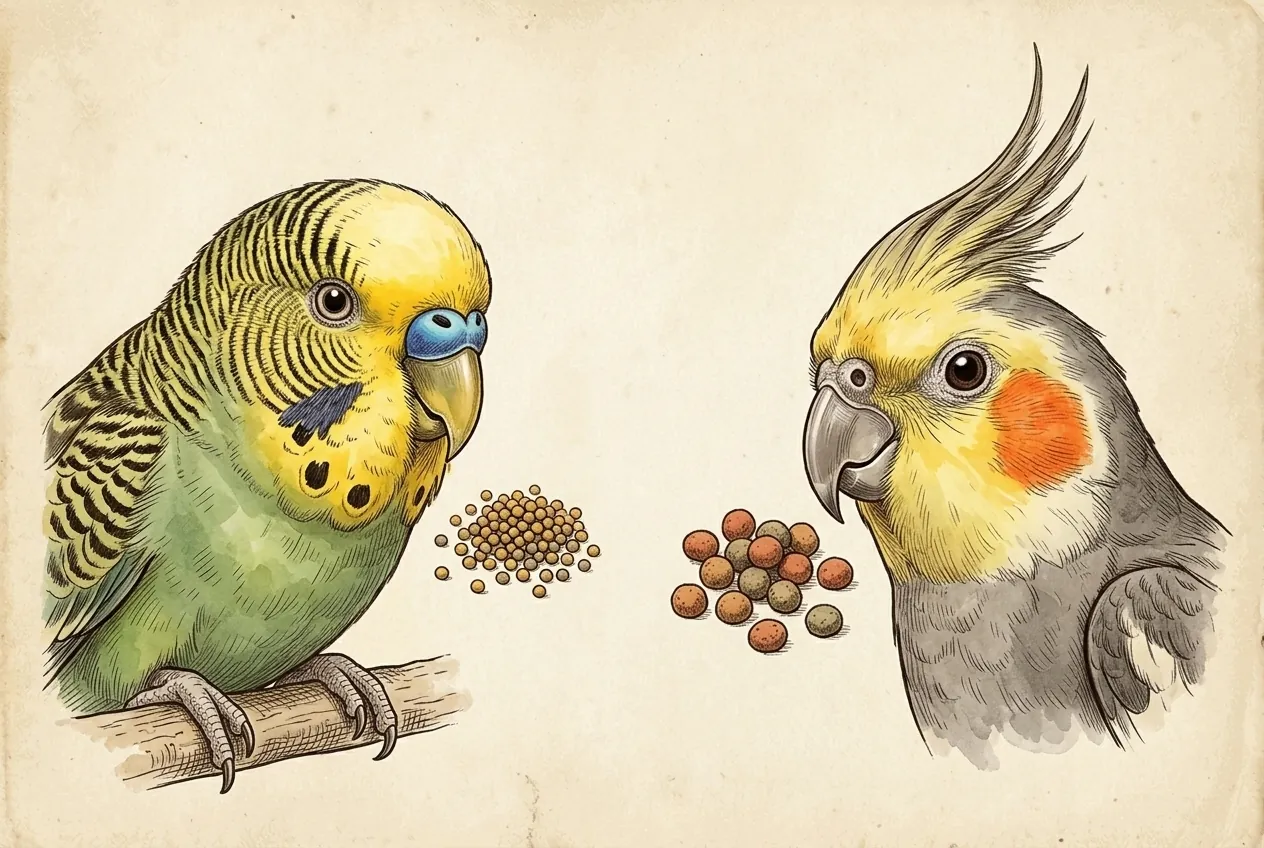
- Budgie
- Cockatiel
- Budgie
- The smallest pellets, smaller than the beak tip.
- Cockatiel
- Small pellets, about the size of the beak tip.
Seed with pellet pieces is a bridge, not the goal. Some bags (seed blends with fortified pieces or pellets mixed in) are mostly seed. They can be a first step, but they aren't a pellet diet.
The steps
Pellets beside the usual food, weigh every morning, reward with seed, shrink the seed slowly.
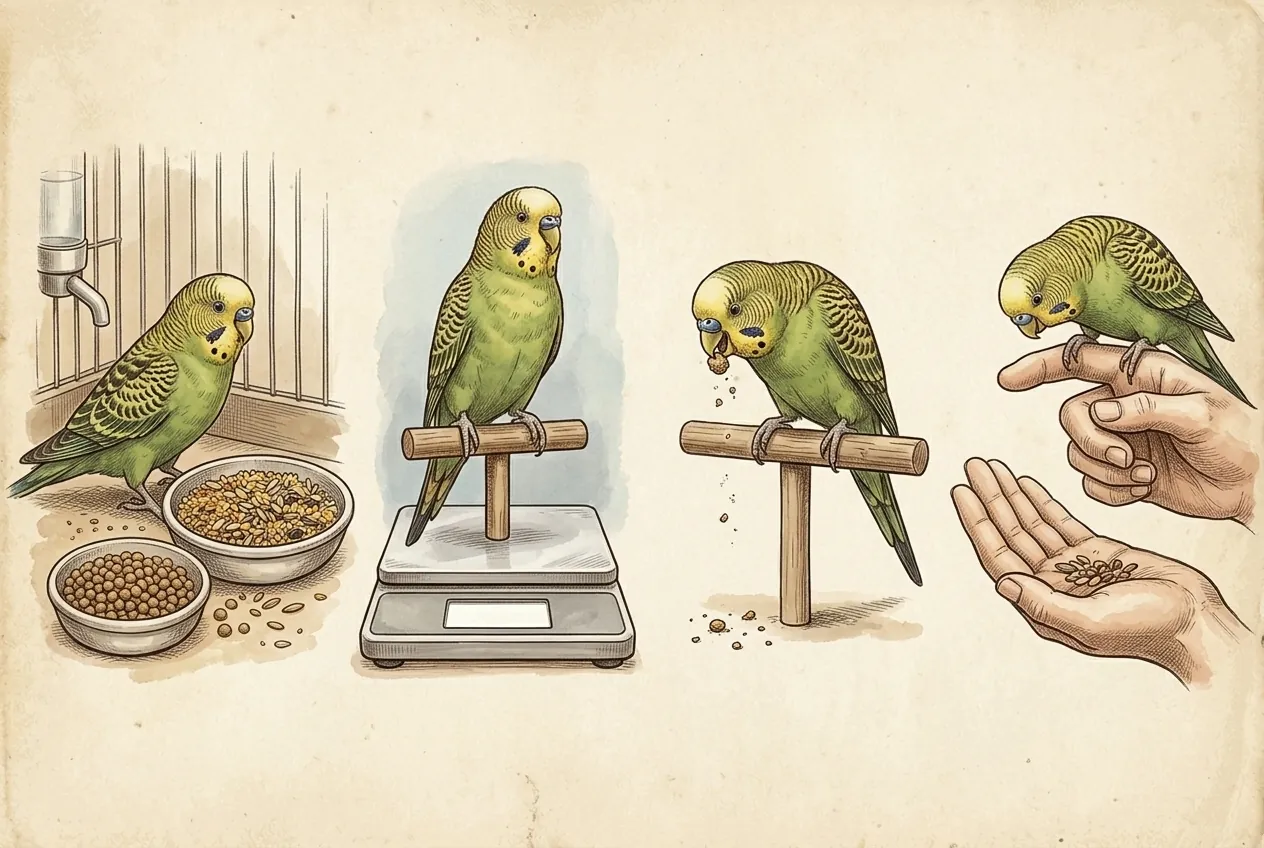
- Add a pellet dish
- Weigh each morning
- Watch it really eat
- Seed becomes the reward
- Add a pellet dish. Put pellets in their own clean dish, next to the food your bird already eats. Don't stir pellets into the seed: ZuPreem and Hagen both say a bird just picks out the seed.
- Weigh every morning, before breakfast, and write it down. Lafeber gives the same advice.
- Make pellets interesting. Crumble a few, offer one from your hand, or set the pellet dish beside a favorite vegetable.
- Check it's really eating. A crushed pellet looks eaten. LafeberVet's check is that the bird swallows the food, not just crushes it.
- Shrink the seed slowly. As your bird eats more pellets, the seed becomes a measured reward, given from your hand or after the pellet meal. Seed doesn't have to go to zero.
Weigh, don't guess
The scale tells you sooner than your eyes can.
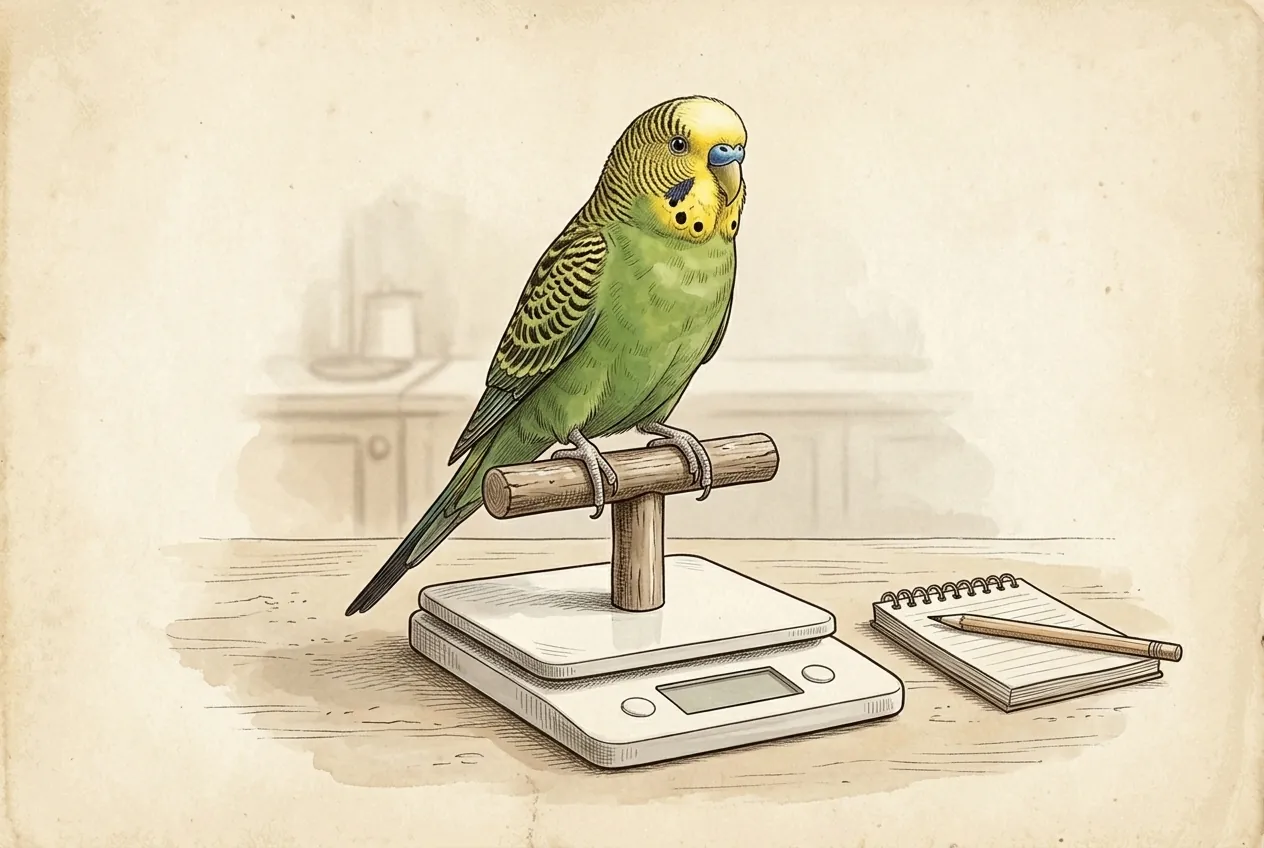
- Same time, every morning, before the first meal. A perch on top of the scale makes it easy.
- Write it down. A slow downward trend is easier to see on paper.
- A small bird has little to lose. A budgie is tiny, so a small loss is a big share of its body. Don't wait for a big drop.
- Harrison's and ZuPreem put the vet line at a 10% change in body weight. Treat that as a stop line, never a target.
When to stop and go back
Losing weight, not eating, or fluffed up: put the old food back today.
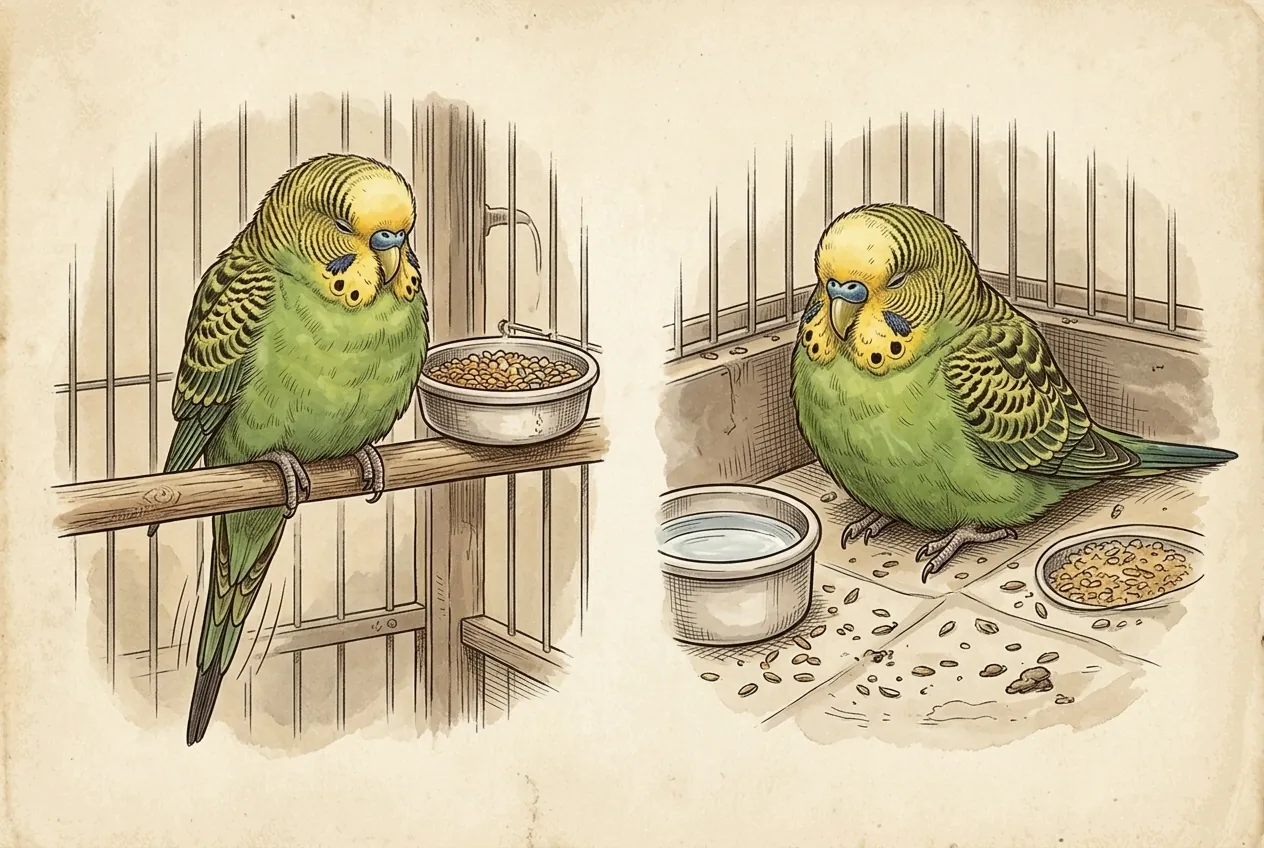
- Fluffed on the perch
- On the floor
- Fluffed on the perch
- Puffed up, eyes half closed.
- On the floor
- Sitting low on the cage floor.
Put the familiar food back the same day if your bird:
- is losing weight from one morning to the next,
- isn't eating the new food and has less of the old,
- sits fluffed up, or on the cage floor,
- has droppings that changed in a way the food doesn't explain, are watery, or show blood.
Some change in droppings is normal. Color and amount often change on a new diet. Watery droppings, blood or a bird that seems unwell are not normal.
How long it takes
Days for some birds, weeks for others. Go at your bird's pace.
- No maker gives a budgie or cockatiel timeline. ZuPreem says some birds take to the new food in a day or two and others may not touch it for two weeks or more.
- A pause is fine. If you had to go back to the old food, wait until your bird is steady again, then start over from step 1.
- Won't touch them? Try a smaller pellet, a different brand, crumbled pellets, or the pellet dish beside a favorite vegetable.
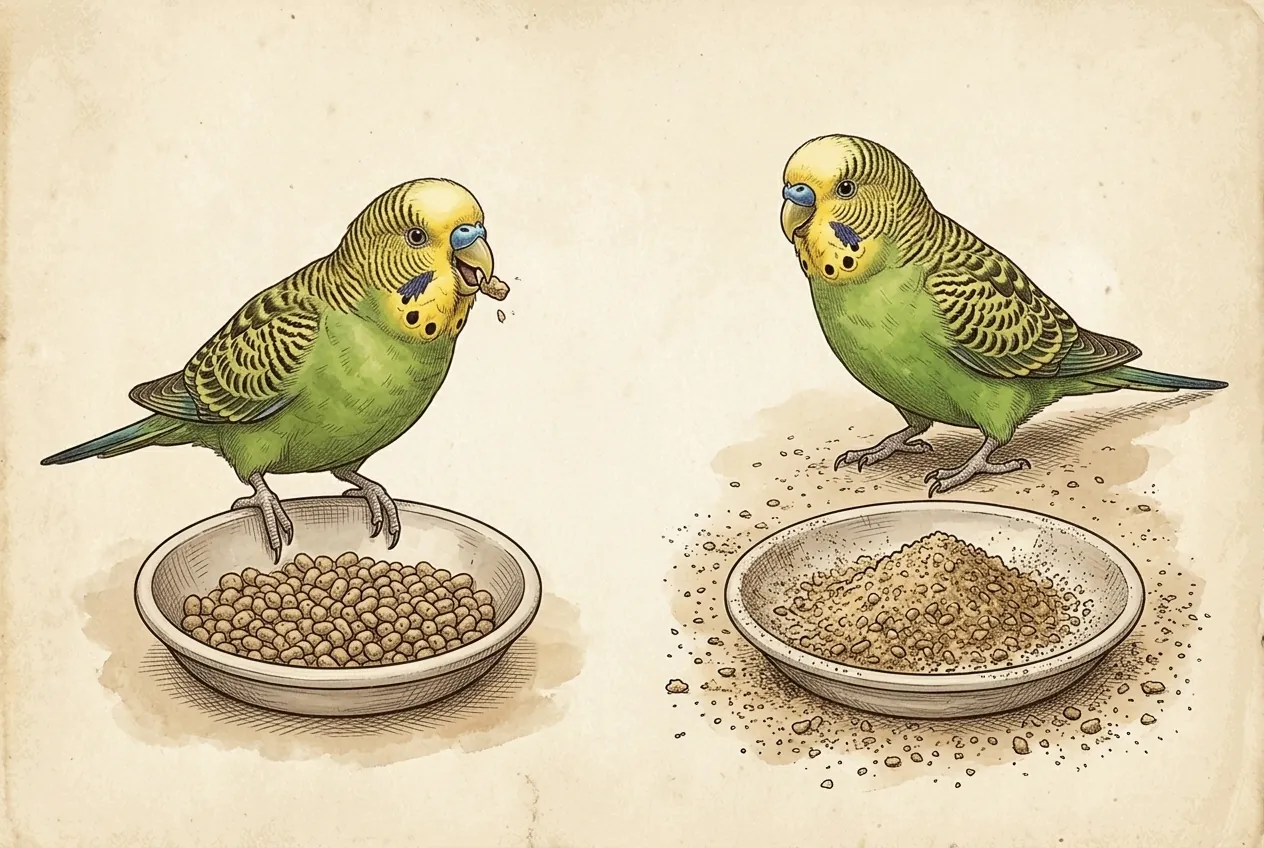
- Eating
- Crushing
- Eating
- Pieces go down, fewer whole pellets left.
- Crushing
- Crumbs everywhere, bird still hungry.
Why makers disagree, and what we chose
- Mixing. Kaytee says to start with a mix of old and new food. ZuPreem and Hagen say not to mix, because the bird picks out the seed. We use separate dishes, side by side: the bird always has its familiar food, and can't sort pellets out of the seed.
- Timeline. Kaytee's mixing plan runs 7 to 10 days. Roudybush offers several methods, from a few days to a few weeks. Harrison's plan runs months for some birds. We give steps, not days.
- Weight loss. Hagen expects a modest loss during a switch. Harrison's calls a change of more than 10% a problem, and Roudybush uses 3% for its fastest method. A budgie is too small to risk much, so any steady drop means put the old food back.
- Fast methods. Some makers describe a "pellets only for a couple of days" method. We don't recommend it for a first switch. A small bird can't afford a missed meal.
After the switch
Pellets as the base, vegetables daily, seed and treats as small extras.
- Pellets in a clean dish, with fresh vegetables in a separate dish.
- Treats stay small. Lafeber says snacks should be no more than 10% of the diet over the week.
- Keep weighing, monthly once your bird is settled.
- Opened pellets: use within 8 weeks, and freeze what you won't use in that time.
See our budgie and cockatiel food guides for amounts and the full daily diet.
Quick answers
Are pellets better than seed? Seed alone is short on vitamins, minerals and protein and is high in fat. A pellet gives the same nutrition in every bite. Pellets as the base, with vegetables and a little seed, is the goal.
How long does switching take? It depends on the bird: days for some, weeks for others. No maker gives a fixed schedule.
Can I mix the pellets into the seed? We don't. The bird eats the seed and tosses the pellets. Use two dishes, side by side. If your pellet bag says to mix, follow the bag.
My bird won't touch them. Try a smaller pellet, a different brand, crumbled pellets, or offering one from your hand. Keep the familiar food available.
My bird lost weight. What now? Put its old food back today. If it lost 10% or stopped eating, see an avian vet.
Should seed go to zero? No. A little seed, measured, makes a great reward.
Do I still need a cuttlebone? A bird on mostly pellets uses it less, but it does no harm, and a laying hen always needs one.
Shop this
Pick up in store or have it shipped.
Reviewed by our team 2026-11-15. Nutrition figures are each maker's published guaranteed analysis.