
What to Feed a Cockatiel: Pellets, Seed, Vegetables and Calcium
Why an all-seed diet makes cockatiels sick, which pellet to pick, sunflower and selective eating, daily vegetables, calcium for hens and body condition.
Cockatiels are often fed mostly seed, and that's the most common reason they get sick. Lafeber says many seed-fed cockatiels are short on vitamins and minerals, and that an all-seed diet is high in fat, which can lead to fatty liver disease.
Pellets are the base. Fresh vegetables every day. Seed and millet are treats and training rewards, not a bowl that's always full.
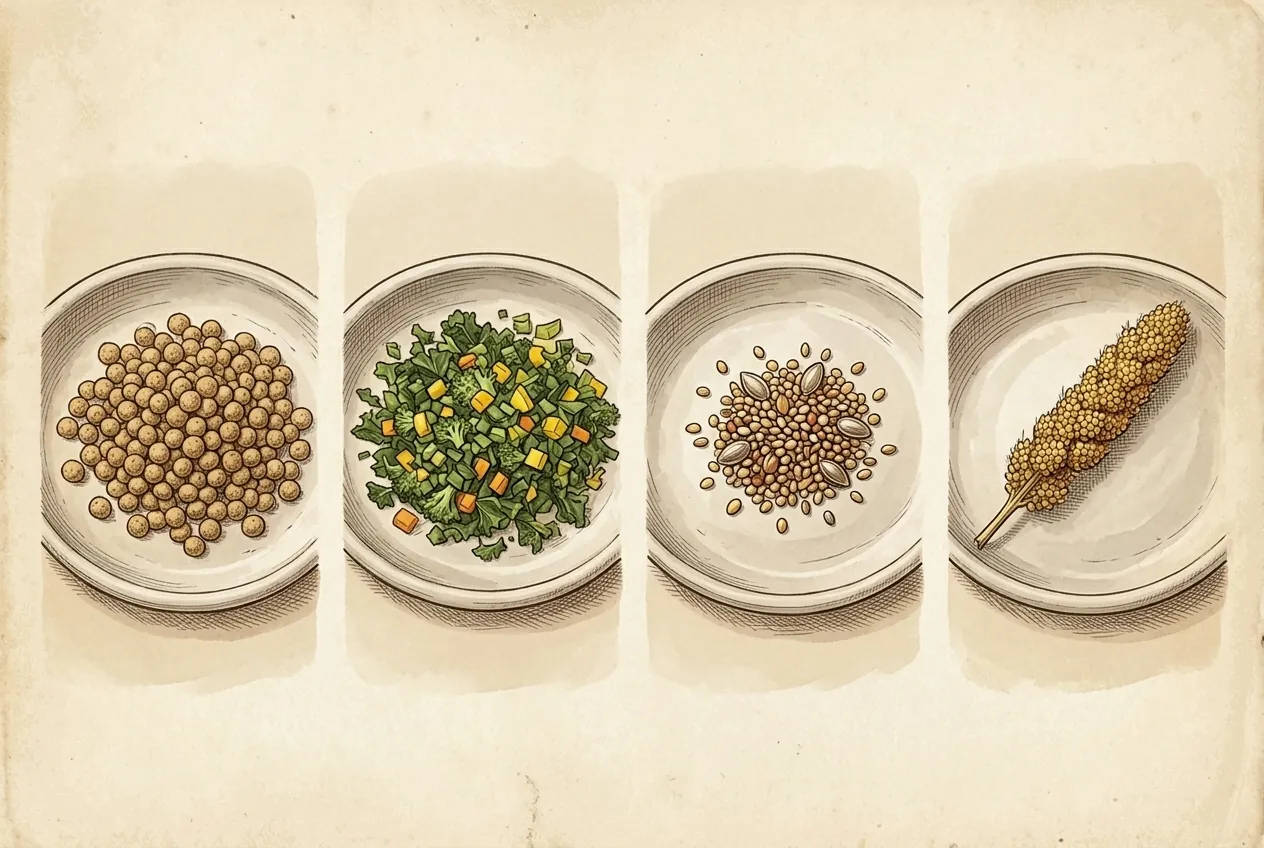
- Pellets
- Vegetables
- Seed
- Spray millet
- Pellets
- The base of the diet.
- Vegetables
- A tablespoon or two, chopped.
- Seed
- A small part, not a free-fed bowl.
- Spray millet
- A training reward.
At a glance
What to feed
A pellet made for cockatiels, vegetables daily, seed as the small extra.
Pellets made for cockatiels
One food in every bite, so the bird can't sort out the fatty seeds and leave the rest. Pick a maintenance formula made for cockatiels.
Fresh vegetables
Kaytee's cockatiel advice is a daily tablespoon or two of chopped, fresh, uncooked and unseasoned dark green or yellow produce.
Seed
Still part of the diet, as the smaller share. Seed mixes are where most of a cockatiel's fat comes from.
Spray millet
The best taming and training reward. A treat, not a meal.
Compare cockatiel pellets: protein, fat and the maker's amount
| Pellet | Protein | Fat | How much, per the maker's label |
|---|---|---|---|
| ZuPreem True Harvest, Medium | 14.0% min | 4.0% min | 1/8-1/4 cup a day |
| ZuPreem FruitBlend, Medium | 14% min | 4.0% min | 1/8-1/4 cup a day |
| Lafeber Cockatiel Pellets | 15.5% min | 5.1% min | not listed on the maker's page |
| Harrison's Adult Lifetime Fine | 14% min | 6% min | A share of the diet by weight, on the maker's chart |
| Tropican Lifetime, 2 mm | 13% min | 7% min | not listed on the maker's page |
Figures are each maker's guaranteed analysis. Protein is close. Fat runs from 4% to 7%, and that's the number to compare for a bird that gains weight easily. ZuPreem FruitBlend uses added colors; the others list none or natural ones. No maker says the colors are unsafe, so that part is your choice.
Seed: the fat problem
A cockatiel picks out its favorite seeds. Usually the fattiest ones.
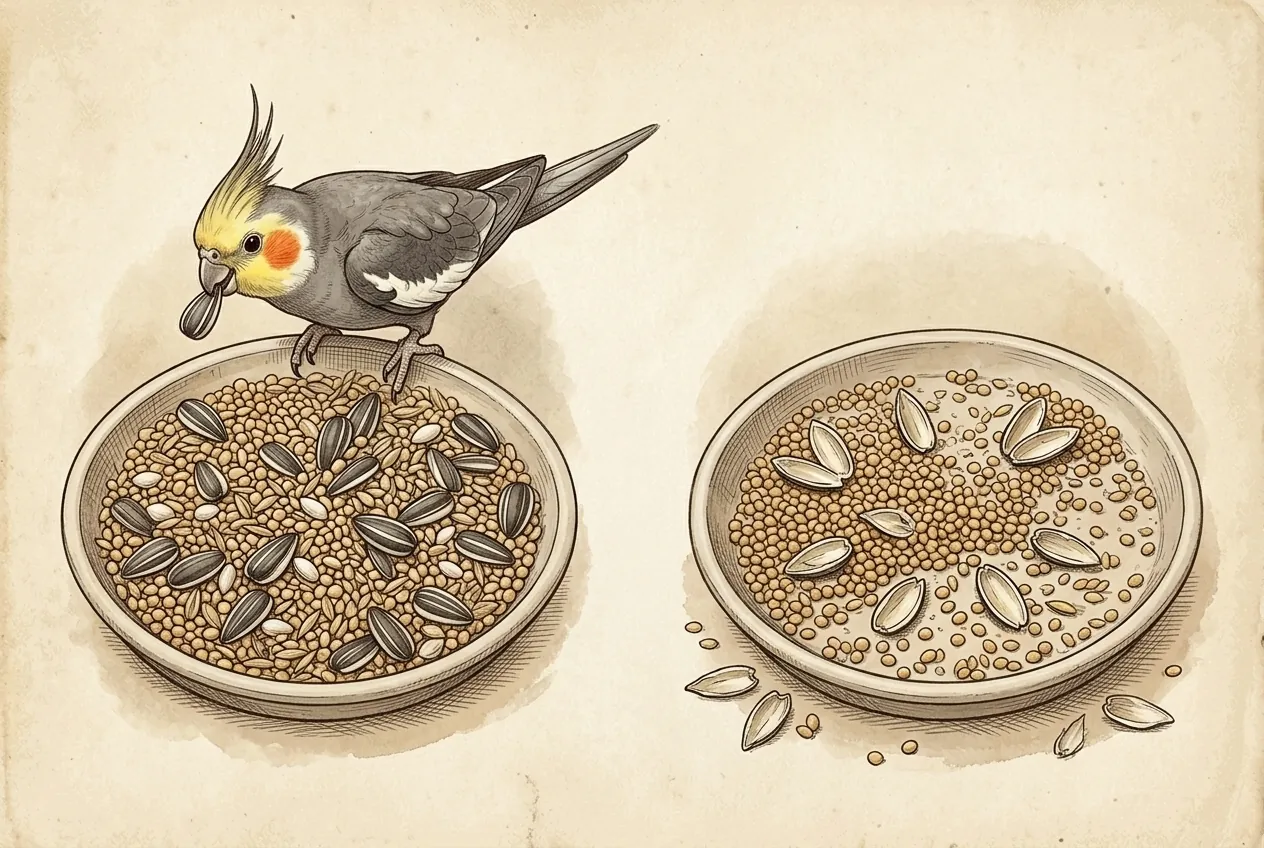
- Day one
- A day later
- Day one
- A full mix, and the bird goes for the sunflower.
- A day later
- Sunflower gone, the small seeds left.
- Selective eating. A cockatiel picks out favorites, often sunflower, and leaves the rest. The bag's balance isn't what the bird eats.
- "No sunflower" isn't low fat. Kaytee says sunflower and safflower are both high-fat seeds. A no-sunflower mix is lower fat, not low fat.
- Fat on seed bags runs from 6% to 15%. Read the fat figure on the bag. The highest-fat blends are treat mixes, not daily food.
Compare cockatiel seed mixes: fat and the maker's amount
| Seed mix | Sunflower? | Protein | Fat | How much, per the maker's label |
|---|---|---|---|---|
| Sunseed Vita Prima Cockatiel & Lovebird | Yes | 13% min | 6% min | 1/8-1/4 cup a day |
| Kaytee Forti-Diet Pro Health + Safflower | None in first 15 ingredients | 15.0% min | 8.0% min | 2-4 tablespoons |
| Higgins Safflower Gold Conure & Cockatiel | No sunflower or peanuts | 13.0% min | 9.0% min | 1/4-1/2 cup |
| Kaytee Supreme Cockatiel | Yes | 13.5% min | 9.0% min | 2-4 tablespoons |
| Kaytee Forti-Diet Pro Health Cockatiel | Yes | 15.0% min | 9.0% min | 2-4 tablespoons |
| Volkman Avian Science Super Cockatiel (no sunflower) | None | 12.75% min | 9.5% min | not listed |
| Higgins Sunburst Cockatiel | Yes, plus nuts | 13.5% min | 15.0% min | 1/4-1/2 cup |
Figures are each maker's guaranteed analysis. The daily amounts printed on bags differ by about four times. Use your bag's amount as a ceiling, and remember seed is the smaller part of the diet.
How much and how often
A measured amount from your bag. Never top up the dish.
- Follow the bag in your hand. Makers' amounts for cockatiels differ a lot, so read the bag you bought, not one you remember.
- Measure it, then clear it. Seed hulls sit on top of an empty dish and look like food. Kaytee says to throw out uneaten food and clean the dish before each feeding.
- Cockatiels eat through the day. Keep the pellet dish available, and check it holds food, not just dust and hulls.
Vegetables every day
A tablespoon or two, chopped, out after about two hours.
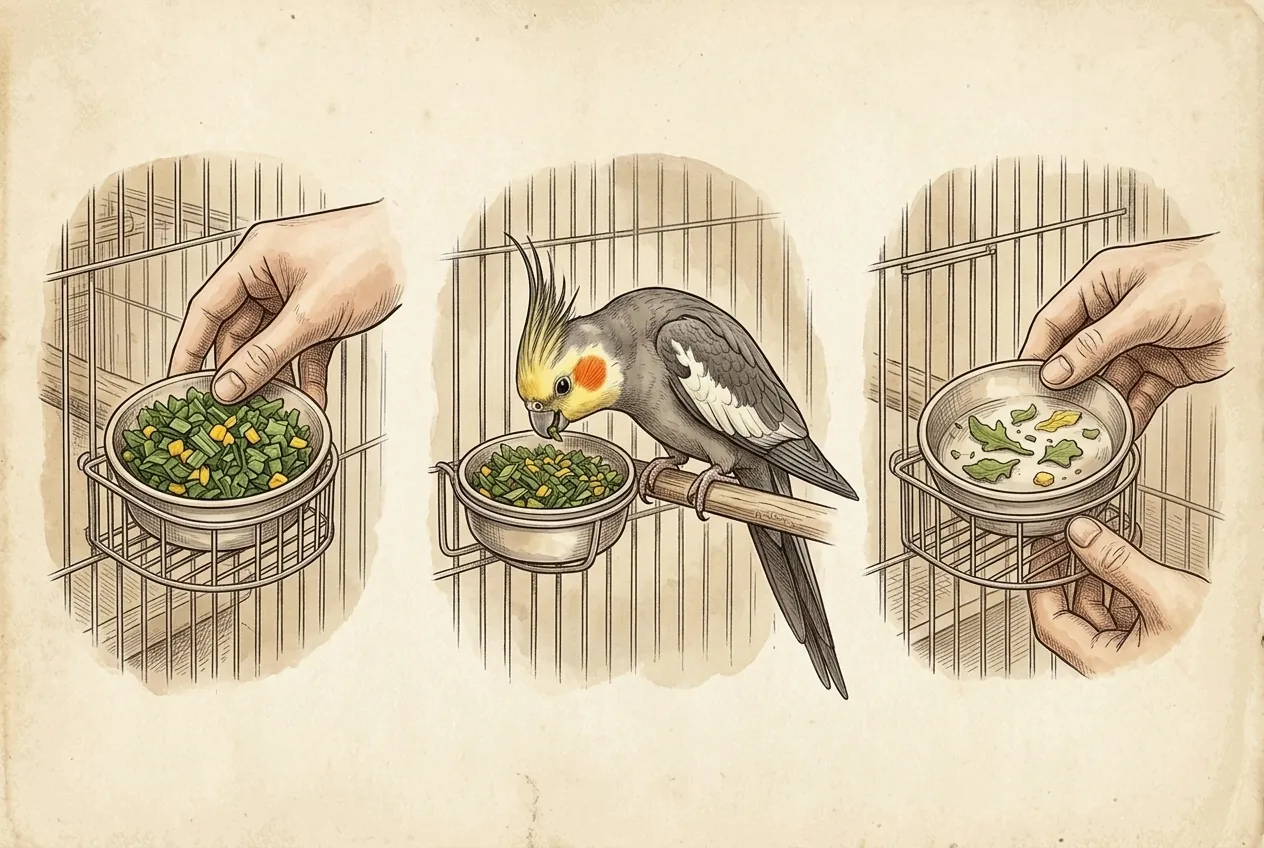
Chop a tablespoon or two of fresh, raw, unseasoned dark green or yellow vegetables.
Use a separate dish from the pellets, so wet food doesn't spoil them.
Take leftovers out after about two hours, before they spoil. Kaytee gives the same timing.
Fresh in, eaten, leftovers out.
See our guide to fresh foods and treats for small birds for what's safe, what's "now and then," and what's never OK.
Calcium for hens
Female cockatiels often need extra calcium, especially if they lay eggs.
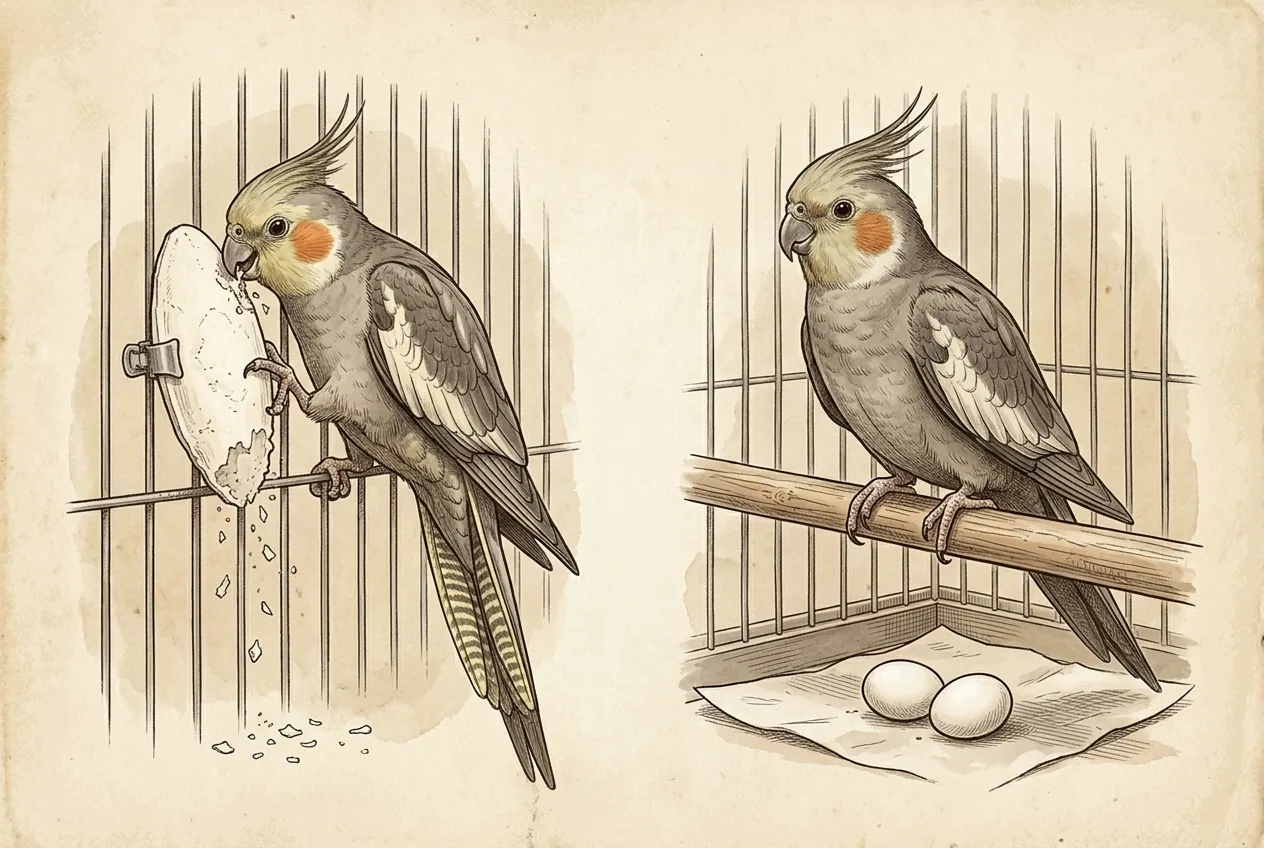
- Cuttlebone
- Eggs
- Cuttlebone
- Keep one clipped to the bars.
- Eggs
- A hen can lay without a male.
- Lafeber says female cockatiels often need extra calcium, such as a calcium-fortified base diet or a cuttlebone.
- Hens can lay without a male. Repeated laying can drain a hen's calcium.
- A cuttlebone or mineral block in every cockatiel cage costs little and does no harm. A bird on mostly pellets uses it less, but a laying hen always needs it.
- Grit: Lafeber says parrots don't need grit, and cockatiels shell their seed. Some makers sell it; if you use it, follow that label.
Body condition
Sleek and upright is right. A round, bulging chest means too much rich food.
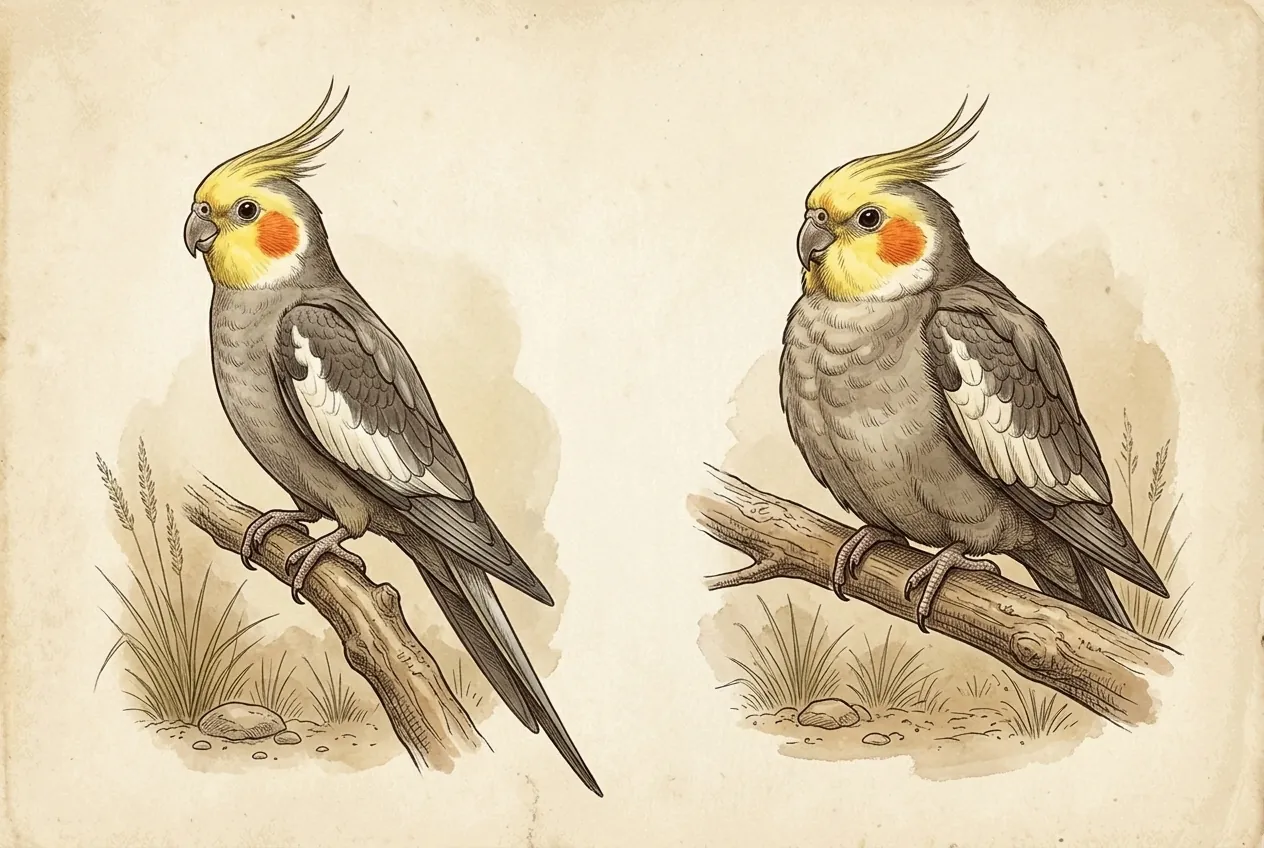
- Just right
- Too heavy
- Just right
- Sleek, upright, smooth chest.
- Too heavy
- Round chest, sits low and squat.
- Seed, millet and treats are the usual causes.
- Weigh monthly on a kitchen scale that reads in grams, once your bird is on pellets.
- Gaining on pellets? Check the formula (rich lines suit breeders, not pets), the amount and the treats, then talk to your avian vet.
Feeding setup
Two dishes up high: one for pellets, one for fresh food.
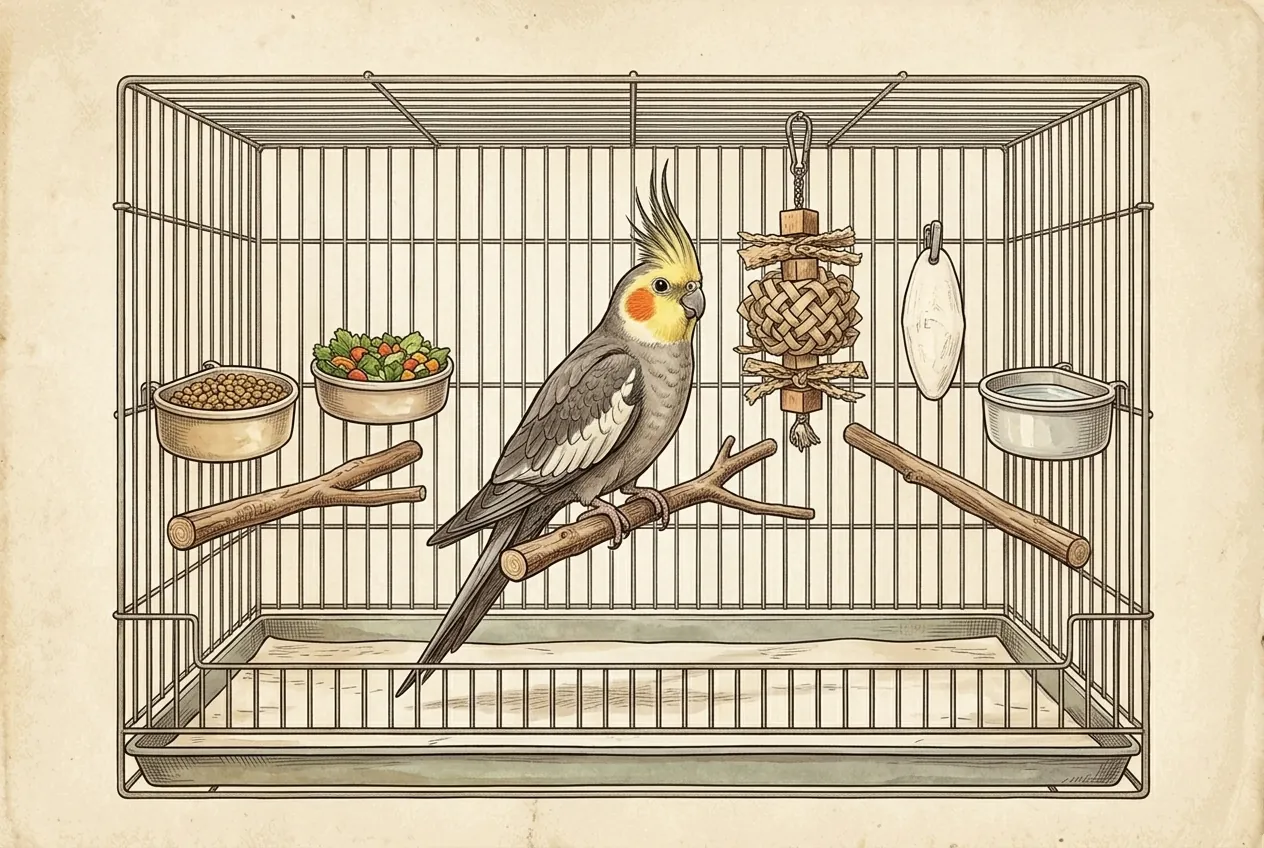
- Pellet dish: high, available through the day.
- Fresh-food dish: separate, emptied after about two hours.
- Water: fresh every day. Change it if it has droppings or food in it.
- Cuttlebone: for calcium, especially for hens.
- Foraging toy: a few pellets hidden inside make food a game.
- Pellet dish: high, available through the day.
- Fresh-food dish: separate, emptied after about two hours.
- Water: fresh every day. Change it if it has droppings or food in it.
- Cuttlebone: for calcium, especially for hens.
- Foraging toy: a few pellets hidden inside make food a game.
- An airtight container for the opened bag.
- A kitchen scale that reads in grams.
Storing food
Use opened pellets within 8 weeks. Freeze, don't refrigerate, the extra.
- Pellets: makers say 8 to 12 weeks after opening. We say 8 weeks, in a sealed container, cool and dry.
- Freeze the rest of a big bag. Let it come to room temperature and wipe off any moisture before feeding.
- Seed: Kaytee says use it within 30 to 45 days of opening.
- Throw out anything wet, musty or moldy. Lafeber warns that mold is a common cause of illness in birds.
Quick answers
Is seed bad for my cockatiel? On its own, yes. Lafeber links an all-seed diet to vitamin and mineral shortages and fatty liver disease. Seed is fine as the smaller part of the diet.
What should most of the diet be? Pellets made for cockatiels, then fresh vegetables. Makers put pellets at 60% to 90% of the diet, and none recommends seed as the base.
My cockatiel only eats sunflower seeds. That's selective eating. Move toward pellets slowly, with pellets in their own dish, and weigh your bird. See our step-by-step guide to switching from seed to pellets.
How much seed per day? Follow the bag, and measure it. Makers' amounts range widely. Clear the hulls every day.
Is safflower better than sunflower? Kaytee says both are high-fat. A no-sunflower mix is lower fat, not low fat.
Do hens need calcium? Lafeber says female cockatiels often need extra, such as a cuttlebone.
Does my cockatiel need grit? Lafeber says parrots don't need grit. Use a cuttlebone for calcium.
Which pellet is best? A maintenance formula sized for cockatiels. Compare the fat figure, then choose on colors or organic if those matter to you.
Shop this
Pick up in store or have it shipped.
Reviewed by our team 2026-11-15. Nutrition figures are each maker's published guaranteed analysis.