
Fresh Foods and Treats for Small Birds: Every Day, Now and Then, Never
Which vegetables to feed every day, fruit in small pieces, the foods that are never OK (avocado, chocolate and more), and how many treats is too many.
Fresh food is part of a small bird's everyday diet, not just a treat. Budgies, cockatiels, finches and canaries all do better with vegetables in the mix.
Vegetables every day. Fruit now and then, in small pieces. A short list of foods is never OK for any bird. Treats stay small, so they don't push the real food out.
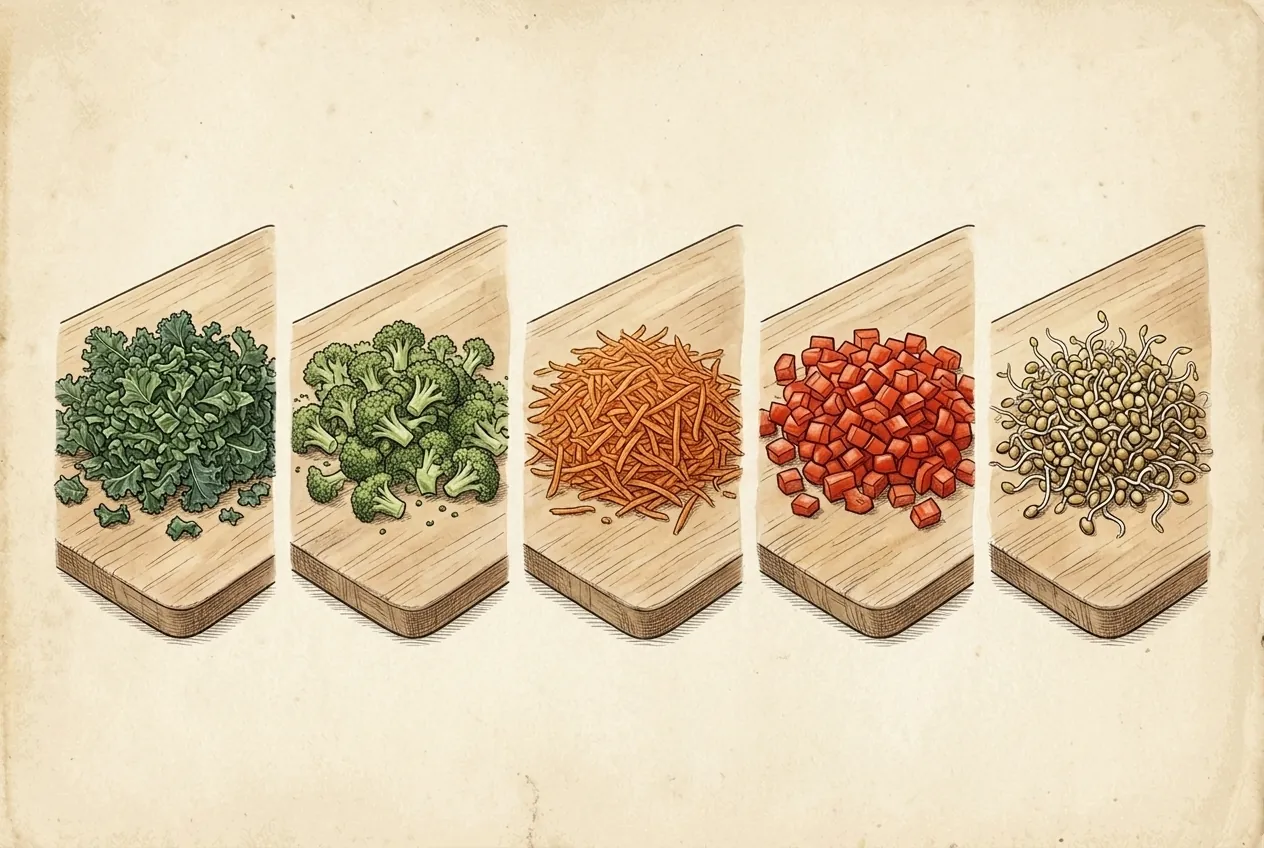
- Dark leafy greens
- Broccoli
- Carrot
- Bell pepper
- Sprouted seeds
- Dark leafy greens
- Kale and other dark greens.
- Broccoli
- Tiny florets.
- Carrot
- Shredded.
- Bell pepper
- Small dice.
- Sprouted seeds
- Great for finches and canaries too.
At a glance
Every day: vegetables
Finely chopped, raw, unseasoned, washed. Leftovers out after about two hours.
- Dark leafy greens like kale, plus broccoli, carrot and bell pepper.
- Sprouted seeds are a good fresh food for finches and canaries.
- Raw and plain. No salt, butter, seasoning or dressing.
- Wash it like you would for yourself.
- How much: for a cockatiel, Kaytee suggests a tablespoon or two a day. Smaller birds get less.
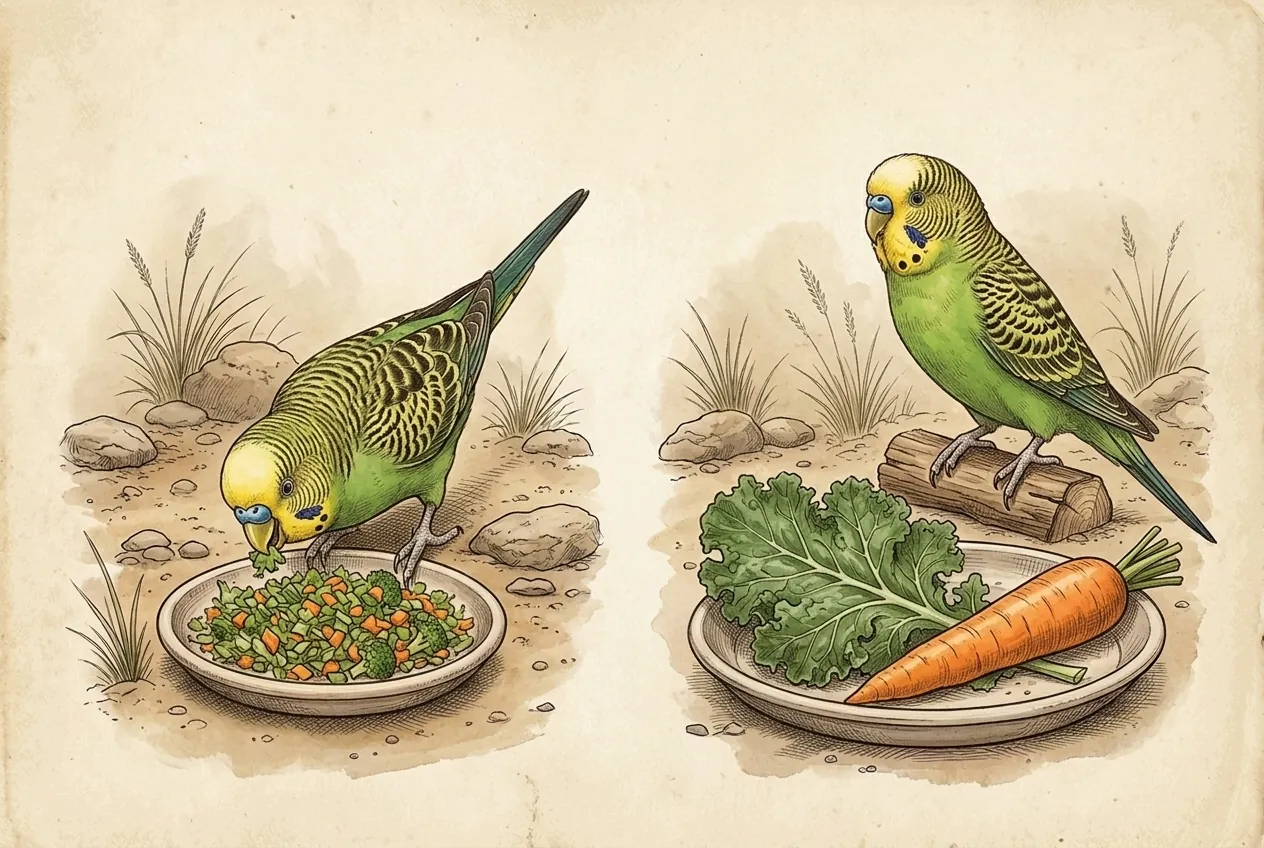
- Right
- Wrong
- Right
- Finely chopped, easy to pick up.
- Wrong
- Whole leaves and chunks get ignored.
Chop it fine. Small birds pick up small pieces. Whole leaves and big chunks tend to get ignored, and then they spoil.
Lafeber's budgie advice is to pick vegetables low in sugar, and keep peas, corn and fruit to a minimum.
Take leftovers out
Fresh food spoils. About two hours, then out.
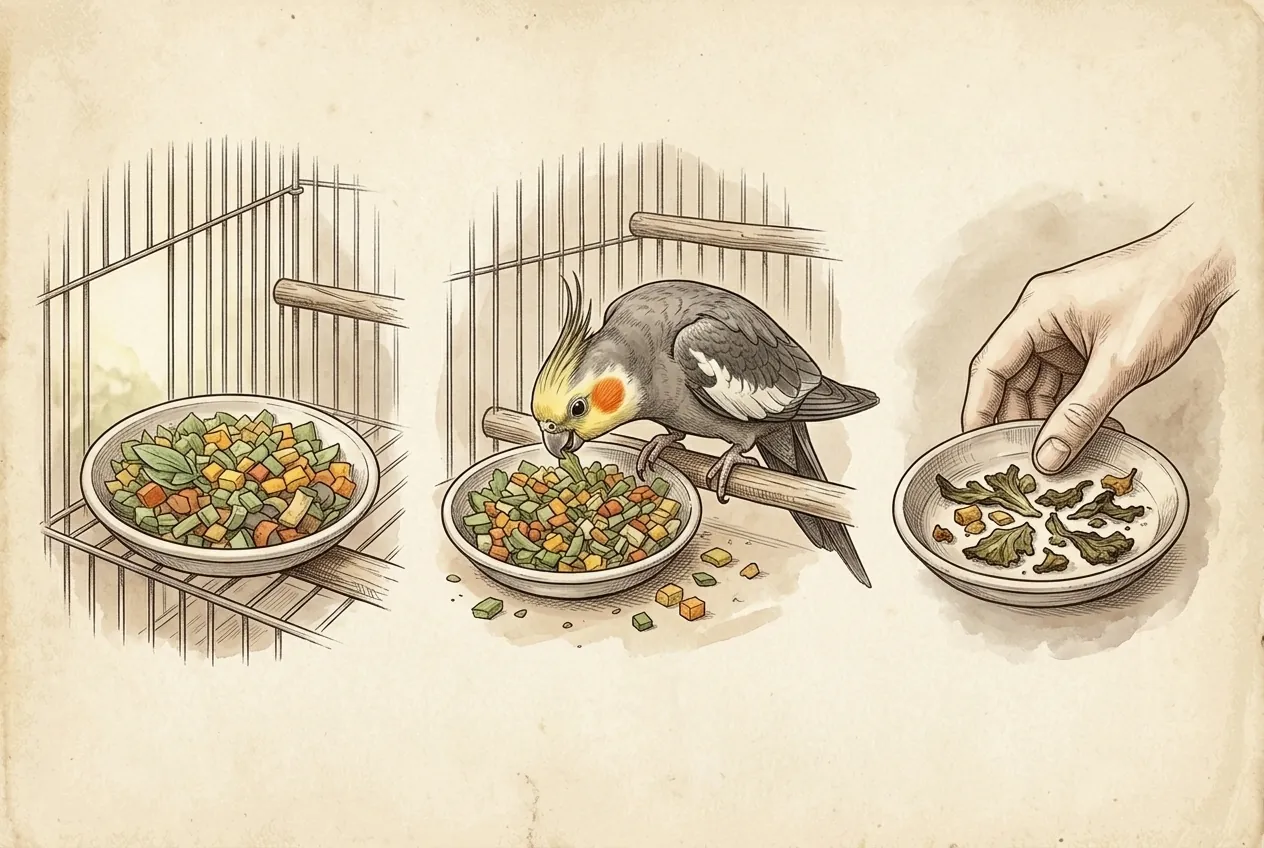
Put fresh food in its own dish, separate from pellets or seed, so wet food doesn't spoil them.
Let your bird eat. Many birds eat most in the morning.
Take leftovers out after about two hours, before they spoil. Kaytee gives the same timing for cockatiels.
Fresh in, eaten, out before it spoils.
Now and then: fruit and starchy vegetables
Small pieces, a few times a week. No seeds or pits.
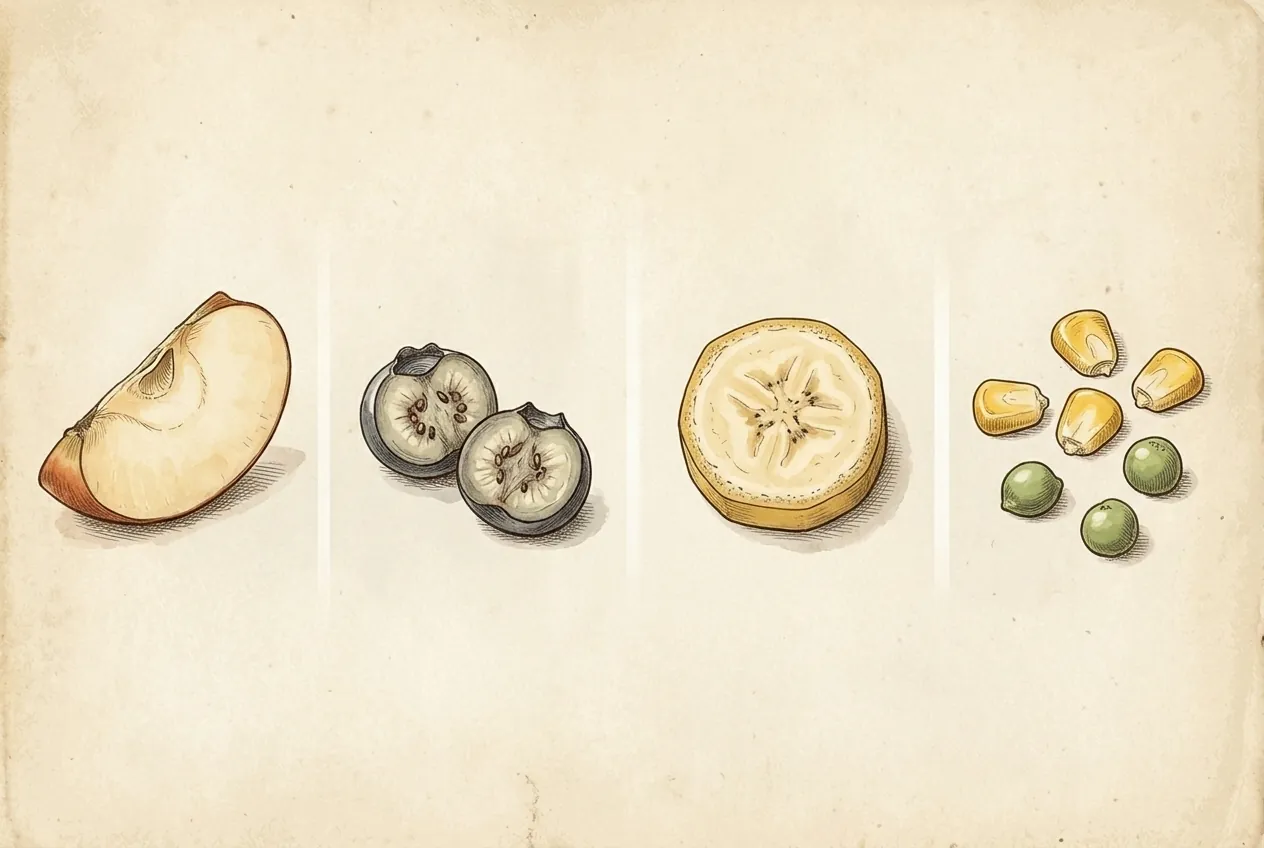
- Apple
- Berries
- Banana
- Corn and peas
- Apple
- Core and seeds removed.
- Berries
- A couple, cut up.
- Banana
- One thin slice.
- Corn and peas
- A few, not a scoop.
- Fruit is sweet. A small piece a few times a week is plenty.
- Take out seeds and pits first. Apple seeds and the pits of cherries, plums, apricots and peaches are never OK.
- Corn and peas are starchy. Lafeber keeps them to a minimum for budgies.
Never OK for any bird
Avocado is the big one. These foods stay off your bird's menu completely.
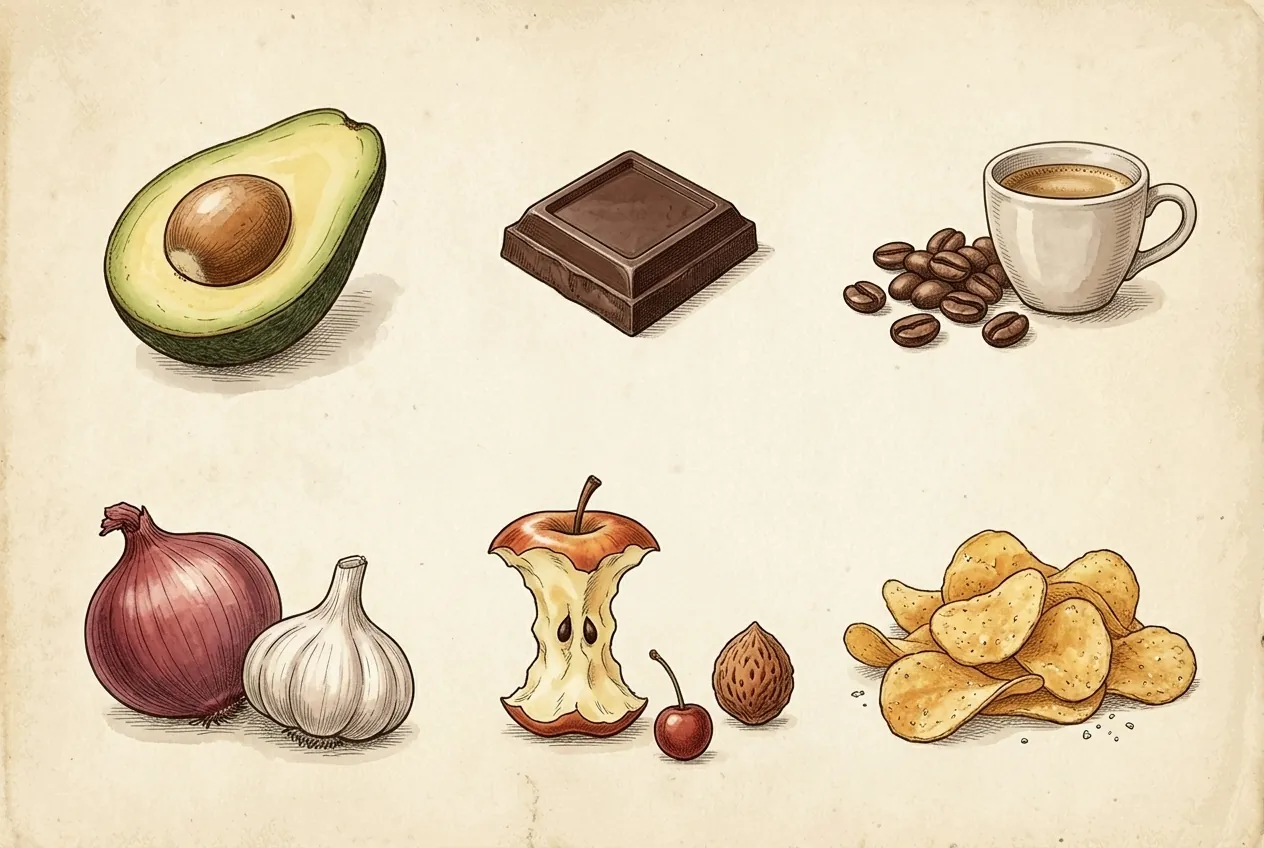
- Avocado
- Chocolate
- Coffee and caffeine
- Onion and garlic
- Apple seeds and fruit pits
- Salty snacks
- Avocado
- Every part of the plant.
- Chocolate
- Coffee and caffeine
- Onion and garlic
- Apple seeds and fruit pits
- Salty snacks
- Avocado, every part of the plant. Lafeber says it contains persin, which has been reported to be a heart toxin for birds.
- Chocolate and caffeine (coffee, tea, soda).
- Alcohol.
- Onion and garlic, especially powders and soup mixes.
- Apple seeds and fruit pits (cherry, plum, apricot, peach).
- Sugar-free candy and gum (xylitol).
- Dairy.
- Salty, sugary or fatty people food, like chips, crackers and sweets.
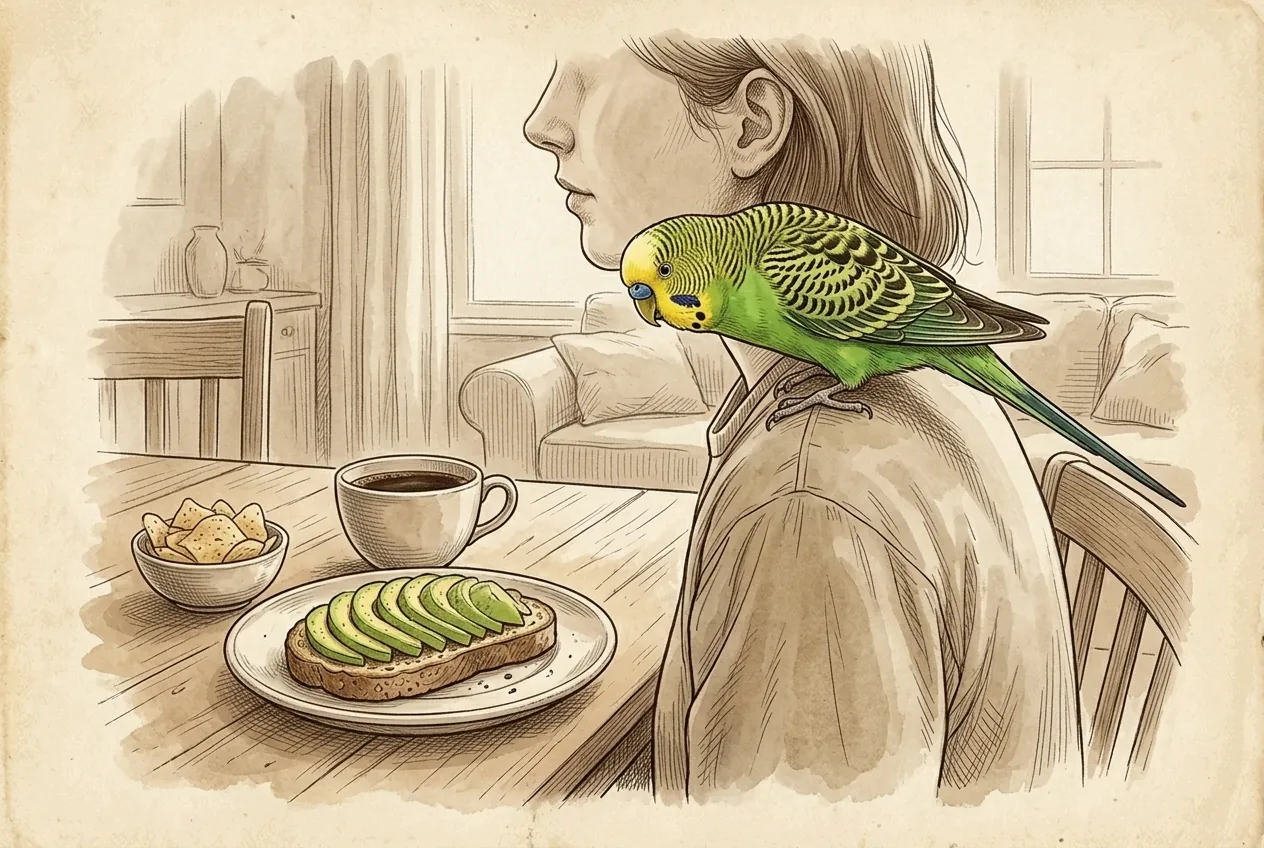
Mealtimes are the risky moment. A bird on your shoulder at the table can grab a bite before you notice. Keep your bird in its cage or on its perch while people eat, and keep its fresh food in its own dish.
Treats: how much
Treats are about 10% of the diet over the week, at most.
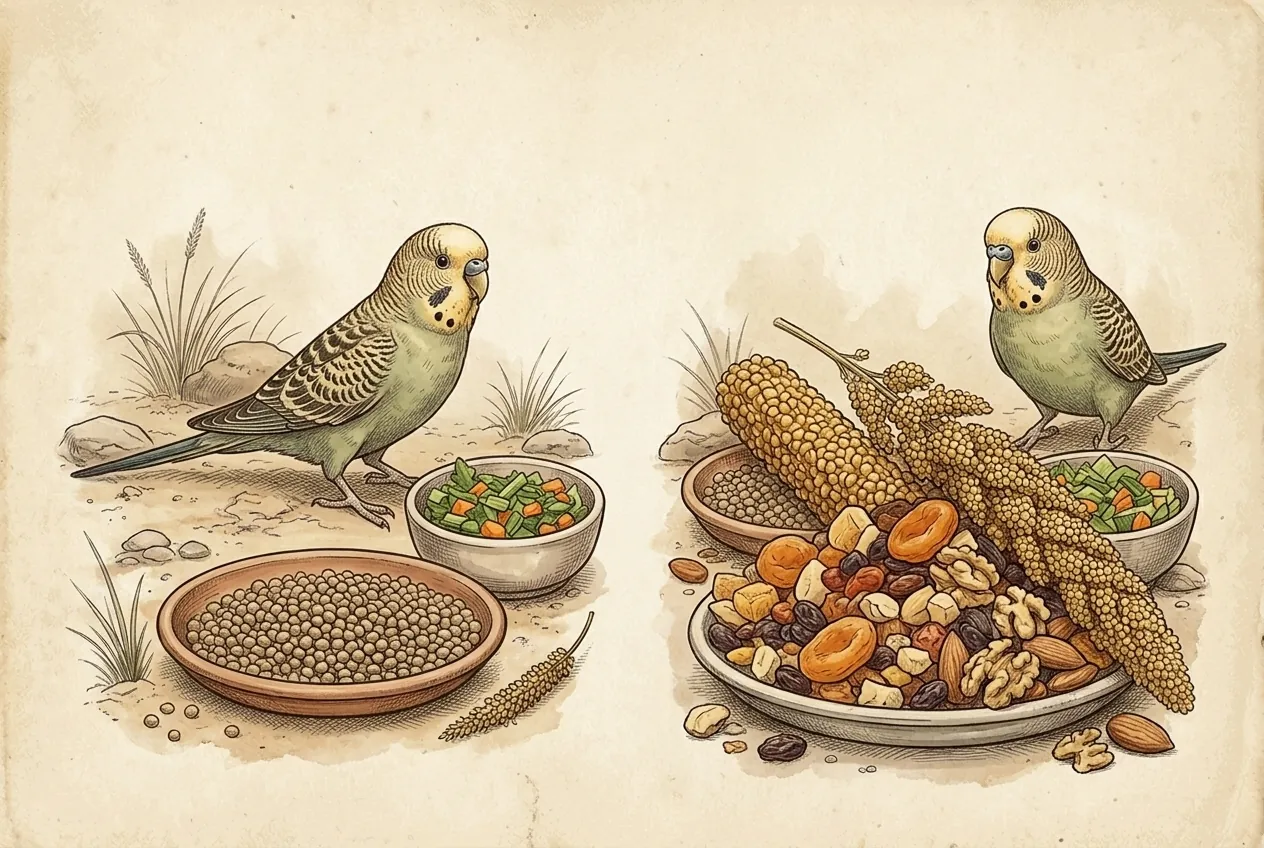
- Right
- Too much
- Right
- The real food, with one small treat.
- Too much
- Treats bury the food the bird actually needs.
- Lafeber's limit: snacks no more than 10% of the diet over the week. That's the strictest number makers print, so it's the one we use.
- Honey seed sticks: Kaytee says one stick per bird per week.
- Spray millet: a short piece as a reward, after the regular meal.
- Seed and nut treat mixes run high in fat and sugar compared with pellets. Read the bag before making one a daily food.
- A bird that's already heavy, or on a vet's diet: ask the vet before adding treats.
Treat limits the makers print
| Treat | Limit, per the maker's label |
|---|---|
| Lafeber (general advice) | Snacks no more than 10% of the diet during the week |
| Kaytee Honey Treat Sticks (parakeet) | 1 stick per bird per week |
| Higgins Sunburst Fruits & Veggies | Not to exceed 20% of daily food |
| Harrison's Power Treats | About 15-20% of the diet |
| ZuPreem Pure Fun | 30% of weekly nutrition |
Makers print anything from one honey stick a week to 30% of the week. We go with the strictest, Lafeber's 10%.
Make treats a game
A treat that takes work lasts longer and keeps a bird busy.
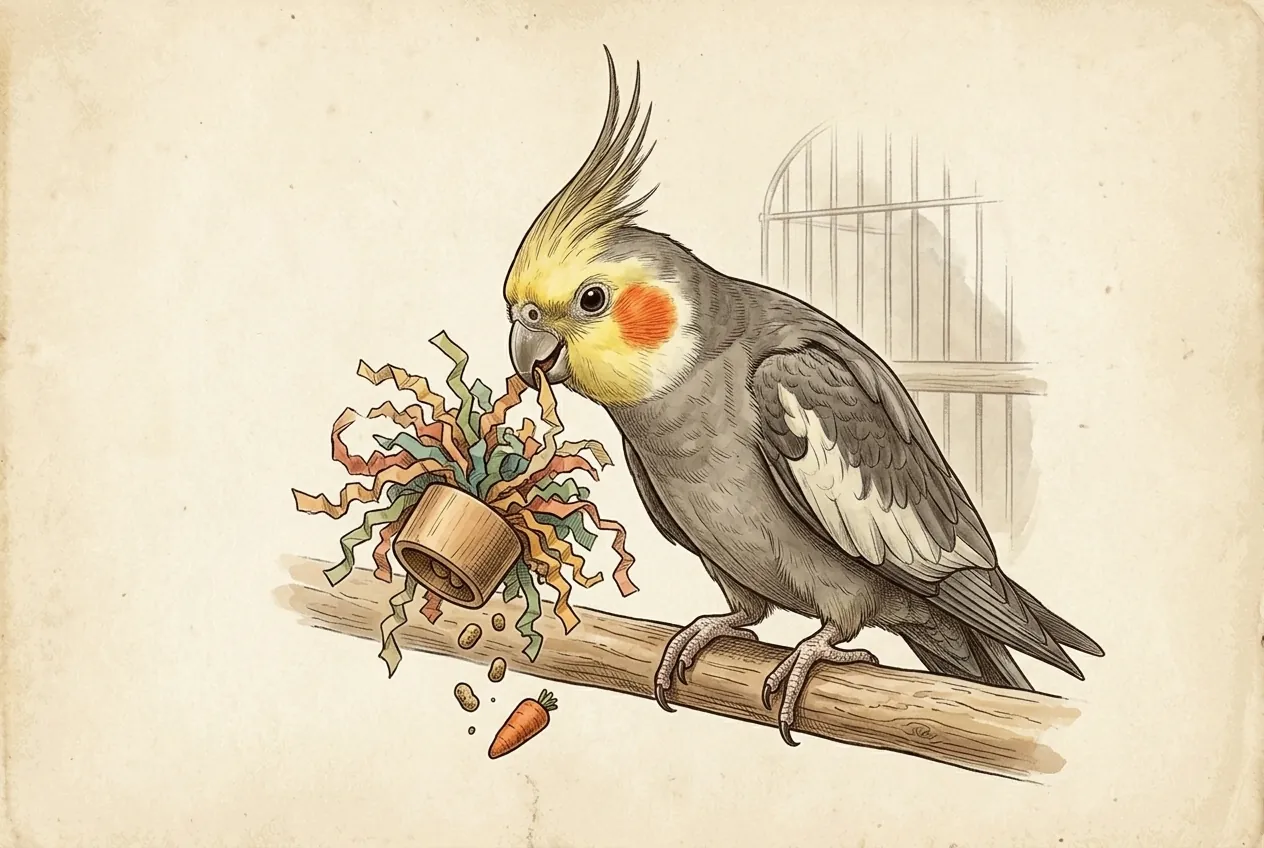
- Foraging toys: tuck a few pellets or a small piece of vegetable inside paper or a toy cup.
- Separate dish: treats in the main bowl get eaten first, and the real food gets left.
- Training rewards: a few seeds from your hand are perfect for teaching step-up.
Finches and canaries
Greens, sprouts and egg food. Fruit is a small extra.
- Fresh foods: finely chopped greens like kale and broccoli, and sprouted seeds.
- Egg food: finches and canaries enjoy it. Hagen names hard-boiled egg as a good treat. See our finch and canary food guide for how to make it.
- The never list is the same for every bird.
Quick answers
Can my bird eat avocado? No, never, not any part of it. Lafeber says avocado contains persin, a reported heart toxin for birds.
Is fruit OK every day? A small piece a few times a week is plenty. Vegetables are the everyday fresh food.
What vegetables are good? Dark leafy greens like kale, broccoli, carrot, bell pepper and sprouted seeds, raw, washed and finely chopped.
How long can fresh food stay in the cage? About two hours, then take it out before it spoils.
How many treats can my bird have? About 10% of the diet over the week, at most (Lafeber). One honey stick a week (Kaytee).
My bird only eats the treats. Offer treats after the main food, in a separate dish, and in smaller amounts.
Can my bird share my food? Plain, raw vegetables from the cutting board, yes. Food from your plate, no: salt, butter, seasoning, onion and garlic are common in people food.
Shop this
Pick up in store or have it shipped.
Reviewed by our team 2026-11-15. Nutrition figures are each maker's published guaranteed analysis.