
What to Feed a Ferret
Ferrets are meat-eaters. How to pick a high-protein ferret kibble, how much to feed, safe treats, water, and switching foods slowly.
Ferrets are obligate carnivores, like cats. Their bodies are built to run on meat: lots of animal protein and fat, very little fiber or sugar.
The easy way to feed one well is a ferret kibble, left out all day, plus fresh water. This guide covers picking the food, how much, treats, and switching foods.
 Healthy
At a glance
- Best staple High-protein, high-fat, low-fiber ferret kibble
- How often Free-feed, refill every day
- How much About 1/2 to 3/4 cup a day (Mazuri)
- Water Fresh daily, from a bottle or heavy bowl
- Avoid Fruit, vegetables, raisins, sweet treats, kitten food
- Switching Slowly: a week minimum, often several weeks
What ferrets eat
A ferret food built on animal protein. No fruit, no vegetables, no sweets.
- Animal protein first. Oxbow says a ferret can't properly digest fruits, vegetables or grains.
- Read the label. Animal protein should lead the ingredient list.
- A ferret food, not a "small animal" mix. Rabbit food and rodent mixes are not a ferret diet.
Picking a ferret food
Look for high protein, high fat and low fiber, with meat at the top of the list.
Protein
Oxbow's guidance is above 35-40%. Vet sources run a little lower: LafeberVet says 30-35%, the Merck Veterinary Manual says 35-40%.
Fat
Oxbow says 20% or more. LafeberVet says 15-20%.
Fiber
Oxbow says under 5%, with very little carbohydrate.
Compare ferret foods: protein, fat, fiber and taurine
| Food | Protein | Fat | Fiber | First ingredient | Also listed |
|---|---|---|---|---|---|
| Oxbow Essentials Ferret Food | 42% min | 20% min | 3% max | Chicken meal | Taurine 0.5% min, moisture 10% max |
| Mazuri Ferret Diet | 40% min | 20% min | 4% max | Chicken meal | Taurine 0.25% min, moisture 12% max |
| Marshall Premium Ferret Diet | not listed | not listed | not listed | not listed | not listed |
Figures are each maker's guaranteed analysis. We couldn't read a clear analysis for Marshall, so it shows "not listed".
How much and how often
Keep kibble out all the time. Refill it every day and watch your ferret's weight.
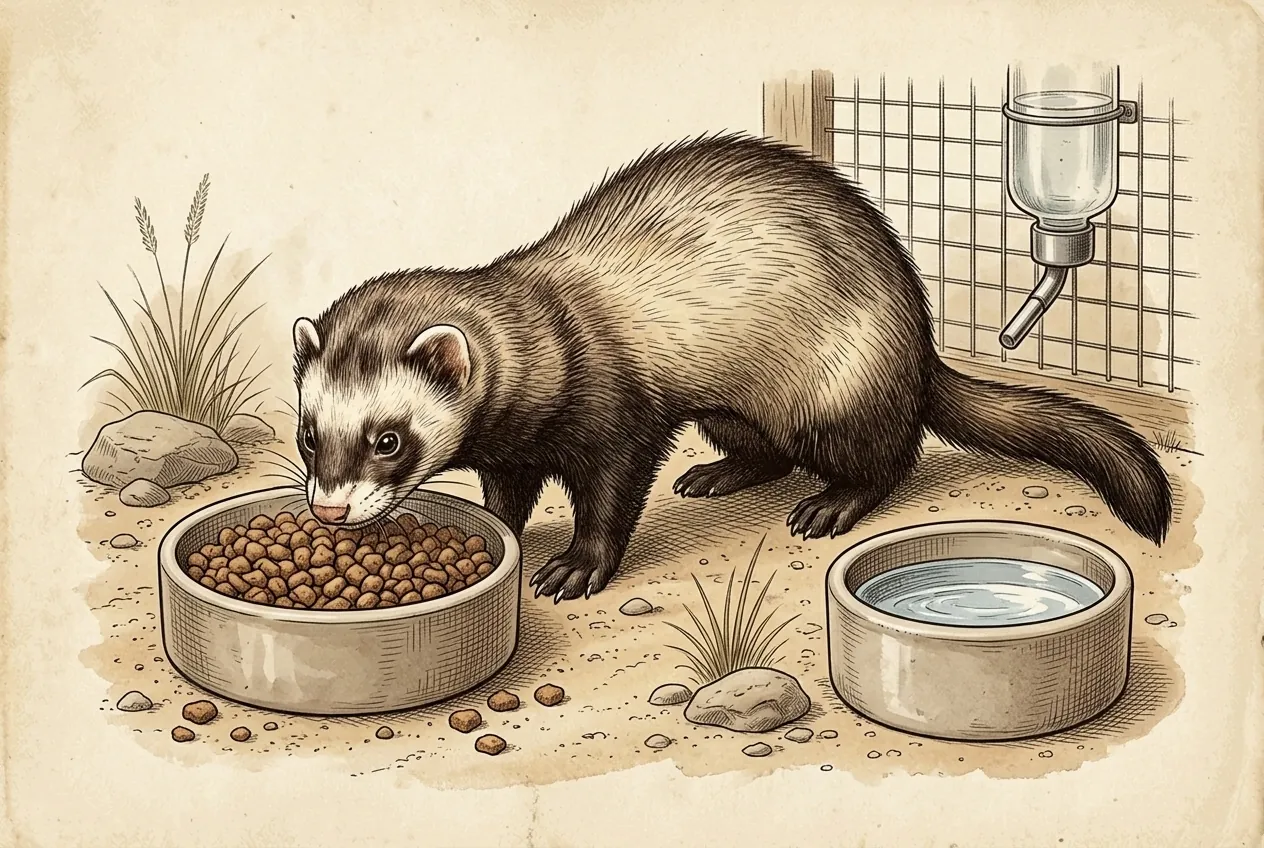
Ferrets eat lots of small meals. Marshall says food passes through a ferret's gut in about two hours, so the bowl should never sit empty.
- Free-feed. Both Oxbow and Mazuri say to feed free-choice.
- Refill daily. Oxbow says to top up with fresh food every day.
- About how much. Mazuri says an adult of 2-4 lb eats about 6% of its body weight a day. That's about 1/2 to 3/4 cup.
- Nursing or breeding females can eat up to 7%, per Mazuri.
A sample week
Ferret kibble
Fresh water
Recovery food
Feed Optional Rest day
Show as a table
| Food | How often |
|---|---|
| Ferret kibble | Unlimited, refilled every day |
| Fresh water | Unlimited, fresh every day |
| Recovery food | Only when your vet says |
Where food goes in the cage
Food and water on one level, the litter pan in a far bottom corner.
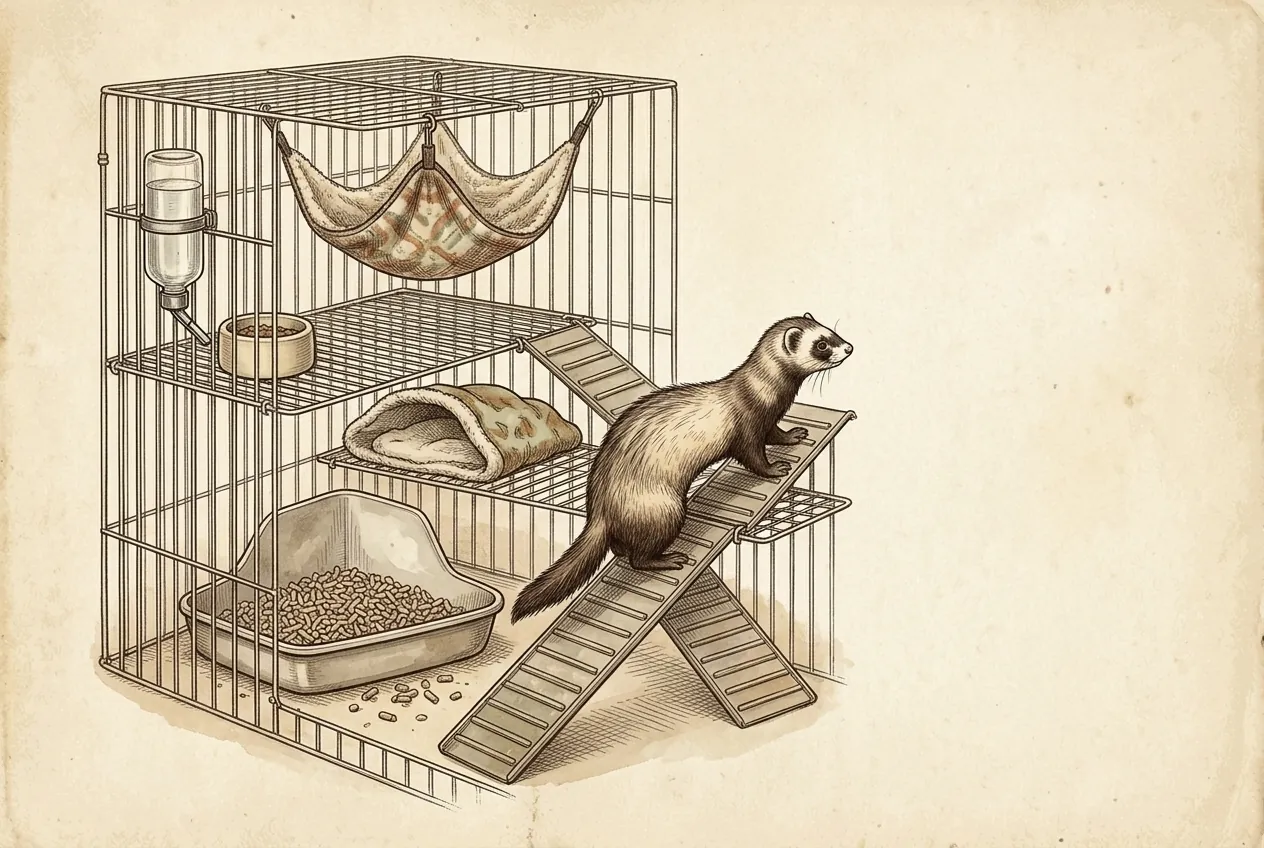
- Litter pan: a high-backed pan in a bottom corner. Ferrets back into corners to go. Use paper litter, never clumping clay.
- Food and water: in their own area, away from the litter pan.
- Hammock or sleep sack: a separate spot to sleep. Ferrets love to burrow and sleep tucked in.
- Litter pan: a high-backed pan in a bottom corner. Ferrets back into corners to go. Use paper litter, never clumping clay.
- Food and water: in their own area, away from the litter pan.
- Hammock or sleep sack: a separate spot to sleep. Ferrets love to burrow and sleep tucked in.
Our care sheet asks for a large, multi-level cage with separate sleeping, eating and litter areas.
Water and bowls
Fresh water always, from a bottle, a heavy bowl, or both.
- Mazuri says plenty of fresh, clean water.
- Oxbow suggests more than one water source, with no-chew or glass bottles.
- The Merck Veterinary Manual says bottles are often preferred, because ferrets play with bowls.
- Our care sheet says a heavy ceramic bowl or a large bottle. Ferrets love to dig in their water.
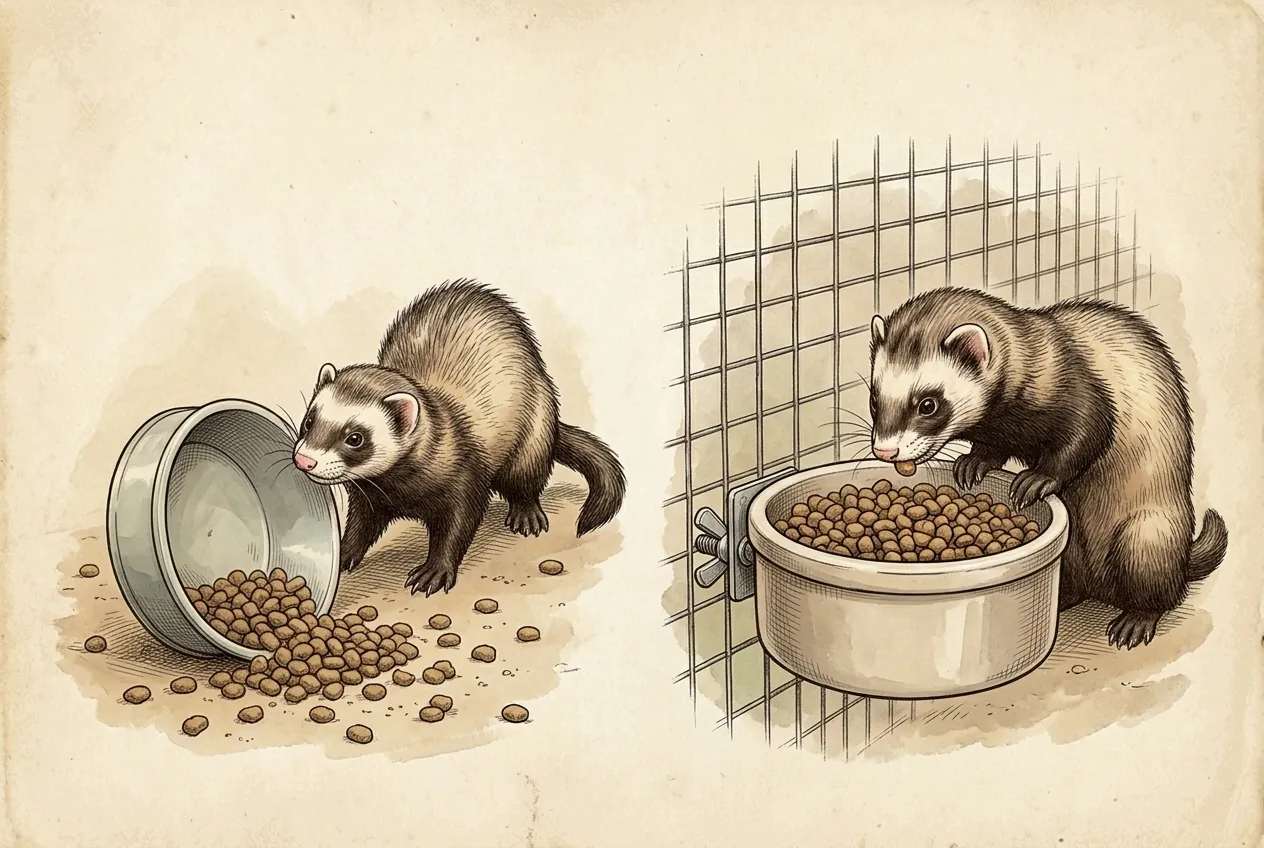
- Light bowl
- Heavy or clamped bowl
- Light bowl
- Flipped, and the food is on the floor.
- Heavy or clamped bowl
- Stays put, so food is always there.
Treats
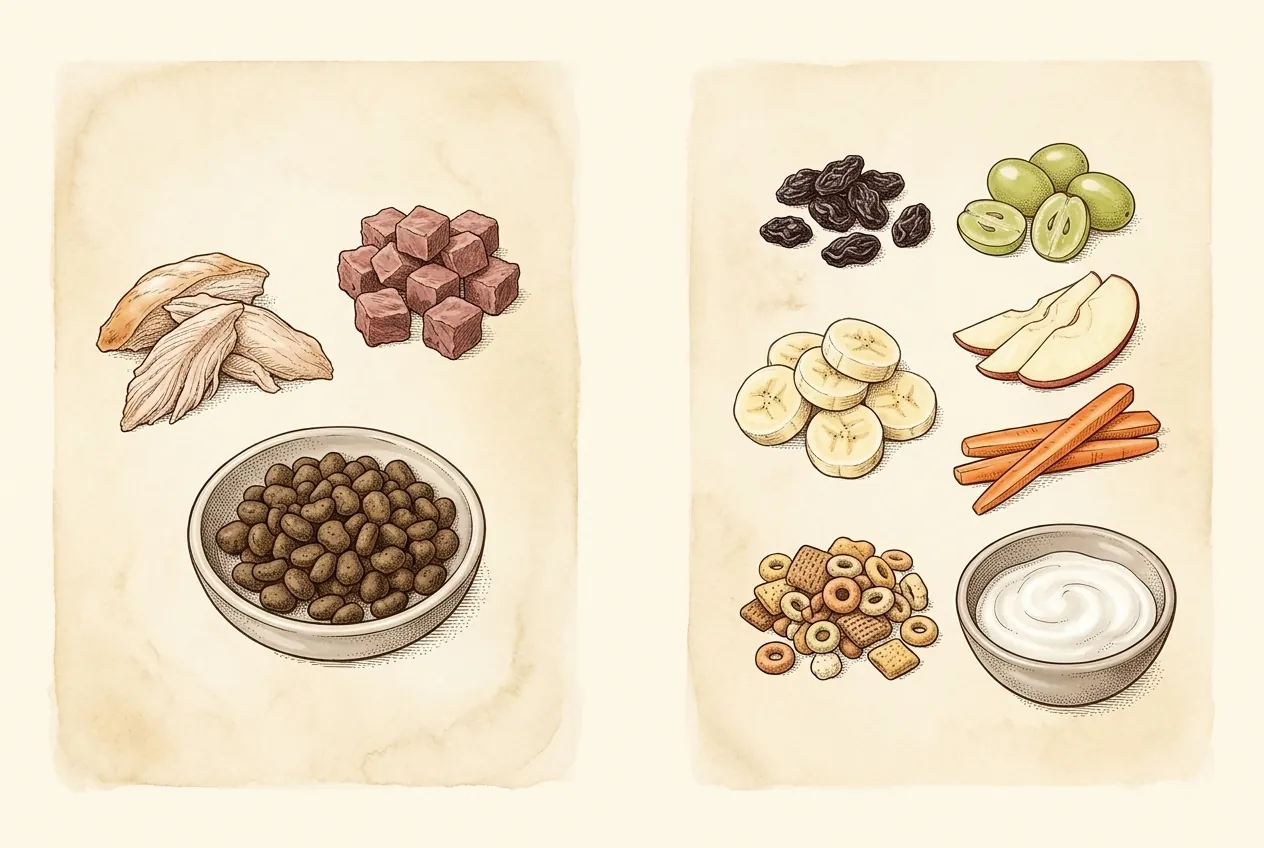
Treats should be meat. Skip fruit, vegetables, raisins and anything sweet.
- Good treats
- Skip
- Good treats
- Small bits of meat, meat treats made for ferrets, or their own kibble.
- Skip
- Raisins, fruit, vegetables and sweet foods.
Do
- offer small bits of meat or a meat-based treat made for ferrets.
- use a piece of their own kibble as a training treat.
Don't
- give fruit or vegetable treats. Oxbow says to avoid them.
- give raisins or sugary treats. Our care sheet calls sugary treats dangerous for ferrets.
If you run out of ferret food
Get ferret food as soon as you can. A meat-based adult cat food can bridge a day or two.
The makers are firm. Mazuri says swapping in dog or cat food can cause blockages, discomfort or disease. Marshall notes a ferret's gut is much shorter than a cat's.
Vet sources are a little softer. LafeberVet says a cat food built on animal protein can be used if no ferret food is available.
Do
- pick an adult cat food with meat at the top of the list.
Don't
- use kitten food. LafeberVet says its fat level is the problem.
- keep it up. Switch back to ferret food slowly (see below).
Switching foods
Go slowly. Seven days is the minimum, and some ferrets take weeks.
Ferrets get set on the foods they know. Oxbow calls this "nutritional imprinting". Mixing new into old over days helps your ferret accept it and keeps its stomach settled.
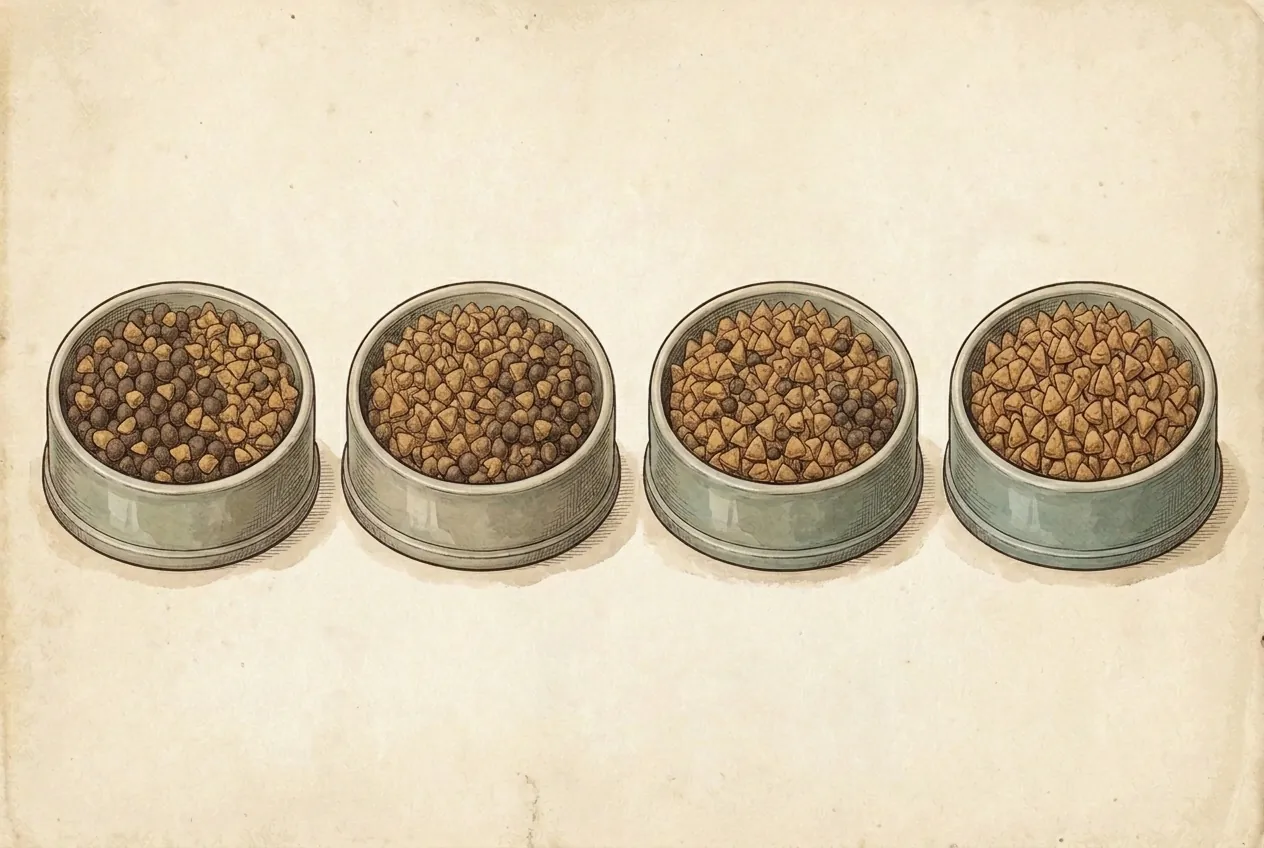
About 25% new, 75% old.
About 50% new, 50% old.
About 75% new, 25% old.
All new food.
Mix new into old, a little more each time.
Recovery food
Recovery food helps a sick ferret. It is not an everyday diet.
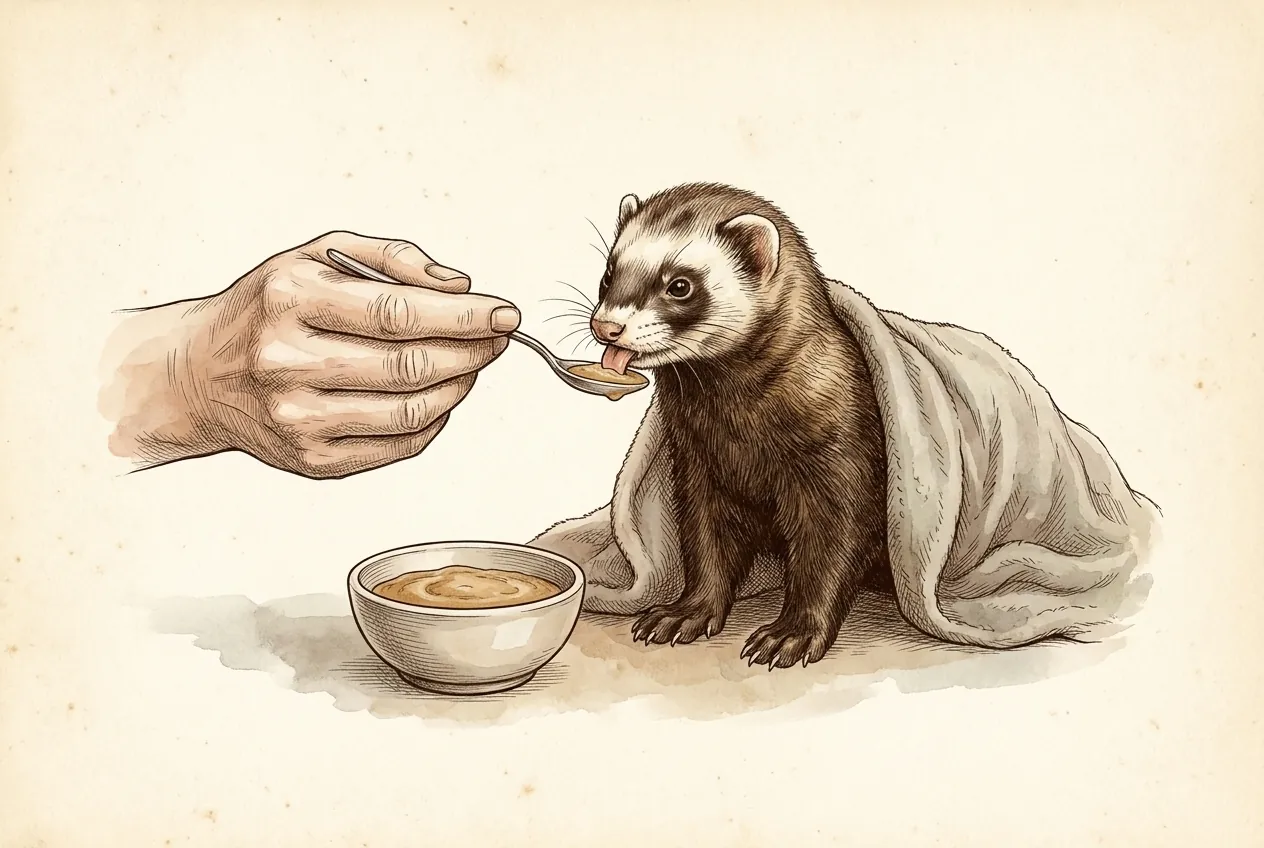
Oxbow makes Carnivore Care. Oxbow describes it as a recovery food for carnivores in poor condition after illness or surgery.
- Use it when your vet asks you to.
- Ask your vet how much and for how long.
- Go back to regular ferret kibble once your ferret is eating well again.
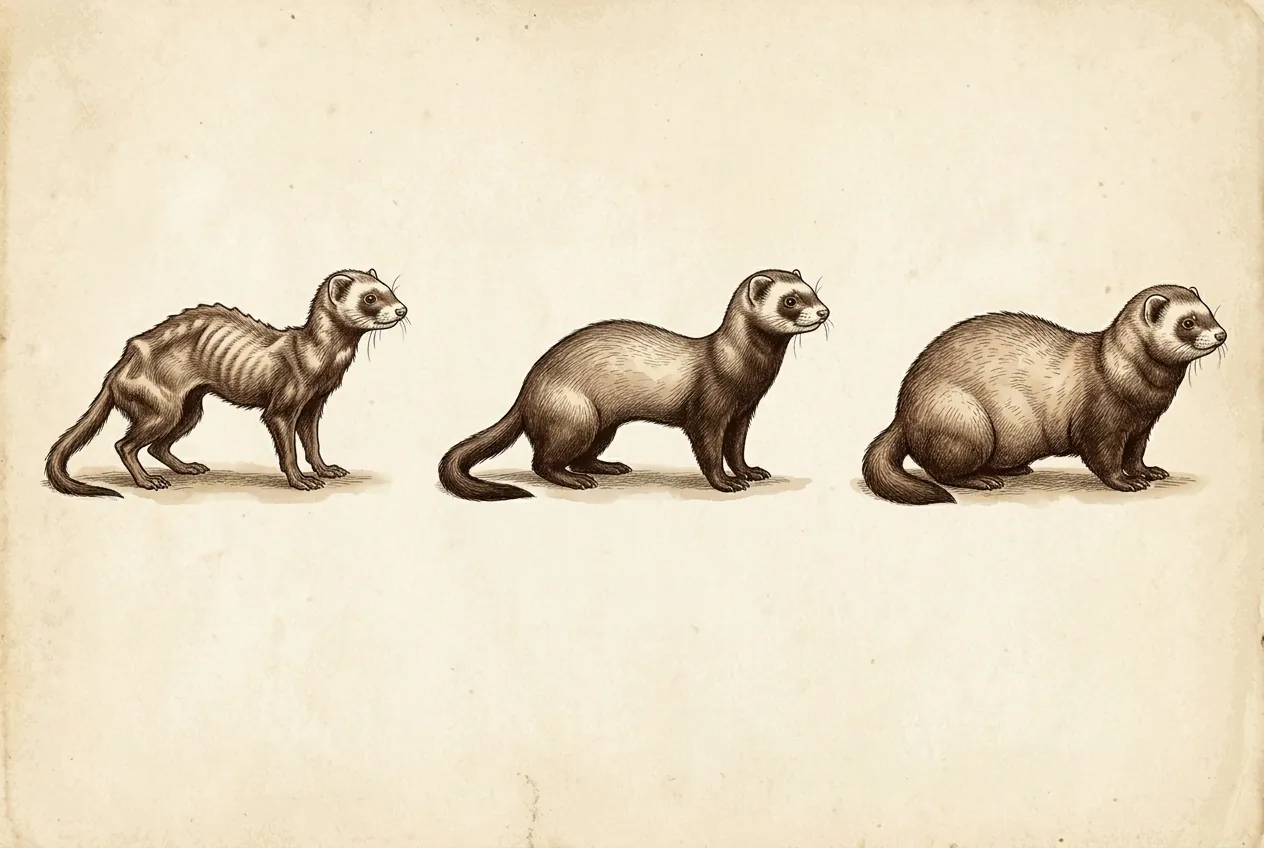
Checking your ferret's body
Watch your ferret's weight. That tells you more than the cup does.
Oxbow says to adjust the amount to keep an ideal body weight. A steady weight and a smooth body line are good signs.
- Underweight
- Healthy
- Overweight
- Underweight
- Hips and spine show.
- Healthy
- Smooth, even body line.
- Overweight
- Round, heavy belly.
Storing the food
Keep kibble cool, dry and sealed.
Where
Mazuri says 75°F or colder, somewhere dry.
How long
Mazuri says use it within a year of the date it was made. Check the date on your bag.
Quick answers
Can my ferret eat cat food? Not as a diet. Feed a ferret food. If you run out, LafeberVet says a meat-based adult cat food can bridge until you get more. Never kitten food.
How much should I feed? Keep kibble out all the time and refill it daily. Mazuri says an adult of 2-4 lb eats about 1/2 to 3/4 cup a day. Watch the weight, and the bag is the final word.
Can I give my ferret fruit or raisins? No. Oxbow says to avoid fruit and vegetable treats. Choose small meat treats instead.
How do I change foods? Slowly. Mix new into old over at least a week. Some ferrets take several weeks.
Bottle or bowl for water? Either, or both. Use a heavy bowl your ferret can't tip, or a bottle, and keep it fresh every day.
Is recovery food a good everyday food? No. It's for a ferret recovering from illness or surgery. Use it with your vet's guidance, then go back to kibble.
Shop this
Pick up in store or have it shipped.
Reviewed by our team 2026-11-06. Nutrition figures are each maker's published guaranteed analysis.