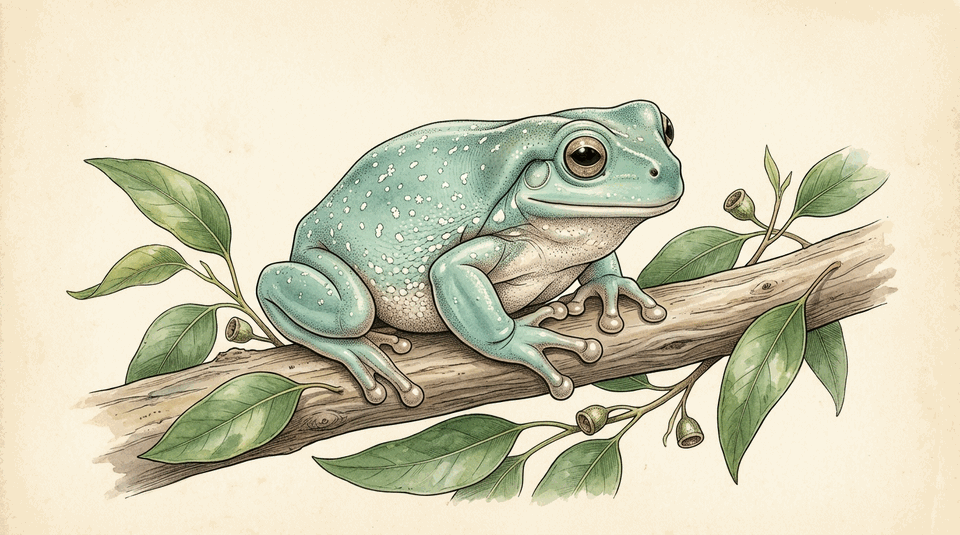
African Dwarf Frog
Hymenochirus spp.
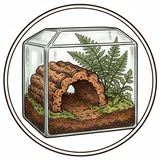
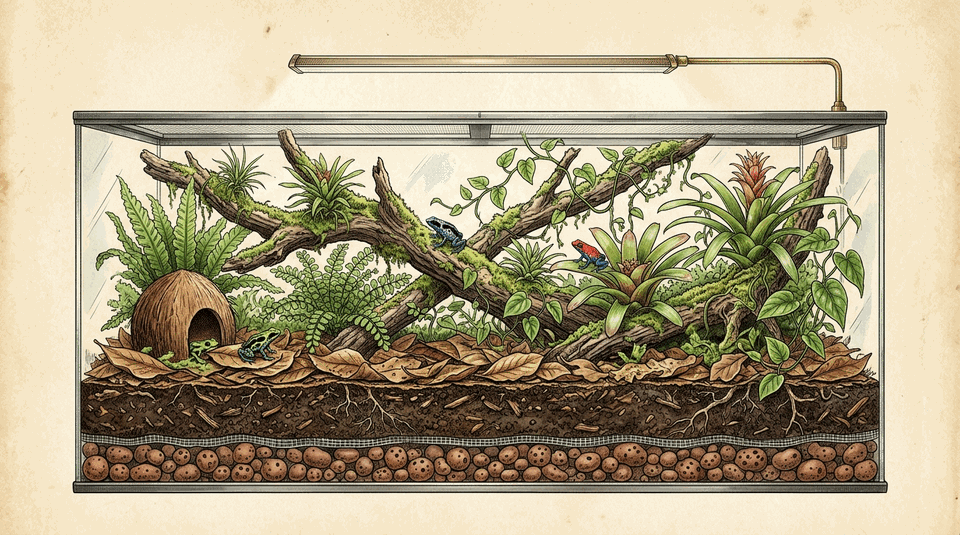
1. Habitat Layout & Temperature Gradient
Species: Hymenochirus spp. | Difficulty: 2/5 — Easy | Hardiness: 3/5 — Moderate
Critter Cabana & Gresham Pet Supply — Keeping Your Pet Healthy & Thriving
At a Glance

| Common Name | African Dwarf Frog (ADF) |
| Species | Hymenochirus spp. |
| Origin | Equatorial Africa (Congo, Nigeria, Cameroon) |
| Adult Size | 1 to 1.5 inches (Very small!) |
| Lifespan | 5+ years |
| Diet Type | Carnivore (Sinking pellets, bloodworms) |
| Activity | Diurnal and Nocturnal |
| Temperament | Peaceful, slow-moving, and very social. |
| Handleability | Do Not Handle. They are fully aquatic and will die if kept out of water. Their skin is highly sensitive to the oils and soaps on human hands. |
| Difficulty | 2/5 — Easy (Requires basic aquarium cycling knowledge) |
| Hardiness | 3/5 — Moderate (Sensitive to poor water quality) |
Why We Love Them: These tiny, fully aquatic frogs are incredibly entertaining to watch as they clumsily paddle around the bottom of a fish tank. They are highly social and love to pile on top of each other in a corner to sleep. They occasionally dart to the surface, take a massive gulp of air, and dive back down to the bottom.
The African Clawed Frog Warning
CRITICAL IDENTIFICATION: African Dwarf Frogs are frequently confused with African Clawed Frogs (Xenopus laevis). The Clawed Frog grows to the size of a grapefruit and will eat every fish in your tank.
- Dwarf Frogs have webbing between their front fingers.
- Clawed Frogs do NOT have webbing on their front fingers, and their eyes sit on the very top of their head.
Housing & Aquarium
Tank Size & Setup
- Type: Fully Aquatic Aquarium. They cannot live in terrestrial terrariums.
- Minimum Size: A 10-gallon aquarium is the minimum for a pair or small group (3-4 frogs). While they can survive in a 5-gallon, the water parameters in such a small volume are difficult to keep stable.
- Lid (CRITICAL): They are excellent jumpers. Your aquarium must have a tight-fitting, secure lid, or you will find dried-up frogs on your floor.
- Air Space: They do not have gills; they have lungs and must swim to the surface to breathe air. Leave a 1-inch gap between the water line and the lid.
Substrate
- Recommended: Bare-bottom, large river stones, or fine sand.
- Avoid: Standard aquarium gravel. Frogs are clumsy eaters and frequently swallow gravel by accident when lunging at food, which causes fatal impaction.
Décor & Enrichment
- Hiding Spots: They are prey animals and need to hide to feel safe. Provide terra cotta pots, smooth caves, or dense aquatic plants (Java Fern and Anubias are great).
Water Parameters & Filtration
Amphibians absorb everything through their skin. Water quality is the most important aspect of their care.
| Parameter | Target |
|---|---|
| Temperature | 72–78°F (Requires an aquarium heater) |
| pH | 6.5–7.5 |
| Ammonia/Nitrite | 0 ppm (Strictly) |
| Nitrates | < 20 ppm |
- Dechlorinator (Mandatory): Tap water contains chlorine/chloramines that will burn and kill your frogs. Every drop of water added to the tank must be treated with a water conditioner (like Seachem Prime or API Stress Coat).
- Filtration: They are weak swimmers and get stressed by strong currents. A sponge filter driven by an air pump is the absolute best choice for them.
Diet & Nutrition
African Dwarf Frogs are carnivores with terrible eyesight. They hunt entirely by smell and vibrations. Because they are slow, clumsy eaters, keeping them with fast fish (like tetras or guppies) usually means the frogs starve to death because the fish steal all the food.
What to Feed
- Staples: Sinking frog pellets (like Zoo Med Aquatic Frog & Tadpole Food) and frozen (thawed) bloodworms or brine shrimp.
- Avoid: Freeze-dried foods (they cause severe bloating and constipation).
Feeding Schedule
- Adults: Feed every other day.
- Target Feeding: The best way to ensure they eat is to use a turkey baster or long tweezers to drop the food directly in front of their faces.
Tank Mates
They are best kept in a species-only tank (just frogs). If you must keep them in a community tank, only pair them with small, peaceful, top-dwelling fish (like small rasboras or a single betta fish, depending on the betta's temperament). Never keep them with large fish, cichlids, or aggressive fin-nippers.
What We Stock & Use in Our Stores
These are products we carry and recommend for this species. Ask any associate for help finding them in-store.
| Category | Product | Notes |
|---|---|---|
| Water Care | Seachem Prime | The best water conditioner for removing toxic chlorine |
| Filtration | Aquarium Co-Op Sponge Filter | Provides gentle filtration without blowing the frogs around |
| Diet | Zoo Med Aquatic Frog & Tadpole Pellets | Sinking pellets formulated for their nutritional needs |
| Diet | Omega One Frozen Bloodworms | An excellent staple diet (thaw before feeding) |
Care sheet compiled by Critter Cabana & Gresham Pet Supply. For questions, ask any livestock specialist in-store.
Last updated: 2026-08-04
How We Keep Them at Critter Cabana & Gresham Pet Supply
- Oregon Tap Water Tip (Soft Water Advantage + pH Stability): Municipal tap water across the Willamette Valley and Portland Metro (Bull Run and Willamette River sources) comes out of the tap naturally ultra-soft (
0–1 dGHand0–1 dKH). While African Dwarf Frog love soft water,0 dKHmeans there is almost zero carbonate buffer to stop your pH from crashing once biological filtration kicks in. In our store systems at Critter Cabana (Newberg) and Gresham Pet Supply, we condition with Seachem Prime and add a light dose of mineral/KH buffer or botanicals so the pH stays rock-steady instead of swinging between water changes. - Free In-Store Water Testing & Cycling Help: Bring a small cup or vial of your tank water into Critter Cabana (Newberg) or Gresham Pet Supply and our aquatic crew will test your ammonia, nitrite, nitrate, pH, and KH/GH for free before you add fish.
- 30-Day Rewards Fish Guarantee & Schooling Discounts: Rewards members get a 30-day live fish guarantee (with a water sample and receipt), plus automatic quantity discounts up to 70% off when you buy larger schools of community fish, tetras, corydoras, or shrimp at Critter Cabana and Gresham Pet Supply.
Common Questions (FAQ)
Is Oregon tap water safe for African Dwarf Frog?
Willamette Valley and Portland Metro tap water is very clean once treated with a dechlorinator like Seachem Prime, but it comes out of the tap ultra-soft (0–1 dGH and 0–1 dKH). Because African Dwarf Frog do best at Fully Aquatic, we recommend bringing a water sample into Critter Cabana (Newberg) or Gresham Pet Supply for a free KH/GH and pH check so your tank doesn't experience a pH crash.
What size tank does a African Dwarf Frog actually need?
Plan on a minimum of 10-Gallon Aquarium with a fully cycled biological filter and stable temperature (72-78°F (Water Temperature)). Larger water volume keeps water chemistry much more forgiving, especially in Oregon's low-KH tap water.
What do you feed African Dwarf Frog at Critter Cabana and Gresham Pet Supply?
In our fish rooms we feed a varied carnivore rotation—combining high-quality sinking or slow-sinking pellets/flakes (such as Hikari, Fluval Bug Bites, or New Life Spectrum) with frozen daphnia, bloodworms, or brine shrimp so every fish colors up and stays active.
Where can I buy healthy African Dwarf Frog in the Portland or Willamette Valley area?
Our full live fish and aquatic rooms—along with aquarium filters, heaters, live plants, and water conditioners—are located at Critter Cabana in Newberg (503-537-2887) and Gresham Pet Supply (503-665-7606).