
Axolotl
Ambystoma mexicanum
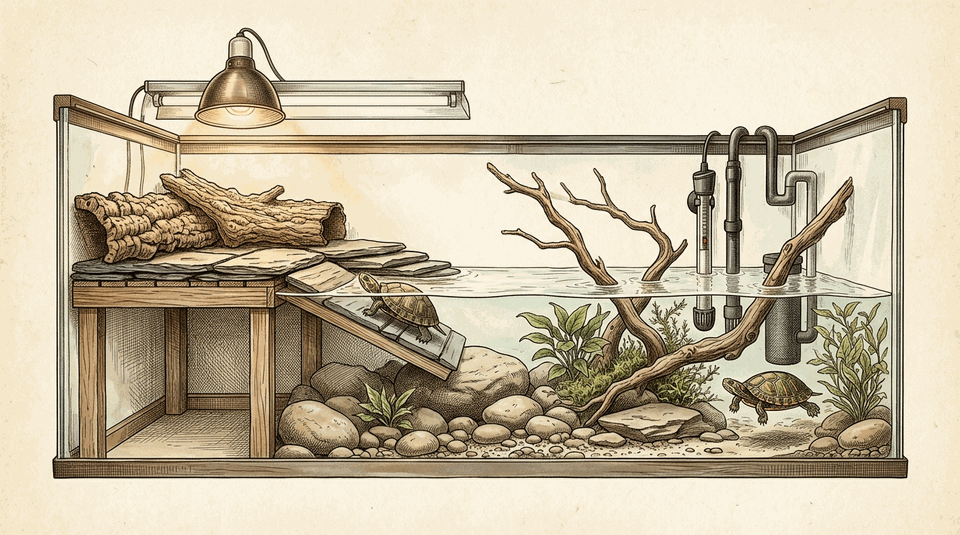
1. Habitat Layout & Temperature Gradient
Species: Ambystoma mexicanum | Difficulty: 3/5 — Intermediate | Hardiness: 3/5 — Moderate

Critter Cabana & Gresham Pet Supply — Keeping Your Pet Healthy & Thriving
At a Glance

| Common Name | Axolotl, Mexican Walking Fish |
| Species | Ambystoma mexicanum |
| Origin | Lake Xochimilco, Mexico (Critically endangered in the wild) |
| Adult Size | 9 to 11 inches |
| Lifespan | 10 to 15 years |
| Diet Type | Carnivore (Earthworms, specialized sinking pellets) |
| Activity | Diurnal/Crepuscular (Bottom-dwellers that "walk" along the tank floor) |
| Temperament | Peaceful, slow-moving, and highly engaging. They will often beg for food at the glass. |
| Handleability | None. They are fully aquatic and possess an incredibly delicate slime coat. Never use a net to move them (it damages their gills); use a plastic tub to scoop them if necessary. |
| Difficulty | 3/5 — Intermediate (Strict temperature and water quality requirements) |
| Hardiness | 3/5 — Moderate (Highly sensitive to warm water and ammonia) |
Why We Love Them: Axolotls exhibit "neoteny," meaning they never undergo metamorphosis into a terrestrial salamander. They keep their gills and remain fully aquatic their entire lives. With their feathery external gills and permanent smiles, they are one of the most unique and beloved aquatic pets in the world.

Temperature Warning (CRITICAL)
THEY MUST BE COLD: Axolotls come from glacial-melt lakes in Mexico. Their ideal temperature is 60°F to 65°F (15-18°C). Temperatures above 74°F are dangerous and will cause extreme stress, fungal infections, and death. Unless your house is kept at 65°F year-round, you will likely need to purchase an aquarium water chiller (which is a significant financial investment).
Substrate & Impaction (CRITICAL)
NO GRAVEL EVER: Axolotls are "suction feeders." When they eat, they rapidly inhale everything in front of their mouth. If they are kept on standard aquarium gravel or small pebbles, they will inhale the rocks. This causes fatal intestinal impaction.
The only safe substrates are: A bare-bottom glass tank, large slate tiles, or very fine, powdery aquarium sand (only for adults over 5 inches long).
Housing & Enclosure
Aquarium Setup
- Type: Fully Aquatic.
- Size: A 20-gallon "long" tank is the absolute minimum for one adult. A 29-gallon or 40-gallon breeder is highly recommended. They need floor space, not height.
- The Nitrogen Cycle: You CANNOT put an axolotl into a brand-new tank. The tank must be fully "cycled" for 4 to 6 weeks using liquid ammonia before the animal arrives to establish beneficial bacteria. (Ammonia and Nitrites must test at 0 ppm).
Filtration & Water Flow
- Axolotls have a massive bioload (they produce a lot of waste). You need heavy filtration (like a canister filter or a large sponge filter).
- Low Flow: They hate strong water currents. If using a canister or hang-on-back filter, you must baffle the output using a spray bar or a sponge so it doesn't blow the axolotl around the tank.
Diet & Feeding

- Staple Diet: Live Earthworms (Nightcrawlers or Red Wigglers) are the absolute best diet. You can also feed high-quality sinking Axolotl pellets (like Hikari Sinking Carnivore Pellets).
- Treats: Frozen bloodworms (messy, best for juveniles) or occasionally live ghost shrimp (quarantined first).
- Schedule:
- Juveniles (under 5 inches): Feed 1-2 times daily.
- Adults: Feed 1 large earthworm every 2-3 days.
- Use long feeding tongs to drop the food directly in front of their face.
What We Stock & Use in Our Stores
| Category | Product | Notes |
|---|---|---|
| Housing | Aqueon 40-Gallon Breeder Tank | The gold-standard footprint for a happy adult |
| Filtration | Fluval 307 Canister Filter | Essential for handling their heavy bioload |
| Substrate | CaribSea Super Naturals Aquarium Sand | Safe, ultra-fine sand for adults |
| Water | Seachem Prime & API Freshwater Master Kit | Essential for water conditioning and testing |
Care sheet compiled by Critter Cabana & Gresham Pet Supply.
Last updated: 2026-08-04
How We Keep Them at Critter Cabana & Gresham Pet Supply
- Oregon Tap Water Warning (Ultra-Soft Bull Run & Willamette Valley Water): Municipal tap water across the Portland Metro and Willamette Valley comes out of the tap extremely soft (
0–1 dGHand0–1 dKH). Because Axolotl need dissolved calcium, magnesium, and carbonate buffer (Fully Aquatic) for healthy osmoregulation, shells, or molting, straight Oregon tap water will cause pH crashes and mineral deficiency. In our fish rooms at Critter Cabana (Newberg) and Gresham Pet Supply, we buffer and remineralize soft tap water using Seachem Equilibrium, Seachem Alkaline/Acid Buffer, or a mesh bag of crushed coral in the filter. - Free In-Store Water Testing & Cycling Help: Bring a small cup or vial of your tank water into Critter Cabana (Newberg) or Gresham Pet Supply and our aquatic crew will test your ammonia, nitrite, nitrate, pH, and KH/GH for free before you add fish.
- 30-Day Rewards Fish Guarantee & Schooling Discounts: Rewards members get a 30-day live fish guarantee (with a water sample and receipt), plus automatic quantity discounts up to 70% off when you buy larger schools of community fish, tetras, corydoras, or shrimp at Critter Cabana and Gresham Pet Supply.
Common Questions (FAQ)
Is Oregon tap water safe for Axolotl?
Willamette Valley and Portland Metro tap water is very clean once treated with a dechlorinator like Seachem Prime, but it comes out of the tap ultra-soft (0–1 dGH and 0–1 dKH). Because Axolotl do best at Fully Aquatic, we recommend bringing a water sample into Critter Cabana (Newberg) or Gresham Pet Supply for a free KH/GH and pH check so your tank doesn't experience a pH crash.
What size tank does a Axolotl actually need?
Plan on a minimum of 20-Long to 40-Gallon Breeder with a fully cycled biological filter and stable temperature (60-65°F (CHILLER REQUIRED)). Larger water volume keeps water chemistry much more forgiving, especially in Oregon's low-KH tap water.
What do you feed Axolotl at Critter Cabana and Gresham Pet Supply?
In our fish rooms we feed a varied carnivore rotation—combining high-quality sinking or slow-sinking pellets/flakes (such as Hikari, Fluval Bug Bites, or New Life Spectrum) with frozen daphnia, bloodworms, or brine shrimp so every fish colors up and stays active.
Where can I buy healthy Axolotl in the Portland or Willamette Valley area?
Our full live fish and aquatic rooms—along with aquarium filters, heaters, live plants, and water conditioners—are located at Critter Cabana in Newberg (503-537-2887) and Gresham Pet Supply (503-665-7606).