Arid & Desert Bioactive Plants (Succulents & Snake Plants)
Dwarf Sansevieria (Snake Plants) • Ponytail Palm • Spineless Haworthia & Gasteria • Jade, Sedum & Sempervivum
1. Arid Bioactive Blueprint & 'Dry Top / Damp Pocket'
2. Two Great Ways to Set Up Your Habitat
Rule #1: Why Spineless Succulents Beat Cacti in Reptile Tanks
Inside an enclosure, cactus spines and microscopic glochids pierce reptile eyes, tongues, and bellies:
100% Reptile-Safe Spineless Champions (Sansevieria, Ponytail Palm, Haworthia, Gasteria, Jade)
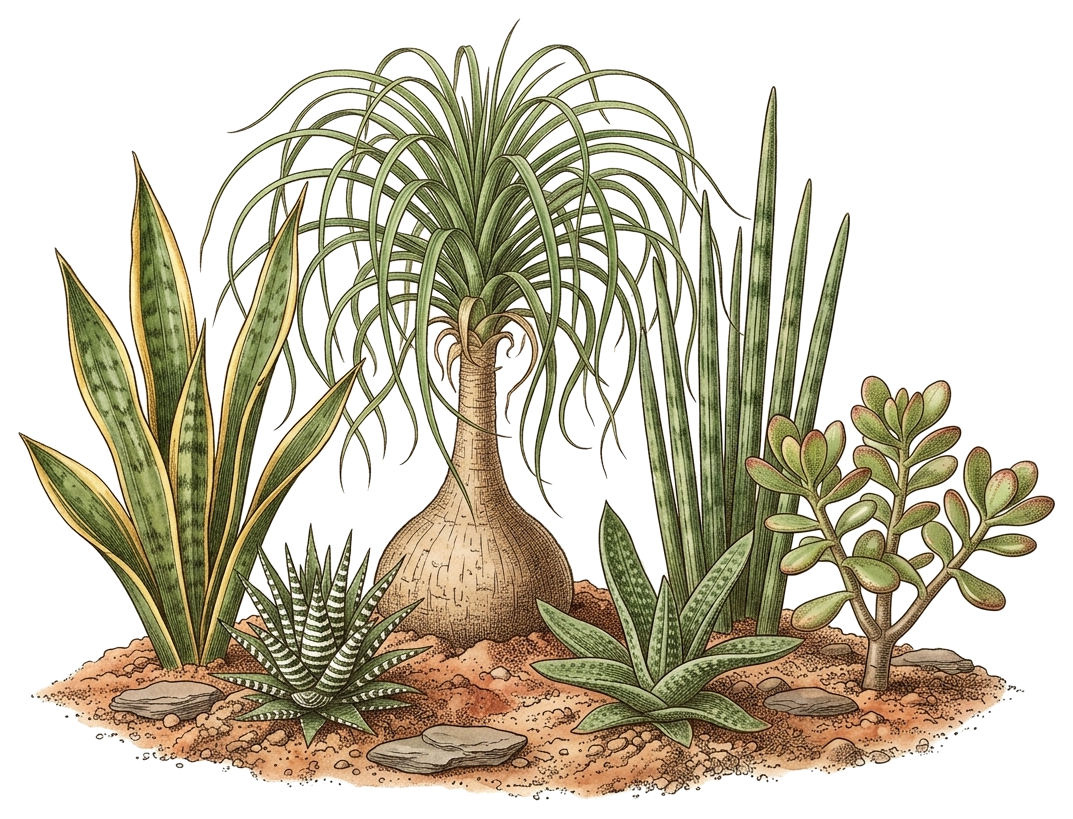
Our arid section at Newberg and Gresham is curated around spineless architectural plants: Snake Plants ('Futura Superba', 'Mikado', 'Bonji'), Ponytail Palms (Beaucarnea recurvata), Zebra Haworthia, Gasteria, Crassula Jade, and Sedum.
Which Arid Plants Are Safe If Nibbled by Bearded Dragons, Tortoises, or Uromastyx?
Insectivores & Snakes (Leopard Geckos, Hognose, Sand Boas) ignore plants, so all spineless succulents work. For herbivores/omnivores (Bearded Dragons, Tortoises, Uromastyx), prioritize edible-safe Elephant Bush (Portulacaria afra), Haworthia, Gasteria, Ponytail Palm, and Sedum (after a 3–6 week grow-out if from a general nursery).
Rule #2: Gritty Arid Substrate vs. The 'Buried Terracotta Pot' Trick
Standard potting soil holds too much moisture and rots succulent roots:
Option A: Direct Planting in Our Gritty 10-Part Arid Bioactive Mix
Skip the LECA drainage layer! Blend Zoo Med ReptiSoil + Washed Play Sand / ReptiSand + Excavator Clay + Lava Rock / Pumice grit (4–5" deep). Gently brush peat/perlite off roots and plant into dry-to-lightly-damp gritty mix.
Option B: Buried Terracotta Pots for Heavy Diggers & Bulldozers
Have a Bearded Dragon, Uromastyx, or Hognose Snake that digs up roots? Plant your Sansevieria or Haworthia in a small unglazed terracotta pot with gritty cactus soil, sink the pot flush into the substrate, and armor the rim with flat slate stones!
Rule #3: How to Water Arid Plants Without Spiking Tank Humidity
Never mist an arid succulent tank like a frog vivarium—spray bottles rot crowns and raise humidity too high:
Spot-Water the Root Zone Only (Every 2 to 4 Weeks)
Use a narrow-spout squeeze bottle to pour a few tablespoons of dechlorinated water directly at the base of each plant every 2–4 weeks (only after the soil has dried completely). Never pour water into the center rosette of Echeveria or Sempervivum.
How Your Clean-Up Crew Thrives in an Arid Tank
Place a flat piece of cork bark on the cool side with a handful of damp Sphagnum Moss and oak leaves tucked underneath. Re-moisten just that hidden moss pocket weekly so Powder Blue/Orange or Giant Canyon Isopods have a humid underground retreat!
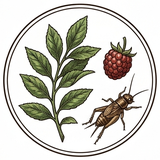
3. Species-by-Species Cheat Sheet (10–75 Gal Vivariums)
Arid Plant Troubleshooting & Care Rules:
Called 'etiolation'—move the succulent closer to your 6500K daylight LED bar
Sign of overwatering—let soil dry 100% between spot-waterings!
Plant is drawing on stored water—give the root ball a targeted drink
Lay flat slate or river stones around stems so burrowers can't uproot them

4. Four Keys to a Happy, Thriving Arid & Desert Bioactive Plants (Succulents & Snake Plants)
Overwatering Kills 10× Faster
Succulents and Snake Plants store weeks of water inside their leaves and caudex. When in doubt, wait another week before spot-watering!
Wait 3–5 Days After Planting
When you bare-root a succulent and plant it into your tank, wait 3–5 days before watering so any microscopic root scrapes callous dry.
Heat Bulbs Aren't Plant Lights
Halogen heat bulbs emit infrared/heat, not balanced 6500K daylight. Pair your basking lamp and UVB tube with a 6500K LED bar.
Arid Isopod Match
Pair Temperate White or Arid Springtails with Powder Blue / Powder Orange (P. pruinosus) or burrowing Giant Canyon Isopods (P. dilatatus).

Bring-Home Shopping Checklist
Tap items to check them off on your phone while you shop at Critter Cabana.
1. Gritty Arid Bioactive Substrate
2. Spineless Arid Plant Bundle
3. Lighting, Watering & Clean-Up Crew
Complete Reference Notes & Oregon Keeping Guide
Arid Bioactive Blueprint & 'Dry Top / Damp Pocket'
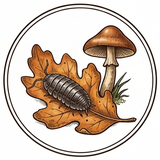
Succulents Hate Wet Feet, While Isopods Need a Damp Cool-Side Retreat!
Temperature & Humidity Zones
| Zone | Target | Notes |
|---|---|---|
| 1. Basking Sun Zone | Full Sun Lovers | 88–105°F warm side under bright 6500K LED + UVB: Jade, Sedum, Portulacaria |
| 2. Heavy-Duty Anchors | Claw-Proof Armor | Mid-zone: Snake Plants (Sansevieria) & Ponytail Palm handle heavy claws |
| 3. Cool / Shaded Side | Shade-Tolerant | 72–80°F cool end: Zebra Haworthia & Gasteria thrive without scorching |
| 4. Skip Drainage Layer | Fast-Draining Grit | Pack 4–5" gritty Arid Bioactive Soil/Sand mix straight on bottom glass |
| 5. Isopod Moss Pocket | Clean-Up Refuge | Tuck damp sphagnum under cool-side cork bark ONLY—keep succulent roots dry! |
Two Ways That Work (100% Stocked Store Options)
Rule #1: Why Spineless Succulents Beat Cacti in Reptile Tanks
Inside an enclosure, cactus spines and microscopic glochids pierce reptile eyes, tongues, and bellies:
- 100% Reptile-Safe Spineless Champions (Sansevieria, Ponytail Palm, Haworthia, Gasteria, Jade): Our arid section at Newberg and Gresham is curated around spineless architectural plants: Snake Plants ('Futura Superba', 'Mikado', 'Bonji'), Ponytail Palms (Beaucarnea recurvata), Zebra Haworthia, Gasteria, Crassula Jade, and Sedum.
- Which Arid Plants Are Safe If Nibbled by Bearded Dragons, Tortoises, or Uromastyx?: Insectivores & Snakes (Leopard Geckos, Hognose, Sand Boas) ignore plants, so all spineless succulents work. For herbivores/omnivores (Bearded Dragons, Tortoises, Uromastyx), prioritize edible-safe Elephant Bush (Portulacaria afra), Haworthia, Gasteria, Ponytail Palm, and Sedum (after a 3–6 week grow-out if from a general nursery).
Rule #2: Gritty Arid Substrate vs. The 'Buried Terracotta Pot' Trick
Standard potting soil holds too much moisture and rots succulent roots:
- Option A: Direct Planting in Our Gritty 10-Part Arid Bioactive Mix: Skip the LECA drainage layer! Blend Zoo Med ReptiSoil + Washed Play Sand / ReptiSand + Excavator Clay + Lava Rock / Pumice grit (4–5" deep). Gently brush peat/perlite off roots and plant into dry-to-lightly-damp gritty mix.
- Option B: Buried Terracotta Pots for Heavy Diggers & Bulldozers: Have a Bearded Dragon, Uromastyx, or Hognose Snake that digs up roots? Plant your Sansevieria or Haworthia in a small unglazed terracotta pot with gritty cactus soil, sink the pot flush into the substrate, and armor the rim with flat slate stones!
Rule #3: How to Water Arid Plants Without Spiking Tank Humidity
Never mist an arid succulent tank like a frog vivarium—spray bottles rot crowns and raise humidity too high:
- Spot-Water the Root Zone Only (Every 2 to 4 Weeks): Use a narrow-spout squeeze bottle to pour a few tablespoons of dechlorinated water directly at the base of each plant every 2–4 weeks (only after the soil has dried completely). Never pour water into the center rosette of Echeveria or Sempervivum.
- How Your Clean-Up Crew Thrives in an Arid Tank: Place a flat piece of cork bark on the cool side with a handful of damp Sphagnum Moss and oak leaves tucked underneath. Re-moisten just that hidden moss pocket weekly so Powder Blue/Orange or Giant Canyon Isopods have a humid underground retreat!
Species-by-Species Cheat Sheet (10–75 Gal Vivariums)

Little Prince & Josh's Frogs Arid Stock — Light Zone & Nibbler Safety
- Claw-Proof Structural Anchors (Dwarf Snake Plants (Sansevieria) & Tabletop Ponytail Palms): Dwarf Sansevieria (Bird's Nest 'Hahnii', starfish 'Bonji', mini cylindrical 'Mikado', & compact 'Futura Superba'—staying 6–15" tall for 20–75 gal tanks!) tolerate bright-to-moderate light, 30–50% RH, and heavy reptile claws. Tabletop Ponytail Palm (Beaucarnea recurvata) stores water in its bulbous base (keep bulb above soil!) while its grassy leaves create a natural hide.
- Armor-Plated Mid & Cool Zone (Haworthia, Gasteria & Dwarf Spineless Aloe): Zebra & Cooper's Haworthia (Haworthiopsis attenuata, H. cooperi) and Ox-Tongue (Gasteria 'Little Warty') have thick, textured leaves that stand up to crawling geckos and thrive on the moderate-light cool or mid side where high-light Echeveria would stretch out. Non-toxic and 100% spineless!
- High-Light Basking Succulents (Crassula (Jade), Portulacaria, Sedum, Sempervivum & Echeveria): Crassula ('Crosby's Compact', 'Gollum', 'Hobbit', 'Ripple' Jade, 'Watch Chain'), Elephant Bush (Portulacaria afra), Sedum ('Shooting Stars', 'Gold Mound', Burro's Tail), & Sempervivum (Hens & Chicks) need direct, bright 6500K LED + UVB light on the warm side so they stay compact and colorful instead of stretching ('etiolating').
Arid Plant Troubleshooting & Care Rules:
- Stretching / Tall Stems?: Called 'etiolation'—move the succulent closer to your 6500K daylight LED bar
- Mushy / Yellow Translucent Leaves?: Sign of overwatering—let soil dry 100% between spot-waterings!
- Wrinkled / Flat Bottom Leaves?: Plant is drawing on stored water—give the root ball a targeted drink
- Ring Roots With Flat Slate: Lay flat slate or river stones around stems so burrowers can't uproot them
Keeper Note: Quarantine & Bare-Rooting Reminder: Always pop new succulents out of their nursery pots, gently brush off peat/perlite potting mix (which holds too much moisture and contains white perlite beads reptiles may mistake for calcium), and run a 3 to 6 week grow-out on general garden-center plants before placing them with plant-nibbling lizards or tortoises.
Essential Keeper Rules & Pro Tips
- Overwatering Kills 10× Faster: Succulents and Snake Plants store weeks of water inside their leaves and caudex. When in doubt, wait another week before spot-watering!
- Wait 3–5 Days After Planting: When you bare-root a succulent and plant it into your tank, wait 3–5 days before watering so any microscopic root scrapes callous dry.
- Heat Bulbs Aren't Plant Lights: Halogen heat bulbs emit infrared/heat, not balanced 6500K daylight. Pair your basking lamp and UVB tube with a 6500K LED bar.
- Arid Isopod Match: Pair Temperate White or Arid Springtails with Powder Blue / Powder Orange (P. pruinosus) or burrowing Giant Canyon Isopods (P. dilatatus).
Complete Store Setup Checklist
1. Gritty Arid Bioactive Substrate
- ReptiSoil + Play Sand / ReptiSand + Excavator Clay (4–5" Deep)
- Lava Rock / Pumice Grit + Flat Slate Stones (Around Stems)
- Dry Live Oak Leaf Litter + Seed Pods + Cork Bark Flats
- Handful of Sphagnum Moss (Under Cool-Side Cork ONLY)
2. Spineless Arid Plant Bundle
- 1–2 Anchors: Sansevieria ('Futura Superba'/'Mikado') or Ponytail Palm
- 1–2 Mid/Cool Succulents: Zebra Haworthia or Gasteria
- 1–2 Warm Basking Succulents: Crassula Jade, Portulacaria, or Sedum
3. Lighting, Watering & Clean-Up Crew
- Full-Spectrum 6500K LED Bar + Linear T5 HO UVB on 12-Hr Timer
- Narrow-Spout Squeeze Bottle (Spot-Water Roots Every 2–4 Wks)
- Powder Blue / Powder Orange OR Giant Canyon Isopods + Springtails
How We Keep Them at Critter Cabana & Gresham Pet Supply
- Store-Shelf 10-Part Bioactive Recipes (Tropical, Arid & Invert): In our reptile rooms at Critter Cabana (Newberg) and Gresham Pet Supply, we build every bioactive vivarium from the bottom up—starting with a 1.5–2 inch LECA/hydroball drainage layer, a fine mesh substrate barrier, a 3–5 inch custom soil/bark/moss blend, and a thick top blanket of dry oak or magnolia leaf litter.
- Live Springtail & Isopod Cultures Ready to Seed: We breed and stock Temperate White Springtails, Dwarf White (Trichorhina tomentosa), Powder Blue & Powder Orange (Porcellionides pruinosus), Dairy Cow (Porcellio laevis), and Giant Canyon (Porcellio dilatatus) isopods so you can match your clean-up crew to your exact humidity and species.
- Grab Our Printable 1-Page Recipe or Tri-Fold Brochure: Ask our reptile team to walk you through scaling our 10-quart batch recipe to your exact tank size (18×18, 20L, 40B, or 4×2×2 PVC).
Common Questions (FAQ)
How deep should the soil layer be in a bioactive terrarium?
Aim for 3 to 5 inches of bioactive substrate above the mesh drainage barrier (and 4 to 6+ inches for burrowing species or heavy root plants) topped with a generous layer of leaf litter and cork bark flats.
Do arid bioactive setups (like Leopard Geckos or Bearded Dragons) need a drainage layer?
Usually no—in arid setups where you are not misting heavily, skip the LECA drainage layer and instead create a deep moisture gradient by watering only the cool/humid hide corner so isopods and springtails have a damp underground retreat.
Which isopods should I pick for a tropical vs. arid bioactive tank?
For humid tropical tanks (Dart Frogs, Crested Geckos, Ball Pythons), pair Temperate White Springtails with Dwarf White and Powder Orange/Blue isopods. For semi-arid setups (Leopard Geckos, Bearded Dragons, Corn Snakes), use Powder Blue/Orange or Giant Canyon isopods with a damp sphagnum moss pocket under cork bark.
Where can I buy bioactive soil ingredients, cork bark, and live isopods in Oregon?
We stock Zoo Med ReptiSoil, Eco Earth coco fiber, ReptiBark/Orchiata bark, sphagnum moss, leaf litter, LECA clay balls, substrate mesh, cork bark, and live springtail and isopod cultures at Critter Cabana in Newberg (514 E First St, 503-537-2887) and Gresham Pet Supply (2185 NW Burnside Rd, 503-665-7606).