
Children's Python
Antaresia childreni
1. Habitat Layout & Temperature Gradient
Species: Antaresia childreni | Difficulty: 2/5 — Easy | Hardiness: 4/5 — Hardy

Critter Cabana & Gresham Pet Supply — Keeping Your Pet Healthy & Thriving
At a Glance

| Common Name | Children's Python |
| Species | Antaresia childreni |
| Origin | Northern Australia (rocky outcrops, woodlands, and caves) |
| Adult Size | 30–40 inches (One of the smallest pythons in the world!) |
| Lifespan | 20–30 years |
| Diet Type | Carnivore (Frozen/Thawed Mice) |
| Activity | Nocturnal (active at night, but often basks during the day) |
| Temperament | Very docile, curious, and manageable. Great for beginners. |
| Handleability | Excellent. Hatchlings can be defensive/nippy but tame down extremely fast. |
| Social Needs | Strictly solitary. |
| Difficulty | 2/5 — Easy (Perfect alternative to a Ball Python for those wanting a smaller snake) |
| Hardiness | 4/5 — Hardy (Very forgiving of minor husbandry errors) |
Why We Love Them: Don't let the name fool you—they aren't named "Children's Python" because they are for kids (though they make great pets for older children)! They are named after John George Children, a British zoologist. These are among the smallest pythons in the world, rarely exceeding 3 feet. In the wild, they often hang from the ceilings of Australian caves to catch flying micro-bats out of the air! Because of this, they are incredibly active climbers in captivity compared to heavier pythons.
Notable Morphs & Locales
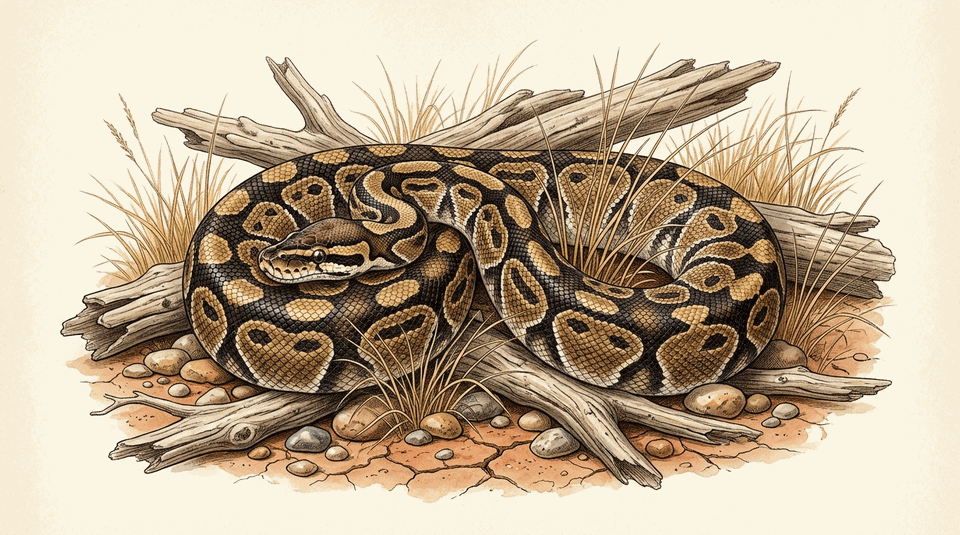
While the classic wild-type is beautiful (featuring a tan or reddish-brown background with darker brown blotches that fade slightly as they age), several morphs exist:
- T+ Albino: A form of albinism where the snake still produces tyrosinase, resulting in stunning purples, lavenders, and caramels instead of bright yellow and white.
- Marble: A highly sought-after morph that scrambles the pattern into a chaotic, marble-like mix of light and dark patches.
- Granite: The blotches are heavily fragmented into tiny specks, giving a "salt and pepper" granite look.
- Hypo (Hypomelanistic): Reduced black/brown pigment, creating a brighter, cleaner-looking snake.
Housing & Enclosure
Enclosure Size
- Juveniles: A 10 to 20-gallon terrarium is sufficient for a baby to feel secure.
- Adult Minimum Enclosure: 36" Long x 18" Wide x 18" High (approx. 40-gallon breeder).
- Style: Glass terrarium with front-opening doors and a highly secure locking lid. Antaresia pythons are slender and famously good escape artists.
Enclosure Setup
- Substrate: They do well on a variety of substrates. Aspen shavings, Zilla Jungle Mix, or ReptiBark are all excellent choices. Provide 1-2 inches of depth.
- Decor (Climbing): Essential. Unlike Ball Pythons, Children's Pythons love to climb. Provide sturdy ghost wood, cork bark tubes, and thick vines that span the height of the terrarium.
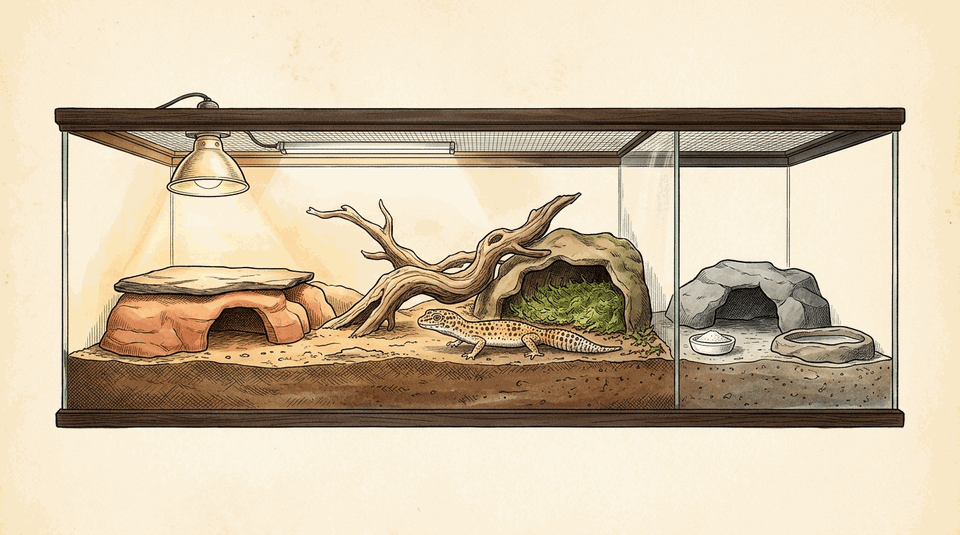
- Hides: Provide at least two tight-fitting hides (one on the warm end, one on the cool end). A rock lair or a hide with a very small opening makes them feel most secure.
Humidity & Water
- Humidity: Moderate (45%–60%). Normal household humidity is usually fine, but a light misting during shedding cycles is beneficial.
- Water Source: Provide a sturdy water bowl large enough for the snake to soak in. Clean and replace the water every 2 days.
Temperature & Lighting
- Warm Side / Basking Spot: 88–95°F (31–35°C). Use a halogen basking bulb or a deep heat projector, always regulated by a thermostat.
- Cool Side Ambient: 75–80°F (24–27°C).
- Lighting: Provide a standard daylight LED on a 12-hour cycle to establish a day/night rhythm. Low-level UVB (Zone 1) is optional but recommended.
Diet & Nutrition

Primary Diet
- Food Type: Frozen/Thawed mice. Never feed live rodents.
- Prey Size: The mouse should be about the same thickness as the widest part of the snake's body. Because these are small snakes, adults will typically eat adult mice, but will never graduate to rats.
- Feeding Frequency:
- Juveniles: Every 5–7 days (Pinky/Fuzzy mice).
- Adults: Every 10–14 days (Adult mice).
Feeding Behavior
Children's Pythons have a fantastic feeding response and rarely refuse meals. However, they can be "strikey" at feeding time. Always use long feeding tongs to offer the mouse so they don't mistake your warm hand for food.
Socialization & Behavior
Handling
- Taming: Babies are notoriously defensive and may strike or rattle their tails, but they grow out of this very quickly with consistent handling.
- Approach: Always scoop them up from underneath, supporting their midsection. Avoid grabbing them from above, which triggers a predator response.
- Post-Feeding: Do not handle for 48 hours after feeding to prevent regurgitation.
Health & Husbandry

Common Health Issues
- Respiratory Infection (RI) — Symptoms: Wheezing, clicking noises when breathing, bubbles or mucus blowing from the nose, holding the head straight up. / Cause: Temperatures are too cold or humidity is too high/stagnant. / Treatment: Requires an exotic vet for antibiotics.
- Stuck Shed (Dysecdysis) — Symptoms: Patches of old skin remain after a shed, especially on the eye caps or tail tip. / Cause: Humidity is too low. / Treatment: Provide a humid hide (box with damp moss) or a shallow, lukewarm soak for 15 minutes.
- Mites — Symptoms: Tiny black dots crawling on the snake, snake constantly soaking in its water bowl. / Cause: Parasites often brought in from outside sources. / Treatment: Requires a full enclosure sterilization and reptile-safe mite treatment.
What We Stock & Use in Our Stores
These are products we actively carry and recommend for Children's Python setups. Ask any associate for help finding them in-store.
| Category | Product | Notes |
|---|---|---|
| Enclosure | Exo Terra Natural Terrarium (Large/Low 36x18x18) | Perfect footprint with vertical space to climb |
| Substrate | Zilla Jungle Mix or Zilla Snake & Lizard Litter | Both work well for holding moderate humidity |
| Heating | Zilla Halogen Mini Dome & Bulb + Thermostat | Creates a perfect, focused basking spot |
| Decor | Exo Terra Forest Branch / Jungle Vines | Essential for their climbing behavior |
| Hides | Zilla Rock Lair | A fantastic, heavy hide that aids in shedding |
| Water Dish | Exo Terra Water Dish (Medium) | Sturdy and difficult to tip over |
| Water Treatment | Zoo Med ReptiSafe Water Conditioner | Removes chlorine from tap water |
Care sheet compiled by Critter Cabana & Gresham Pet Supply. For questions, ask any livestock specialist in-store.
Last updated: 2026-08-04
How We Keep Them at Critter Cabana & Gresham Pet Supply
- Beating Dry Oregon Furnace Air (and Summer Heat Spikes): Across the Willamette Valley and Portland Metro, running the house furnace all winter drops indoor humidity to 25–35%, which quickly causes stuck sheds and dehydration in screen-top tanks. To hold
balanced humidityreliably for Children's Python, our crew uses a deep 3–5" substrate bed (or our store-shelf 10-Part Bioactive Mix of ReptiSoil, Coco Fiber, Orchiata Bark, Sphagnum Moss, and Leaf Litter), a dedicated humid hide packed with damp sphagnum moss, and partial screen cover when needed. - Thermostat & Linear UVB Standard: Every heating element in our Newberg and Gresham reptile rooms runs on a thermostat probe set to
species-appropriate warm zoneon the warm side with acomfortable room temperaturecool retreat, paired withspecies-appropriate lightingon a 12-hour day/night timer. In summer, if an upstairs room climbs above 82°F, a dimming thermostat automatically backs down the basking lamp so the cool side never overheats. - Stocked at Newberg & Gresham: We stock reptile enclosures, thermostats, Arcadia & Zoo Med UVB lighting, bioactive substrate ingredients, live Springtails, Dwarf White, Powder Blue/Orange, Dairy Cow, and Giant Canyon isopods, and gut-loaded crickets, dubia roaches, hornworms, and frozen-thawed rodents at Critter Cabana (Newberg) and Gresham Pet Supply.
Common Questions (FAQ)
What size tank does an adult Children's Python actually need?
An adult Children's Python needs at least 36x18x18 inches so you can maintain a true thermal gradient from species-appropriate warm zone on the warm/basking side down to comfortable room temperature on the cool side.
How do I keep Children's Python humidity at balanced humidity during dry Oregon winters?
Oregon winter furnace heat dries out thin bedding fast. Use a 3–5 inch moisture-retaining substrate mix (such as Zoo Med ReptiSoil blended with coco fiber, Orchiata bark, and sphagnum moss), provide an enclosed humid hide, and cover 50–70% of an open screen top with HVAC foil tape or a PVC panel if ambient humidity drops too low.
What is the best bioactive clean-up crew for a Children's Python?
Pair Temperate White Springtails with a humidity-matched isopod species (such as Powder Blue/Orange for semi-arid setups or Dwarf White / Dairy Cow isopods for humid forest setups) in a 3–5 inch bioactive soil and leaf-litter bed. You can pick up our 1-Page or Tri-Fold Bioactive Substrate Recipe Guide and live cultures at Critter Cabana (Newberg) or Gresham Pet Supply.
Where can I get Children's Python setup supplies, live feeders, and thermostats in Oregon?
We stock our full reptile, amphibian, and bioactive setup supplies—including enclosures, thermostats, Arcadia and Zoo Med UVB lighting, bioactive substrates, live isopods/springtails, and live or frozen feeders—at Critter Cabana in Newberg (514 E First St, 503-537-2887) and Gresham Pet Supply (2185 NW Burnside Rd, 503-665-7606).