
Pacman Frog
Ceratophrys ornata
1. Habitat Layout & Temperature Gradient
Species: Ceratophrys ornata (Ornate Horned Frog) | Difficulty: 1/5 — Beginner | Hardiness: 4/5 — Hardy

Critter Cabana & Gresham Pet Supply — Keeping Your Pet Healthy & Thriving
At a Glance

| Common Name | Pacman Frog, Ornate Horned Frog |
| Species | Ceratophrys ornata |
| Origin | Humid grasslands of South America |
| Adult Size | 4 to 7 inches (They are as wide as they are long) |
| Lifespan | 10 to 15 years |
| Diet Type | Carnivore (Insects, earthworms, occasional pinky mice) |
| Activity | Sedentary / Ambush Predator (They bury themselves and wait for food to walk by) |
| Temperament | Very lazy, but they have a ferocious feeding response. They will try to eat anything that moves in front of them, including your fingers. |
| Handleability | Poor. Amphibians breathe and drink through their skin; human oils are toxic to them. Also, they have teeth (odontoids) and a very strong bite force. |
| Difficulty | 1/5 — Beginner (Very simple enclosure requirements) |
| Hardiness | 4/5 — Hardy (Will thrive as long as the substrate is kept clean) |
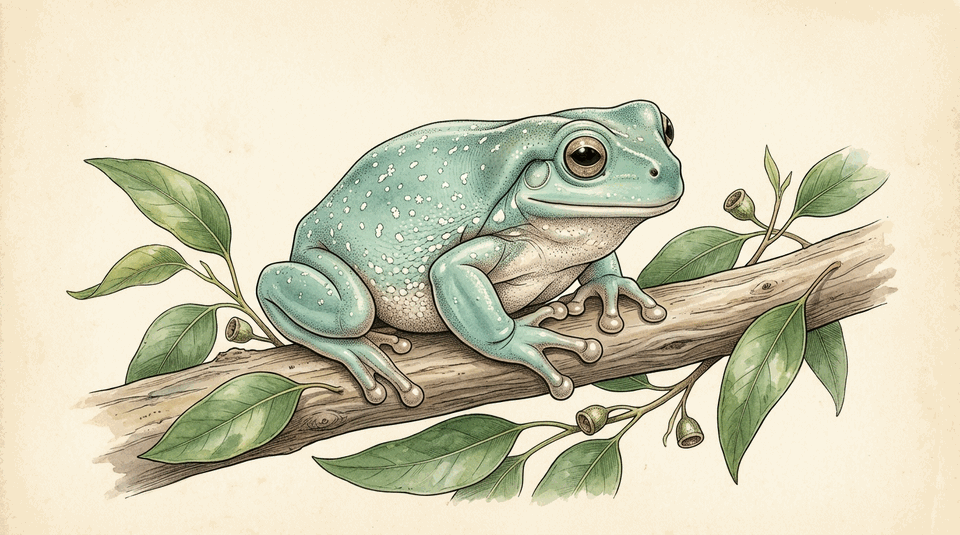
Why We Love Them: They are the ultimate "pet rock" that occasionally erupts into violence. Named after the arcade character because they are essentially a giant mouth with legs, they come in stunning morphs (Strawberry, Mint, Albino) and are incredibly fun to feed.
The Social Rule (Cannibalism)
ONE FROG PER TANK: Pacman frogs are highly cannibalistic. If you put two Pacman frogs in the same tank, the larger one will eat the smaller one. They must be housed strictly alone.
Housing & Enclosure
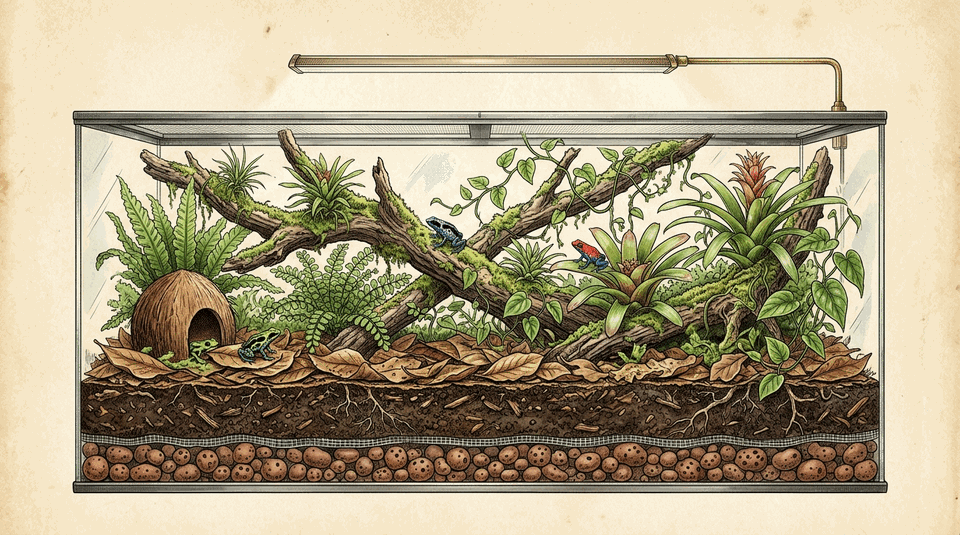
Terrarium Setup
- Type: Terrestrial. They do not climb and do not need height.
- Size: A 10-gallon tank is sufficient for a male. A large female may eventually require a 20-gallon "long" tank.
- The Drowning Hazard: Pacman frogs are terrible swimmers. They require a water dish to soak in, but the water must not be deeper than the frog's chin, or it can easily drown. Always treat the water with a dechlorinator (like Seachem Prime or ReptiSafe).
Substrate (Bioactive Recommended)
- They spend 90% of their lives buried in the dirt with only their eyes showing.
- Depth: Provide at least 3 to 4 inches of Coco Coir (Eco-Earth) or a Bioactive soil mix (ReptiSoil).
- Moisture: The substrate should be damp enough to clump when squeezed, but not dripping wet (which causes bacterial infections).
Environment & Husbandry
Temperature & Heating
- Maintain a temperature gradient of 75°F on the cool side to 85°F on the warm side.
- Heating Method: Use a low-wattage heat mat (UTH) attached to the side of the tank, connected to a thermostat. Never put the heat mat under the tank, as the frog will instinctively burrow down to escape heat and will cook itself.
Lighting & Humidity
- Lighting: A low-level UVB bulb (like a Zoo Med ReptiSun 5.0) is highly recommended for bone health and preventing Metabolic Bone Disease.
- Humidity: Maintain 70-80% humidity by misting the enclosure daily and keeping the substrate moist.
Diet & Feeding

- The Bite Rule: Always use feeding tongs. They lunge quickly and have a very strong bite.
- Staple Diet: Earthworms (Nightcrawlers), Dubia roaches, and large crickets. Dust all insects with Calcium + D3 and a multivitamin.
- Treats: Hornworms and frozen/thawed pinky mice. (Limit mice to once a month for adults, as they are very high in fat and can cause blindness).
- Schedule:
- Babies: Feed 3-4 small insects every other day.
- Adults: Feed 1 large meal (like a nightcrawler) every 4-7 days.
What We Stock & Use in Our Stores
| Category | Product | Notes |
|---|---|---|
| Housing | Exo Terra 18x18x12 Terrarium | Excellent terrestrial footprint |
| Heating | Zoo Med ReptiTherm UTH (Small) | Place on the side of the glass, not the bottom |
| Diet | Zoo Med Repti Calcium with D3 | Essential for preventing Metabolic Bone Disease |
| Feeding | Zoo Med Stainless Steel Tongs (10") | Protects your fingers from their bite |
Care sheet compiled by Critter Cabana & Gresham Pet Supply.
Last updated: 2026-08-04
How We Keep Them at Critter Cabana & Gresham Pet Supply
- Beating Dry Oregon Furnace Air (and Summer Heat Spikes): Across the Willamette Valley and Portland Metro, running the house furnace all winter drops indoor humidity to 25–35%, which quickly causes stuck sheds and dehydration in screen-top tanks. To hold
70-80%reliably for Pacman Frog, our crew uses a deep 3–5" substrate bed (or our store-shelf 10-Part Bioactive Mix of ReptiSoil, Coco Fiber, Orchiata Bark, Sphagnum Moss, and Leaf Litter), a dedicated humid hide packed with damp sphagnum moss, and partial screen cover when needed. - Thermostat & Linear UVB Standard: Every heating element in our Newberg and Gresham reptile rooms runs on a thermostat probe set to
75-85°Fon the warm side with acomfortable room temperaturecool retreat, paired withspecies-appropriate lightingon a 12-hour day/night timer. In summer, if an upstairs room climbs above 82°F, a dimming thermostat automatically backs down the basking lamp so the cool side never overheats. - Stocked at Newberg & Gresham: We stock reptile enclosures, thermostats, Arcadia & Zoo Med UVB lighting, bioactive substrate ingredients, live Springtails, Dwarf White, Powder Blue/Orange, Dairy Cow, and Giant Canyon isopods, and gut-loaded crickets, dubia roaches, hornworms, and frozen-thawed rodents at Critter Cabana (Newberg) and Gresham Pet Supply.
Common Questions (FAQ)
What size tank does an adult Pacman Frog actually need?
An adult Pacman Frog needs at least 10-20 Gallon Terrestrial so you can maintain a true thermal gradient from 75-85°F on the warm/basking side down to comfortable room temperature on the cool side.
How do I keep Pacman Frog humidity at 70-80% during dry Oregon winters?
Oregon winter furnace heat dries out thin bedding fast. Use a 3–5 inch moisture-retaining substrate mix (such as Zoo Med ReptiSoil blended with coco fiber, Orchiata bark, and sphagnum moss), provide an enclosed humid hide, and cover 50–70% of an open screen top with HVAC foil tape or a PVC panel if ambient humidity drops too low.
What is the best bioactive clean-up crew for a Pacman Frog?
Pair Temperate White Springtails with a humidity-matched isopod species (such as Powder Blue/Orange for semi-arid setups or Dwarf White / Dairy Cow isopods for humid forest setups) in a 3–5 inch bioactive soil and leaf-litter bed. You can pick up our 1-Page or Tri-Fold Bioactive Substrate Recipe Guide and live cultures at Critter Cabana (Newberg) or Gresham Pet Supply.
Where can I get Pacman Frog setup supplies, live feeders, and thermostats in Oregon?
We stock our full reptile, amphibian, and bioactive setup supplies—including enclosures, thermostats, Arcadia and Zoo Med UVB lighting, bioactive substrates, live isopods/springtails, and live or frozen feeders—at Critter Cabana in Newberg (514 E First St, 503-537-2887) and Gresham Pet Supply (2185 NW Burnside Rd, 503-665-7606).