
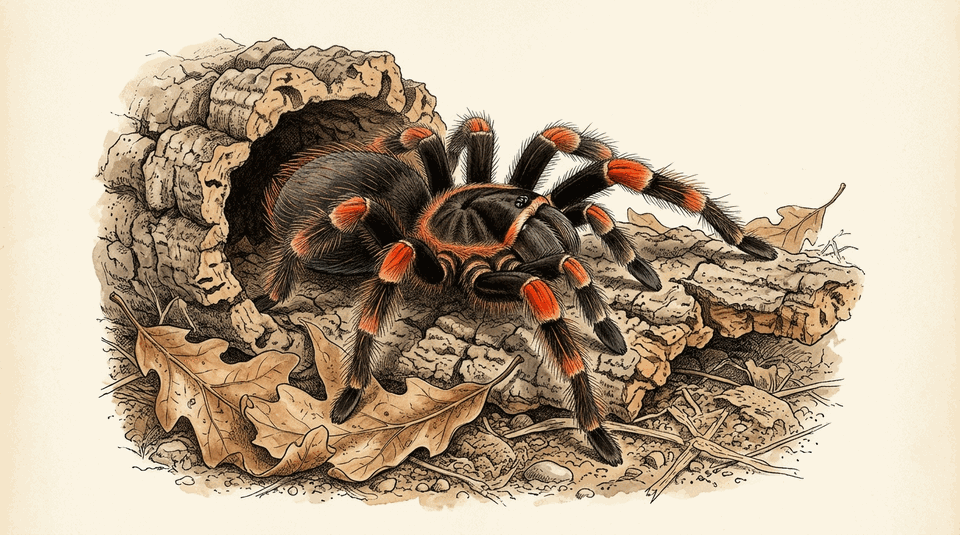
Greek Velvet Spider
Eresus walckenaeri
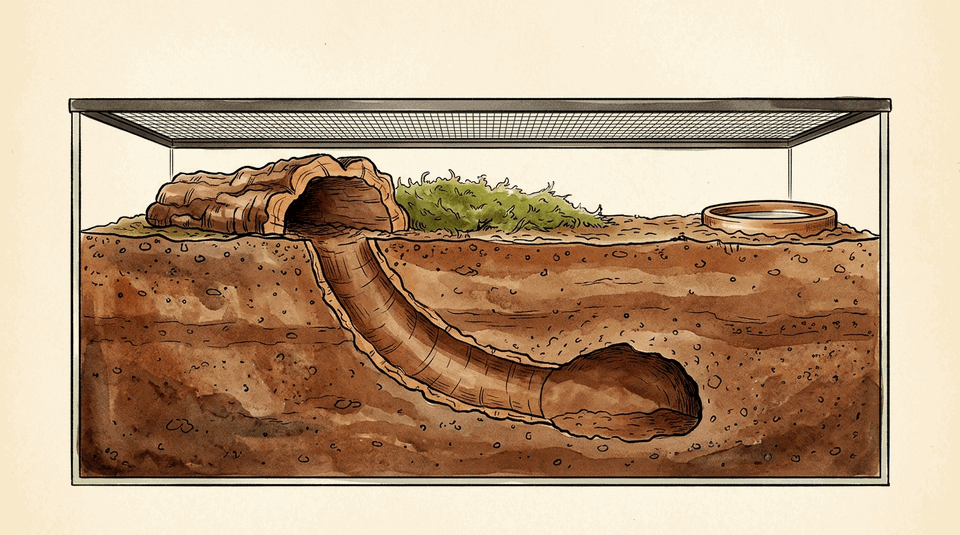
1. Habitat Layout & Temperature Gradient
Species: Eresus walckenaeri | Difficulty: 2/5 — Easy | Hardiness: 3/5 — Moderate

Critter Cabana & Gresham Pet Supply — Keeping Your Pet Healthy & Thriving
At a Glance

| Common Name | Greek Velvet Spider, Pink Velvet Spider | |
| Species | Eresus walckenaeri (Note: This is a True Spider, not a Tarantula) | |
| Origin | Dry scrublands of the Eastern Mediterranean | |
| Adult Size | 1–1.5 inch body length (Females are large and black; males are tiny and brightly colored) | |
| Lifespan | Females: 3–5 years | Males: ~1 year |
| Diet Type | Insectivore (Crickets, Roaches, Mealworms) | |
| Activity | Reclusive. Spends almost its entire life inside its web tunnel. | |
| Temperament | Docile, calm, and slow-moving. | |
| Handleability | Possible but not recommended. They are delicate and reclusive. | |
| Venom | Mildly potent. While not medically significant to humans, a bite is often described as worse than a bee sting. | |
| Urticating Hairs | No (They are True Spiders, so they do not possess urticating hairs) | |
| Difficulty | 2/5 — Easy (Extremely easy care, provided you keep them dry) | |
| Hardiness | 3/5 — Moderate (Highly susceptible to high humidity and stagnant air) |
Why We Love Them: Velvet spiders look exactly like their name suggests: they are covered in dense, plush hairs that make them look like walking velvet. They are incredibly cute, completely docile, and build massive, thick, beautiful web tunnels that they use to hunt their prey via trip-lines.
Safety Information
Venom/Defense: They are not tarantulas, so they cannot kick itchy hairs at you. Their only defense is to bite. While they are very reluctant to bite, their venom is known to be slightly more potent than most pet tarantulas, causing localized pain, swelling, and sometimes mild nausea.
First Aid: If bitten, wash the area with soap and water and apply a cold compress. If you experience severe symptoms like difficulty breathing, seek medical attention for a potential allergic reaction.
Handling Precautions: We do not recommend handling them. While they are docile, they are very clumsy outside of their webs and a fall can easily injure them.

Housing & Enclosure
Enclosure Type & Size
- Type: Terrestrial / Fossorial / Heavy Webber.
- Minimum: They do not need much space. An adult female will thrive in a small acrylic enclosure (like a 4x4x6 inch Tarantula Crib) or a 2.5-gallon tank. Too much space will actually make it harder for them to find their food.
- Ventilation (CRITICAL): Excellent cross-ventilation is absolutely required. Stagnant air will kill them.
Substrate
- Recommended: Bone-dry coconut fiber (Eco Earth), peat moss, or dry topsoil.
- Depth: Provide 3 to 5 inches of substrate. They love to dig vertical or diagonal burrows and line the entire tunnel with thick velvet-like silk.
- Top Layer: Adding some dry sphagnum moss or small pieces of dry cork bark on the surface gives them excellent anchor points to attach their trip-lines.
Temperature
| Zone | Temperature |
|---|---|
| Ambient | 72–82°F (22–28°C) |
- Heating: Room temperature is perfect. Never use a heat pad or heat lamp.
Humidity & Hydration (CRITICAL)
- Target Range: 30–50% (Bone Dry).
- The "No Misting" Rule: Do not mist this spider's enclosure. They originate from arid, dry environments. Excess moisture, damp soil, or high humidity will quickly cause lethal fungal infections.
- Hydration: They get 99% of their moisture from eating live insects. Once every 1–2 weeks, you can place 2 or 3 tiny drops of water directly onto the edge of their webbing using a pipette or syringe. They will drink the drops if they are thirsty. Do not let the water soak into the dirt.
Diet & Nutrition

Velvet spiders are ambush predators. They will sit just inside the entrance of their web tunnel and wait for an insect to trip one of the silk lines they placed outside.
Primary Diet
- Live crickets, small dubia roaches, or mealworms. Ensure the prey is smaller than the spider's body.
Feeding Schedule
| Life Stage | Frequency | Prey Size |
|---|---|---|
| Spiderling (Sling) | Every 4–7 days | Flightless fruit flies or pinhead crickets |
| Juvenile | Every 7 days | Small crickets |
| Adult | Every 10–14 days | 1-2 Medium crickets |
Feeding Notes
- Always drop the prey near the entrance of their web tunnel. If you drop it on the other side of the enclosure, the spider may never find it.
- Remove any uneaten prey after 24 hours.
Molting
During the Molt
- DO NOT disturb the spider. They will seal themselves inside their thick web tunnel for days or even weeks to molt safely.
- Do not attempt to dig them up or tear open their web to check on them.
Post-Molt Care
- Wait at least 7 days before offering food so their new fangs have time to harden.
What We Stock & Use in Our Stores
These are products we carry and recommend for this species. Ask any associate for help finding them in-store.
| Category | Product | Notes |
|---|---|---|
| Enclosure | Tarantula Cribs Small/Medium Cube | Perfect size for an adult female |
| Substrate | Zoo Med Eco Earth (Dry Block) | Use the dry bricks, do not soak them prior to use! |
| Anchor Points | Zoo Med Natural Cork Bark (Small) | Place half-buried in the soil near the center |
| Hydration | Plastic Pipettes / Droppers | Use to drop 2-3 drops of water on the webbing weekly |
| Feeder Insects | Live Crickets | Size appropriately to the spider |
Care sheet compiled by Critter Cabana & Gresham Pet Supply. For questions, ask any livestock specialist in-store.
Last updated: 2026-08-04
How We Keep Them at Critter Cabana & Gresham Pet Supply
- Oregon Winter Furnace Air vs. Molting Humidity: When Pacific Northwest furnaces kick on from October through April, indoor room humidity drops fast and dries out small enclosures from the top down. Rather than misting the spider or invert directly (which stresses terrestrial species and invites stagnant mold), we keep Greek Velvet Spider at
30-50% (Bone Dry)by using a deep moisture-retaining substrate bed (ReptiSoil + Coco Fiber + Sphagnum Moss), overflowing the water dish slightly into one corner, and maintaining cross-ventilation. - Safe Room Heating in the Willamette Valley: If your house drops below 65°F on winter nights, never stick a heat pad on the bottom of a burrowing invertebrate tank—they dig down to escape heat and will cook themselves. Use a low-wattage side-mounted heat mat on a digital thermostat or warm the room ambiently to
species-appropriate warm zone. - Stocked at Newberg & Gresham: At Critter Cabana (Newberg) and Gresham Pet Supply, we stock acrylic and glass invertebrate enclosures, cork bark flats and tubes, bioactive substrates, flightless fruit flies (D. melanogaster and D. hydei), pinhead to adult crickets, dubia roaches, and live Temperate White Springtail and Isopod cultures.
Common Questions (FAQ)
How do I keep my Greek Velvet Spider warm and humid enough during an Oregon winter?
Target species-appropriate warm zone and 30-50% (Bone Dry). When Oregon winter furnaces dry out the air, use a deep 3–5 inch substrate mix of Zoo Med ReptiSoil and coco fiber, keep a shallow water dish filled, and dampen one corner of the substrate rather than misting the animal directly. Never put a heat mat underneath a burrowing invertebrate enclosure.
What size enclosure does a Greek Velvet Spider need?
An adult Greek Velvet Spider thrives in Small Acrylic Enclosure (4x4x6 inches) with secure ventilation. For terrestrial tarantulas and scorpions, floor space and deep substrate matter most (keep open fall height low so heavy-bodied species cannot rupture their abdomen); for arboreal species, prioritize vertical cork bark tubes and cross-ventilation.
Can I put isopods in a Greek Velvet Spider bioactive enclosure?
Around molting tarantulas and scorpions, skip protein-hungry large isopods and stick to Temperate White Springtails (or gentle Dwarf White isopods in humid detritivore setups) so a soft, newly molted animal is never nibbled.
Where can I find Greek Velvet Spider, cork bark, and feeder insects in Oregon?
We stock live invertebrates, tarantulas, jumping spiders, cork bark flats and tubes, bioactive substrates, and gut-loaded feeder insects at our two exotic animal stores: Critter Cabana in Newberg (514 E First St, 503-537-2887) and Gresham Pet Supply (2185 NW Burnside Rd, 503-665-7606).