
Springtails
Collembola
1. Habitat Layout & Temperature Gradient
Species: Collembola (Various species) | Difficulty: 1/5 — Beginner | Hardiness: 4/5 — Hardy (As long as they don't dry out)

Critter Cabana & Gresham Pet Supply — Keeping Your Pet Healthy & Thriving
At a Glance

| Common Name | Springtails (The Bioactive Clean-up Crew) |
| Species | Collembola (Usually Folsomia candida for temperate/tropical) |
| Origin | Found worldwide in damp, organic environments |
| Adult Size | Microscopic (1-3mm) |
| Lifespan | Individual springtails live for a few months, but the colony will reproduce and live indefinitely. |
| Diet Type | Detritivore (Eats mold, fungus, yeast, and decaying plant matter) |
| Activity | Constantly foraging for food in the soil. |
| Temperament | Harmless. They do not bite, sting, or bother pets in any way. |
| Venom | None |
| Difficulty | 1/5 — Beginner (They essentially take care of themselves) |
| Hardiness | 4/5 — Hardy (They are incredibly resilient, but they will die if they dry out) |
Why We Love Them: Springtails are the unsung heroes of the reptile and amphibian hobby. They are the microscopic "clean-up crew" that makes bioactive terrariums possible. They eat mold, fungus, and decaying waste before it can rot and smell. When paired with isopods (which eat larger waste like feces and dead leaves), they create a perfectly balanced, self-cleaning ecosystem in your pet's tank!
The Golden Rule of Springtails
NEVER LET THEM DRY OUT: Springtails breathe cutaneously (through their skin). If their environment dries out, they will suffocate and die very quickly. They require high humidity (80-100%) to survive. Whether they are in a culture cup or a bioactive terrarium, their substrate must always remain damp.

Culturing Springtails (How to breed them)
If you want to keep a "master culture" of springtails to continually harvest and seed multiple tanks, you have a few options for substrate:
1. The Charcoal Method (Easiest)
- Substrate: Horticultural charcoal (lump charcoal). Do not use charcoal briquettes intended for grilling, as they contain toxic accelerants.
- Setup: Fill a plastic container (like a Tupperware) with 2 inches of charcoal. Add dechlorinated water until the bottom 1/4 inch of the container has standing water.
- Benefits: The charcoal provides massive surface area, resists mold, and makes harvesting incredibly easy. To add springtails to a tank, you simply fill the culture with water so the springtails float, and pour the water into your terrarium.
2. The Soil Method (Natural)
- Substrate: A mix of coconut fiber (Eco Earth), sphagnum moss, and organic topsoil.
- Setup: Fill a container with 2-3 inches of soil. Wet it until it is thoroughly damp, but not a muddy soup. Add leaf litter to the top.
- Benefits: They breed very quickly in soil, and this mimics their natural environment. To harvest, you can place a piece of food on a slice of cork bark, wait for them to swarm it, and shake the bark into your terrarium.
3. The Clay Method
- Substrate: Calcium-bearing clay (like ABG mix clay bases).
- Benefits: Increasingly popular for dart frog keepers. The springtails ingest the calcium from the clay, making them highly nutritious ("gut-loaded") when tiny frogs eat them.
Diet & Feeding

Feeding in a Culture
- Springtails need food to breed.
- What to feed: A tiny pinch of dry baker's yeast, nutritional yeast, or specialized Springtail Food. You can also drop in an uncooked grain of rice.
- Frequency: Sprinkle a tiny amount of food onto the charcoal or soil once a week.
- Warning: Do not overfeed. If you add too much food, it will rot and cause an uncontrollable CO2 spike or bacterial bloom that will crash your colony. Only feed them what they can completely consume in 2-3 days.
Feeding in a Bioactive Terrarium
- You do not need to feed springtails once they are in your reptile/amphibian tank!
- They will sustain themselves entirely by eating the naturally occurring mold, fungus, and decaying organic matter in the soil.
Seeding a Bioactive Terrarium
- Wait to add your pet: If possible, add your springtails and isopods to your terrarium 2 to 4 weeks before you add your reptile or amphibian.
- Let them establish: This gives the clean-up crew time to burrow, reproduce, and establish a healthy population before your pet starts trampling them or producing large amounts of waste.
- The Mold Bloom: In a new bioactive tank, it is completely normal to have a massive white/fuzzy mold bloom on your wood and soil after a week. Do not panic! This is a buffet for your springtails. They will eat the mold and multiply rapidly. The mold will disappear in a few days.
What We Stock & Use in Our Stores
These are products we carry and recommend for this species. Ask any associate for help finding them in-store.
| Category | Product | Notes |
|---|---|---|
| Clean-up Crew | Isopods (Dairy Cow, Powder Orange, Dwarf White) | Springtails and Isopods work together; springtails eat the microscopic waste, isopods eat the big waste. |
| Substrate | Zoo Med Horticultural Charcoal | The best medium for a master culture |
| Food | Josh's Frogs Springtail Food | Perfectly balanced diet to explode your culture's population |
| Bioactive Soil | Zoo Med ReptiSoil / The Bio Dude Terra Flora | Excellent bioactive substrates for them to live in |
Care sheet compiled by Critter Cabana & Gresham Pet Supply. For questions, ask any livestock specialist in-store.
Last updated: 2026-08-04
How We Keep Them at Critter Cabana & Gresham Pet Supply
- Oregon Winter Furnace Air vs. Molting Humidity: When Pacific Northwest furnaces kick on from October through April, indoor room humidity drops fast and dries out small enclosures from the top down. Rather than misting the spider or invert directly (which stresses terrestrial species and invites stagnant mold), we keep Springtails at
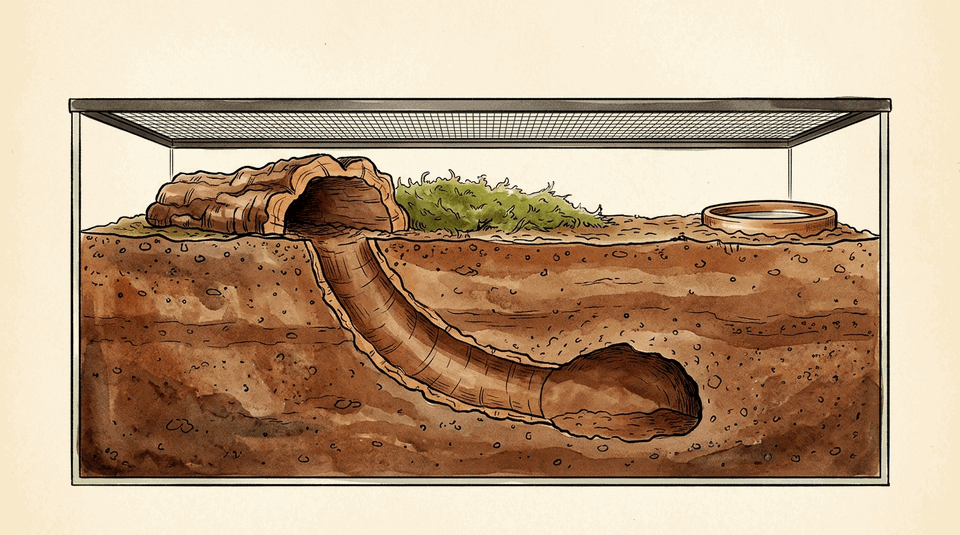
80-100% (Extremely High)by using a deep moisture-retaining substrate bed (ReptiSoil + Coco Fiber + Sphagnum Moss), overflowing the water dish slightly into one corner, and maintaining cross-ventilation. - Safe Room Heating in the Willamette Valley: If your house drops below 65°F on winter nights, never stick a heat pad on the bottom of a burrowing invertebrate tank—they dig down to escape heat and will cook themselves. Use a low-wattage side-mounted heat mat on a digital thermostat or warm the room ambiently to
species-appropriate warm zone. - Stocked at Newberg & Gresham: At Critter Cabana (Newberg) and Gresham Pet Supply, we stock acrylic and glass invertebrate enclosures, cork bark flats and tubes, bioactive substrates, flightless fruit flies (D. melanogaster and D. hydei), pinhead to adult crickets, dubia roaches, and live Temperate White Springtail and Isopod cultures.
Common Questions (FAQ)
How do I keep my Springtails warm and humid enough during an Oregon winter?
Target species-appropriate warm zone and 80-100% (Extremely High). When Oregon winter furnaces dry out the air, use a deep 3–5 inch substrate mix of Zoo Med ReptiSoil and coco fiber, keep a shallow water dish filled, and dampen one corner of the substrate rather than misting the animal directly. Never put a heat mat underneath a burrowing invertebrate enclosure.
What size enclosure does a Springtails need?
An adult Springtails thrives in Small plastic deli cup or Tupperware with secure ventilation. For terrestrial tarantulas and scorpions, floor space and deep substrate matter most (keep open fall height low so heavy-bodied species cannot rupture their abdomen); for arboreal species, prioritize vertical cork bark tubes and cross-ventilation.
Can I put isopods in a Springtails bioactive enclosure?
Around molting tarantulas and scorpions, skip protein-hungry large isopods and stick to Temperate White Springtails (or gentle Dwarf White isopods in humid detritivore setups) so a soft, newly molted animal is never nibbled.
Where can I find Springtails, cork bark, and feeder insects in Oregon?
We stock live invertebrates, tarantulas, jumping spiders, cork bark flats and tubes, bioactive substrates, and gut-loaded feeder insects at our two exotic animal stores: Critter Cabana in Newberg (514 E First St, 503-537-2887) and Gresham Pet Supply (2185 NW Burnside Rd, 503-665-7606).