
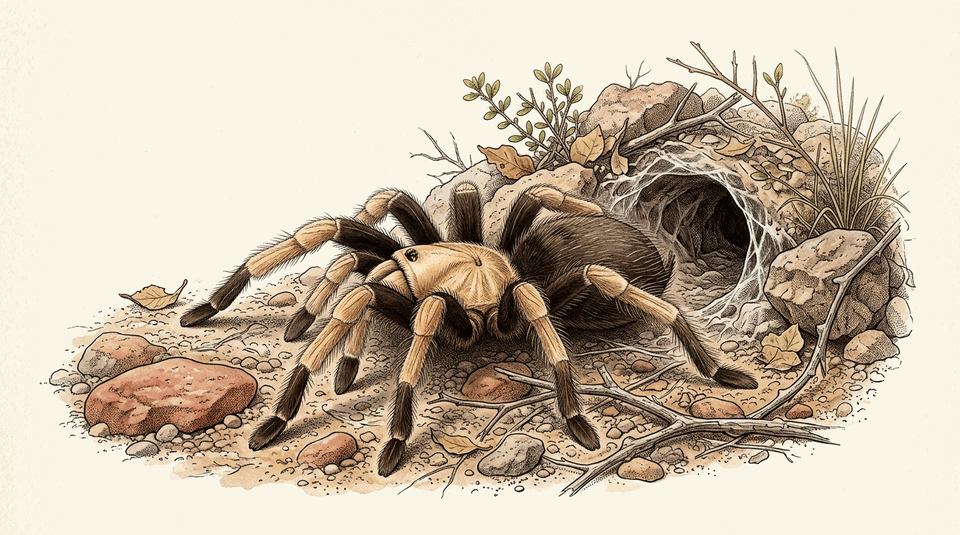
Arizona Blonde Tarantula
Aphonopelma chalcodes
1. Dry Packed Desert Soil & Low-Ceiling Safety

2. Two Great Ways to Set Up Your Habitat
Flooring: Firmly Packed Dry Soil vs. Desert Clay Mix
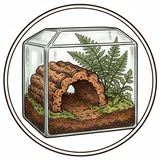
Arizona Blondes hate walking on soggy, fluffy mud—they want firm, dry ground under their feet:
Option A: 4–6" of Reptile / Invert Soil Packed Down Firm
Pack the dirt down like a brownie pan when you set up the tank and let it dry; only the tiny spot right under the water dish needs a splash of moisture.
Option B: Reptile Soil + Desert Burrowing Clay / Sand Mix
Holds sturdy desert tunnels without caving in when your spider decides to redecorate its cave!
Lid Safety: Acrylic Vents vs. Wire Screen
Heavy terrestrial spiders have tiny claws on their feet that can snag like Velcro in cheap window-screen mesh:
Option A: Acrylic Terrestrial Enclosure with Drilled Vents
Smooth roof with zero wire mesh for toes to get stuck in.
Option B: 5- to 10-Gal Tank Filled Halfway Up with Soil
Packing 4–6" of dirt in the bottom keeps the ceiling only 5" above the floor so your spider can never take a dangerous fall!
The Famous Arizona Blonde 'Winter Hunger Strike'
Because they evolved for lean Sonoran Desert winters, Arizona Blondes have the slowest metabolism imaginable:
Option A: Don't Panic If They Fast for Months!
A healthy, plump Arizona Blonde may seal its cave door with silk and skip food for 2 to 6 months in winter without losing any weight—just keep the water dish full!
Option B: Side-Mounted Micro Heat Mat on Thermostat (76–78°F)
Only needed if your house stays cold (<65°F) and you want to keep them awake in winter.

3. Feeding Guide (Slow & Steady Desert Appetite)
Favorite Desert Spider Bugs:
Awesome staple—won't bite or annoy a resting spider
Great hunters—pull uneaten crickets out after 24 hrs!
Crush the worm's head first so it can't dig into the dirt
Wild grasshoppers & beetles carry fatal lawn sprays

4. Four Keys to a Happy, Thriving Arizona Blonde Tarantula
Don't Mist the Tank!
Spraying a desert Arizona Blonde with a water bottle stresses them out! Keep 90% of the dirt dry and just let their water dish overflow a splash once a month.
Upside-Down = Molting!
If you walk in and see your spider flat on its back, pop the champagne—it's molting, NOT dead! Don't touch it and wait a full week afterward before feeding.
Itchy Belly Bristles
Even though Arizona Blondes are super docile, they still have itchy 'urticating hairs' on their abdomen. Wash hands after tank work and don't rub your eyes!
A 25-Year Best Friend!
Female Arizona Blondes are one of the longest-living invertebrates on earth—they'll happily hang out on your desk for 20 to 30 years!

Bring-Home Shopping Checklist
Tap items to check them off on your phone while you shop at Critter Cabana.
Arid Burrowing Tank & Dirt
Water Dish & Tools
Live Feeder Bugs
Complete Reference Notes & Oregon Keeping Guide
Dry Packed Desert Soil & Low-Ceiling Safety

4–6" of Firmly Packed Dry Soil + Open Water Dish + Max 1.5× Legspan Fall Height!
Temperature & Humidity Zones
| Zone | Target | Notes |
|---|---|---|
| Daytime Room Temp | 72°–82°F | Normal warm room temps (no heat lamps!) |
| Dry Packed Floor | Dry Soil | Press the soil down firm & let it dry out! |
| Keep It Desert-Dry! | 40–55% RH | 40–55% room air; just overflow water dish 1×/month |
| Open Water Dish 24/7 | Fresh Water | Even desert spiders need a full water dish! |
| Nighttime Temp Drop | 65°–72°F | Totally fine down to 65°F at night |
Two Ways That Work (100% Stocked Store Options)
Flooring: Firmly Packed Dry Soil vs. Desert Clay Mix
Arizona Blondes hate walking on soggy, fluffy mud—they want firm, dry ground under their feet:
- Option A: 4–6" of Reptile / Invert Soil Packed Down Firm: Pack the dirt down like a brownie pan when you set up the tank and let it dry; only the tiny spot right under the water dish needs a splash of moisture.
- Option B: Reptile Soil + Desert Burrowing Clay / Sand Mix: Holds sturdy desert tunnels without caving in when your spider decides to redecorate its cave!
Lid Safety: Acrylic Vents vs. Wire Screen
Heavy terrestrial spiders have tiny claws on their feet that can snag like Velcro in cheap window-screen mesh:
- Option A: Acrylic Terrestrial Enclosure with Drilled Vents: Smooth roof with zero wire mesh for toes to get stuck in.
- Option B: 5- to 10-Gal Tank Filled Halfway Up with Soil: Packing 4–6" of dirt in the bottom keeps the ceiling only 5" above the floor so your spider can never take a dangerous fall!
The Famous Arizona Blonde 'Winter Hunger Strike'
Because they evolved for lean Sonoran Desert winters, Arizona Blondes have the slowest metabolism imaginable:
- Option A: Don't Panic If They Fast for Months!: A healthy, plump Arizona Blonde may seal its cave door with silk and skip food for 2 to 6 months in winter without losing any weight—just keep the water dish full!
- Option B: Side-Mounted Micro Heat Mat on Thermostat (76–78°F): Only needed if your house stays cold (<65°F) and you want to keep them awake in winter.
Feeding Guide (Slow & Steady Desert Appetite)
Feed Adults Every 10–14 Days • Always Pull Uneaten Crickets Out After 24 Hours!
- Juveniles (<2.5") (Every 5–7 Days): 1–2 Small Crickets, Small Dubia Roaches, or Mealworms: Young Arizona Blondes grow super slowly—enjoy every molt!
- Adults (4–5.5") (Every 10–14 Days): 2–3 Large Crickets or 1–2 Medium Dubia Roaches: Keep their booty about the same size (up to 1.25×) as their gold head shield.
- Pre-Molt / Winter Fast (Water Dish Only): Shiny Dark Booty or Sealed Burrow: Stop offering bugs! Wait 7–10 days after they finish molting before feeding again.
Favorite Desert Spider Bugs:
- Live Dubia Roaches: Awesome staple—won't bite or annoy a resting spider
- Banded Crickets: Great hunters—pull uneaten crickets out after 24 hrs!
- Mealworms & Superworms: Crush the worm's head first so it can't dig into the dirt
- Zero Yard Bugs!: Wild grasshoppers & beetles carry fatal lawn sprays
Keeper Note: No Calcium Powder on Spider Bugs! Unlike geckos, tarantulas don't use reptile calcium or D3 powder—just feed your crickets and roaches a slice of carrot or squash before dinner.
Essential Keeper Rules & Pro Tips
- Don't Mist the Tank!: Spraying a desert Arizona Blonde with a water bottle stresses them out! Keep 90% of the dirt dry and just let their water dish overflow a splash once a month.
- Upside-Down = Molting!: If you walk in and see your spider flat on its back, pop the champagne—it's molting, NOT dead! Don't touch it and wait a full week afterward before feeding.
- Itchy Belly Bristles: Even though Arizona Blondes are super docile, they still have itchy 'urticating hairs' on their abdomen. Wash hands after tank work and don't rub your eyes!
- A 25-Year Best Friend!: Female Arizona Blondes are one of the longest-living invertebrates on earth—they'll happily hang out on your desk for 20 to 30 years!
Complete Store Setup Checklist
Arid Burrowing Tank & Dirt
- 5.5–10 Gal Terrarium or Acrylic Terrestrial Tarantula Enclosure
- Reptile / Invertebrate Soil + Burrowing Clay/Sand (4–6" deep!)
- Half-Log or Curved Cork Bark Cave (Starter Burrow)
Water Dish & Tools
- Shallow Resin Water Dish (Skip sponges!) + Dechlorinator
- 10-Inch Feeding Tongs & Soft Paintbrush
- Digital Thermometer / Hygrometer
Live Feeder Bugs
- Live Dubia Roaches, Crickets, or Mealworms
- Bug Gut-Load Chow (for feeding the crickets/roaches)
How We Keep Them at Critter Cabana & Gresham Pet Supply
- Oregon Winter Furnace Air vs. Molting Humidity: When Pacific Northwest furnaces kick on from October through April, indoor room humidity drops fast and dries out small enclosures from the top down. Rather than misting the spider or invert directly (which stresses terrestrial species and invites stagnant mold), we keep Arizona Blonde Tarantula at
50–70% RHby using a deep moisture-retaining substrate bed (ReptiSoil + Coco Fiber + Sphagnum Moss), overflowing the water dish slightly into one corner, and maintaining cross-ventilation. - Safe Room Heating in the Willamette Valley: If your house drops below 65°F on winter nights, never stick a heat pad on the bottom of a burrowing invertebrate tank—they dig down to escape heat and will cook themselves. Use a low-wattage side-mounted heat mat on a digital thermostat or warm the room ambiently to
72°–82°F. - Stocked at Newberg & Gresham: At Critter Cabana (Newberg) and Gresham Pet Supply, we stock acrylic and glass invertebrate enclosures, cork bark flats and tubes, bioactive substrates, flightless fruit flies (D. melanogaster and D. hydei), pinhead to adult crickets, dubia roaches, and live Temperate White Springtail and Isopod cultures.
Common Questions (FAQ)
How do I keep my Arizona Blonde Tarantula warm and humid enough during an Oregon winter?
Target 72°–82°F and 50–70% RH. When Oregon winter furnaces dry out the air, use a deep 3–5 inch substrate mix of Zoo Med ReptiSoil and coco fiber, keep a shallow water dish filled, and dampen one corner of the substrate rather than misting the animal directly. Never put a heat mat underneath a burrowing invertebrate enclosure.
What size enclosure does a Arizona Blonde Tarantula need?
An adult Arizona Blonde Tarantula thrives in 5–10 Gal Dry Setup with secure ventilation. For terrestrial tarantulas and scorpions, floor space and deep substrate matter most (keep open fall height low so heavy-bodied species cannot rupture their abdomen); for arboreal species, prioritize vertical cork bark tubes and cross-ventilation.
Can I put isopods in a Arizona Blonde Tarantula bioactive enclosure?
Around molting tarantulas and scorpions, skip protein-hungry large isopods and stick to Temperate White Springtails (or gentle Dwarf White isopods in humid detritivore setups) so a soft, newly molted animal is never nibbled.
Where can I find Arizona Blonde Tarantula, cork bark, and feeder insects in Oregon?
We stock live invertebrates, tarantulas, jumping spiders, cork bark flats and tubes, bioactive substrates, and gut-loaded feeder insects at our two exotic animal stores: Critter Cabana in Newberg (514 E First St, 503-537-2887) and Gresham Pet Supply (2185 NW Burnside Rd, 503-665-7606).