
Costa Rican Stripe-Knee Tarantula
Aphonopelma seemanni
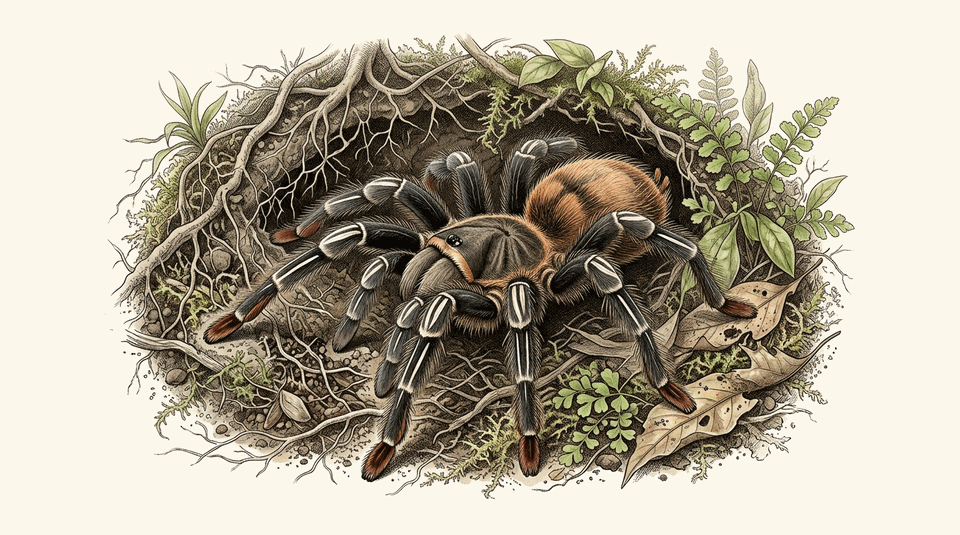
1. Deep Digging Dirt (Damp Underneath!) & Low Ceiling

2. Two Great Ways to Set Up Your Habitat
The Secret to Happy Stripe-Knees: Damp Bottom, Dry Top!
If a Stripe-Knee is pacing the glass walls, 9 times out of 10 its dirt is too shallow or too bone-dry:
Option A: 5–6" Packed Reptile Soil with Corner Water Pour (Best!)
Pack 5–6" of Reptile Soil + Coco Fiber down firm. Every 2 weeks, pour half a cup of water down one glass corner so it soaks the bottom 3" while the top stays dry!
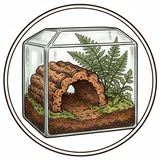
Option B: Starter Cork Tunnel + Damp Moss Corner
Poke a starter hole under curved cork bark, and seed the damp lower soil with Tropical Springtails & Dwarf White Isopods (never large hungry isopods that could bother a molting spider!).
Tank Setup: Preventing Dangerous Falls
Heavy ground tarantulas can rupture their soft abdomen if they climb the glass and fall more than 1.5× their legspan:
Option A: Deep-Substrate Acrylic Terrestrial Enclosure
Gives great side airflow and lets you fill the bottom two-thirds with burrowing dirt.
Option B: 5- to 10-Gal Glass Tank Filled Halfway with Dirt
Fill the tank halfway up the glass with packed soil so there's only 5–6" of open air between the dirt and the lid!
Heating: Skip Overhead Bulbs!
Big No-No: never put a heat lamp over a tarantula or a heat mat *under* the tank (spiders dig down to cool off, so a bottom mat cooks them!):
Option A: Normal Room Temperature (68–78°F)
In most homes, you don't need any heater at all.
Option B: Micro Heat Mat on the SIDE Wall + Thermostat
If your house gets chilly in winter (<65°F), stick a tiny 4W heat mat on the upper back/side glass on a thermostat set to 76°F.

3. Feeding Guide & 'Pet Hole' Phases
Favorite Stripe-Knee Feeders:
Top pick—high protein and won't nibble a spider!
Triggers an awesome lightning-fast burrow pounce
Crush worm heads with tongs so they don't burrow away
Wait until new fangs turn from white to black before feeding!

4. Four Keys to a Happy, Thriving Costa Rican Stripe-Knee Tarantula
Give 'Em 5–6" to Dig!
Stripe-Knees are the happier, calmer spiders when they have a deep burrow. Shallow 1" dirt makes them skittish and defensive.
Flat on Their Back = Molting!
When a tarantula flips completely upside-down on a silk mat, it's molting (NOT dead!). Never touch it, and remove any loose crickets immediately!
Look-Don't-Touch Display Pet
Stripe-Knees can teleport across a table when startled! Enjoy watching them bulldoze dirt and ambush crickets rather than handling them.
Real Water Dish (No Sponge!)
Old books said to put a wet sponge in the dish—don't do it! Spiders can't drink from sponges and they just grow nasty bacteria. Use a shallow open dish.

Bring-Home Shopping Checklist
Tap items to check them off on your phone while you shop at Critter Cabana.
Deep-Dirt Tank & Starter Cave
Water Dish & Safe Tools
Live Feeder Bugs
Complete Reference Notes & Oregon Keeping Guide
Deep Digging Dirt (Damp Underneath!) & Low Ceiling
5–6" of Packed Soil + Damp Bottom Layer + Max 1.5× Legspan Airspace!
Temperature & Humidity Zones
| Zone | Target | Notes |
|---|---|---|
| Normal Room Temp | 72°–80°F | T-shirt room temps are great (no heat lamps!) |
| Deep Burrow Zone | 70°–75°F | Cooler, slightly damp soil down at the bottom |
| The Damp-Bottom Trick | 65–75% RH | Bottom 3" of dirt damp; top layer dry (65–75% RH) |
| Open Water Dish | Fresh Water | Keep a shallow water dish full 24/7 (Skip sponges!) |
| Nighttime Temp | 66°–72°F | If your house drops under 65°F, use a tiny side heat mat |
Two Ways That Work (100% Stocked Store Options)
The Secret to Happy Stripe-Knees: Damp Bottom, Dry Top!
If a Stripe-Knee is pacing the glass walls, 9 times out of 10 its dirt is too shallow or too bone-dry:
- Option A: 5–6" Packed Reptile Soil with Corner Water Pour (Best!): Pack 5–6" of Reptile Soil + Coco Fiber down firm. Every 2 weeks, pour half a cup of water down one glass corner so it soaks the bottom 3" while the top stays dry!
- Option B: Starter Cork Tunnel + Damp Moss Corner: Poke a starter hole under curved cork bark, and seed the damp lower soil with Tropical Springtails & Dwarf White Isopods (never large hungry isopods that could bother a molting spider!).
Tank Setup: Preventing Dangerous Falls
Heavy ground tarantulas can rupture their soft abdomen if they climb the glass and fall more than 1.5× their legspan:
- Option A: Deep-Substrate Acrylic Terrestrial Enclosure: Gives great side airflow and lets you fill the bottom two-thirds with burrowing dirt.
- Option B: 5- to 10-Gal Glass Tank Filled Halfway with Dirt: Fill the tank halfway up the glass with packed soil so there's only 5–6" of open air between the dirt and the lid!
Heating: Skip Overhead Bulbs!
Big No-No: never put a heat lamp over a tarantula or a heat mat under the tank (spiders dig down to cool off, so a bottom mat cooks them!):
- Option A: Normal Room Temperature (68–78°F): In most homes, you don't need any heater at all.
- Option B: Micro Heat Mat on the SIDE Wall + Thermostat: If your house gets chilly in winter (<65°F), stick a tiny 4W heat mat on the upper back/side glass on a thermostat set to 76°F.
Feeding Guide & 'Pet Hole' Phases
Ambush Hunters: Drop Bugs by Their Door at Dusk & Pull Uneaten Bugs After 24 Hrs!
- Juveniles (<2.5") (1–2× Per Week): 1–2 Small/Medium Crickets, Small Dubia Roaches, or Mealworms: Drop gently near their burrow entrance at dusk.
- Adults (4–5.5") (Every 7–10 Days): 2–3 Large Crickets, 1–2 Medium Dubia Roaches, or 1 Hornworm: If their booty is already way bigger than their head shield, skip a week!
- Sealed Burrow (Do Not Feed!): Dirt Wall Over the Door = Pre-Molt! Stripe-Knees love to bulldoze a wall of dirt over their door for weeks before molting. Keep their water dish full and never dig them up!
Favorite Stripe-Knee Feeders:
- Live Dubia Roaches: Top pick—high protein and won't nibble a spider!
- Gut-Loaded Crickets: Triggers an awesome lightning-fast burrow pounce
- Superworms & Hornworms: Crush worm heads with tongs so they don't burrow away
- Wait 7–10 Days Post-Molt!: Wait until new fangs turn from white to black before feeding!
Keeper Note: Skip Calcium Dust for Spiders! Never put reptile calcium powder on bugs for a tarantula—just feed your crickets and roaches fresh carrot/squash or bug chow 24 hours before dinner.
Essential Keeper Rules & Pro Tips
- Give 'Em 5–6" to Dig!: Stripe-Knees are the happier, calmer spiders when they have a deep burrow. Shallow 1" dirt makes them skittish and defensive.
- Flat on Their Back = Molting!: When a tarantula flips completely upside-down on a silk mat, it's molting (NOT dead!). Never touch it, and remove any loose crickets immediately!
- Look-Don't-Touch Display Pet: Stripe-Knees can teleport across a table when startled! Enjoy watching them bulldoze dirt and ambush crickets rather than handling them.
- Real Water Dish (No Sponge!): Old books said to put a wet sponge in the dish—don't do it! Spiders can't drink from sponges and they just grow nasty bacteria. Use a shallow open dish.
Complete Store Setup Checklist
Deep-Dirt Tank & Starter Cave
- 5.5–10 Gal Terrarium or Deep Acrylic Terrestrial Enclosure
- 2 Bags of Reptile / Invertebrate Soil + Coco Fiber (for 5–6" depth!)
- Curved Cork Bark Hide (Starter Burrow) & Sphagnum Moss
Water Dish & Safe Tools
- Shallow Resin Water Dish + Water Dechlorinator
- 10-Inch Feeding Tongs & Soft Paintbrush (for guiding spider)
- Digital Thermometer / Hygrometer
Live Feeder Bugs
- Live Dubia Roaches, Crickets, or Mealworms/Hornworms
- Bug Gut-Load Chow (feed the bugs first!)
How We Keep Them at Critter Cabana & Gresham Pet Supply
- Oregon Winter Furnace Air vs. Molting Humidity: When Pacific Northwest furnaces kick on from October through April, indoor room humidity drops fast and dries out small enclosures from the top down. Rather than misting the spider or invert directly (which stresses terrestrial species and invites stagnant mold), we keep Costa Rican Stripe-Knee Tarantula at
50–70% RHby using a deep moisture-retaining substrate bed (ReptiSoil + Coco Fiber + Sphagnum Moss), overflowing the water dish slightly into one corner, and maintaining cross-ventilation. - Safe Room Heating in the Willamette Valley: If your house drops below 65°F on winter nights, never stick a heat pad on the bottom of a burrowing invertebrate tank—they dig down to escape heat and will cook themselves. Use a low-wattage side-mounted heat mat on a digital thermostat or warm the room ambiently to
72°–80°F. - Stocked at Newberg & Gresham: At Critter Cabana (Newberg) and Gresham Pet Supply, we stock acrylic and glass invertebrate enclosures, cork bark flats and tubes, bioactive substrates, flightless fruit flies (D. melanogaster and D. hydei), pinhead to adult crickets, dubia roaches, and live Temperate White Springtail and Isopod cultures.
Common Questions (FAQ)
How do I keep my Costa Rican Stripe-Knee Tarantula warm and humid enough during an Oregon winter?
Target 72°–80°F and 50–70% RH. When Oregon winter furnaces dry out the air, use a deep 3–5 inch substrate mix of Zoo Med ReptiSoil and coco fiber, keep a shallow water dish filled, and dampen one corner of the substrate rather than misting the animal directly. Never put a heat mat underneath a burrowing invertebrate enclosure.
What size enclosure does a Costa Rican Stripe-Knee Tarantula need?
An adult Costa Rican Stripe-Knee Tarantula thrives in 5–10 Gal Deep Dirt with secure ventilation. For terrestrial tarantulas and scorpions, floor space and deep substrate matter most (keep open fall height low so heavy-bodied species cannot rupture their abdomen); for arboreal species, prioritize vertical cork bark tubes and cross-ventilation.
Can I put isopods in a Costa Rican Stripe-Knee Tarantula bioactive enclosure?
Around molting tarantulas and scorpions, skip protein-hungry large isopods and stick to Temperate White Springtails (or gentle Dwarf White isopods in humid detritivore setups) so a soft, newly molted animal is never nibbled.
Where can I find Costa Rican Stripe-Knee Tarantula, cork bark, and feeder insects in Oregon?
We stock live invertebrates, tarantulas, jumping spiders, cork bark flats and tubes, bioactive substrates, and gut-loaded feeder insects at our two exotic animal stores: Critter Cabana in Newberg (514 E First St, 503-537-2887) and Gresham Pet Supply (2185 NW Burnside Rd, 503-665-7606).