
Feeding Frozen-Thawed Mice and Rats to Your Snake
Pick the right size, thaw it safely, feed with tongs, and keep your snake and your family healthy with frozen-thawed rodents.
Frozen-thawed mice and rats are the safest way to feed a pet snake. Getting it right comes down to three things: the right size, a full thaw, and tongs.
Nothing in the bag can bite back, they keep for months in the freezer, and a whole rodent gives your snake everything it needs. No calcium or vitamin dusting needed.
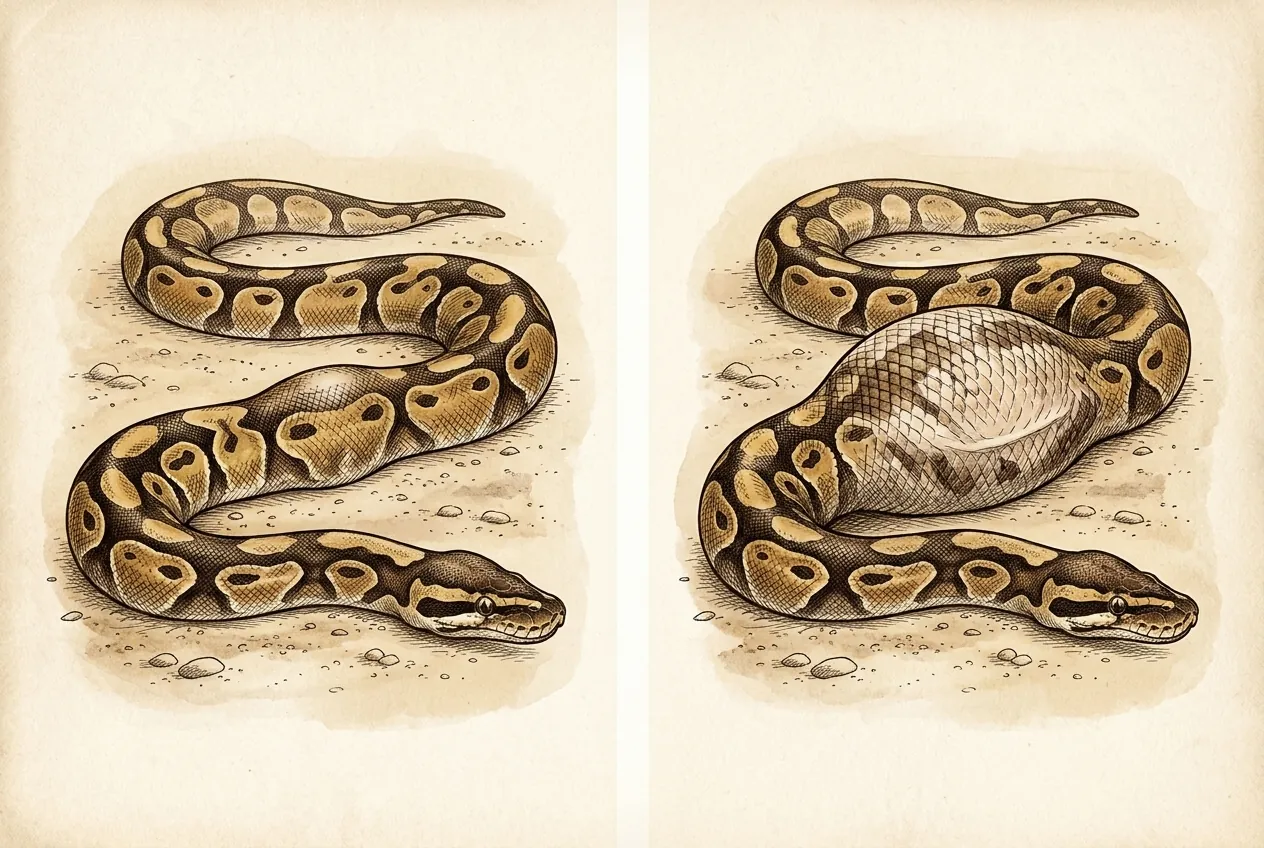 Right size
At a glance
Picking the right size
Match the thickest part of your snake's body. Between two sizes, pick the smaller one.
- Right size
- Too big
- Right size
- A small, gentle lump in the middle is normal.
- Too big
- A huge bulge. Go down a size next time.
That's the rule rodent breeders give, and it matches our snake care sheets. A meal that's too big is the usual reason a snake brings its food back up.
- A small, gentle lump in the middle of your snake after it eats is normal.
- A huge bulge means the prey was too big. Go down a size next time.
- Weigh it if you can. One maker suggests each meal be no more than about 10 to 15% of your animal's weight. A kitchen scale makes this easy.
Size names vs. grams
Size names change from brand to brand. Shop by the grams on the bag.
One company's "small" is another's "weaned." The grams are what matter.
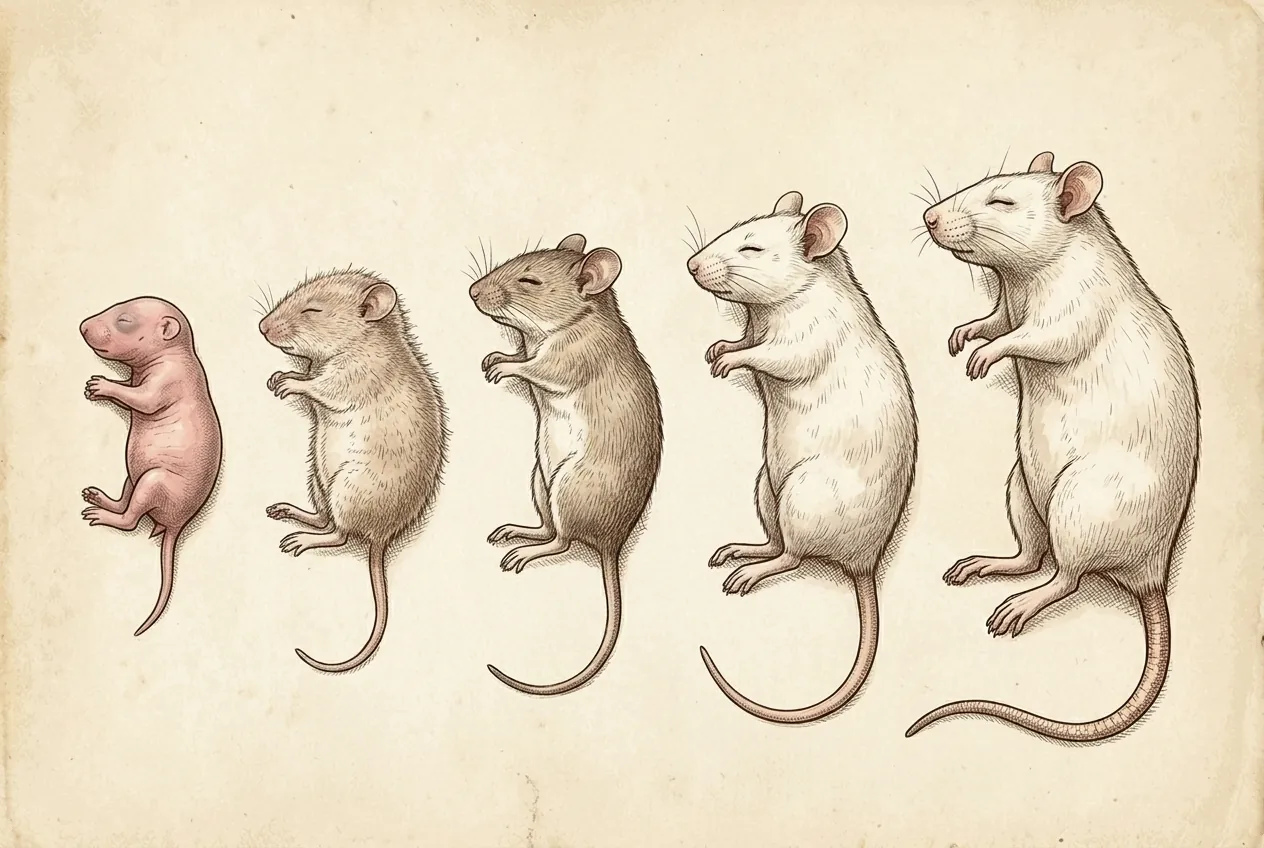
| Type | Size | Typical weight |
|---|---|---|
| Mouse | Pinky | 1.50–2.99 g |
| Mouse | Fuzzy | 3.00–6.99 g |
| Mouse | Hopper | 7.00–12.99 g |
| Mouse | Weaned / small adult | 13.00–17.99 g |
| Mouse | Adult | 18.00–29.99 g |
| Mouse | Jumbo | 30.00–45.00+ g |
| Rat | Pinky | 9–13 g |
| Rat | Fuzzy | 14–19 g |
| Rat | Pup | 20–29 g |
| Rat | Weaned | 30–39 g |
| Rat | Small | 40–69 g |
| Rat | Medium | 90–129 g |
| Rat | Large | 180–249 g |
| Rat | XL / Jumbo | 250 g and up |
Where these weights come from
Mouse weights follow RodentPro's size chart and rat weights follow Layne Labs'. Other brands' ranges overlap but don't match exactly, and in-between sizes (like small/medium rats) fill the gaps.
No rodent maker publishes a protein or fat analysis, so there's no nutrition table here.
Mice or rats?
Most corn snakes, milk snakes, kingsnakes and hognoses stay on mice. Ball pythons and boas move up to rats.
Mice for life
Most corn snakes, milk snakes, kingsnakes and hognoses.
Up to rats
Ball pythons and boas.
Bigger whole prey
Very large snakes and some big lizards eat chicks or quail. The same thawing rules apply.
How to thaw
Fridge first, then a sealed bag in warm water. Never the microwave.
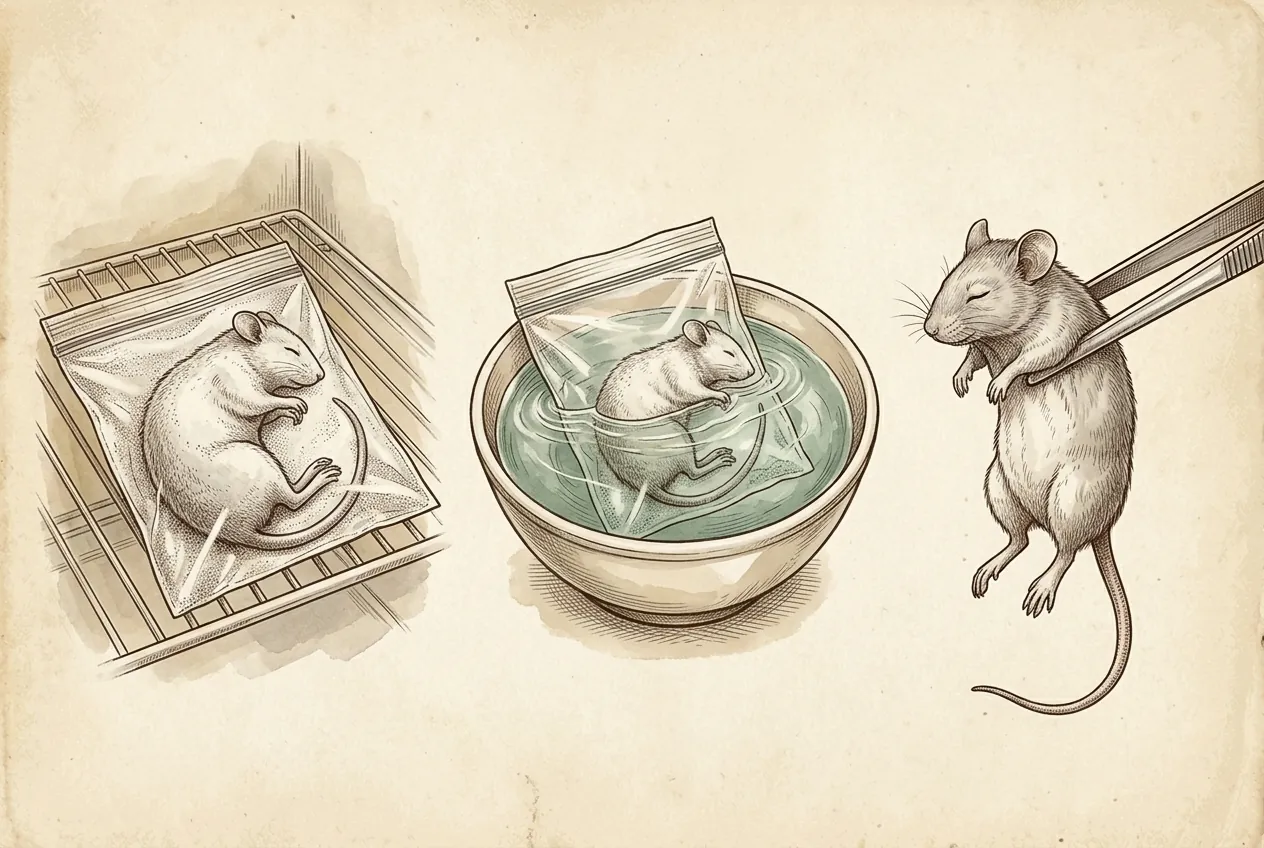
Fridge. Move one meal to the fridge in a sealed bag, on a plate or in a lidded tub. Do it the night before or early in the day.
Warm it in the bag. Set the sealed zip bag in a bowl of warm tap water. Change the water if it cools. Don't put the rodent loose in the water.
Check, then offer. Gently squeeze the belly: soft, with no hard or cold center. Offer it warm to the touch, not hot.
Fridge, then a sealed bag in warm water, then offer on tongs.
Snakes find food by warmth, so a cold mouse often gets ignored or struck and dropped.
A microwave heats unevenly, cooks parts of the animal and can burst it.
Feeding with tongs
Long tongs every time, a little to the side of the head. Never by hand.
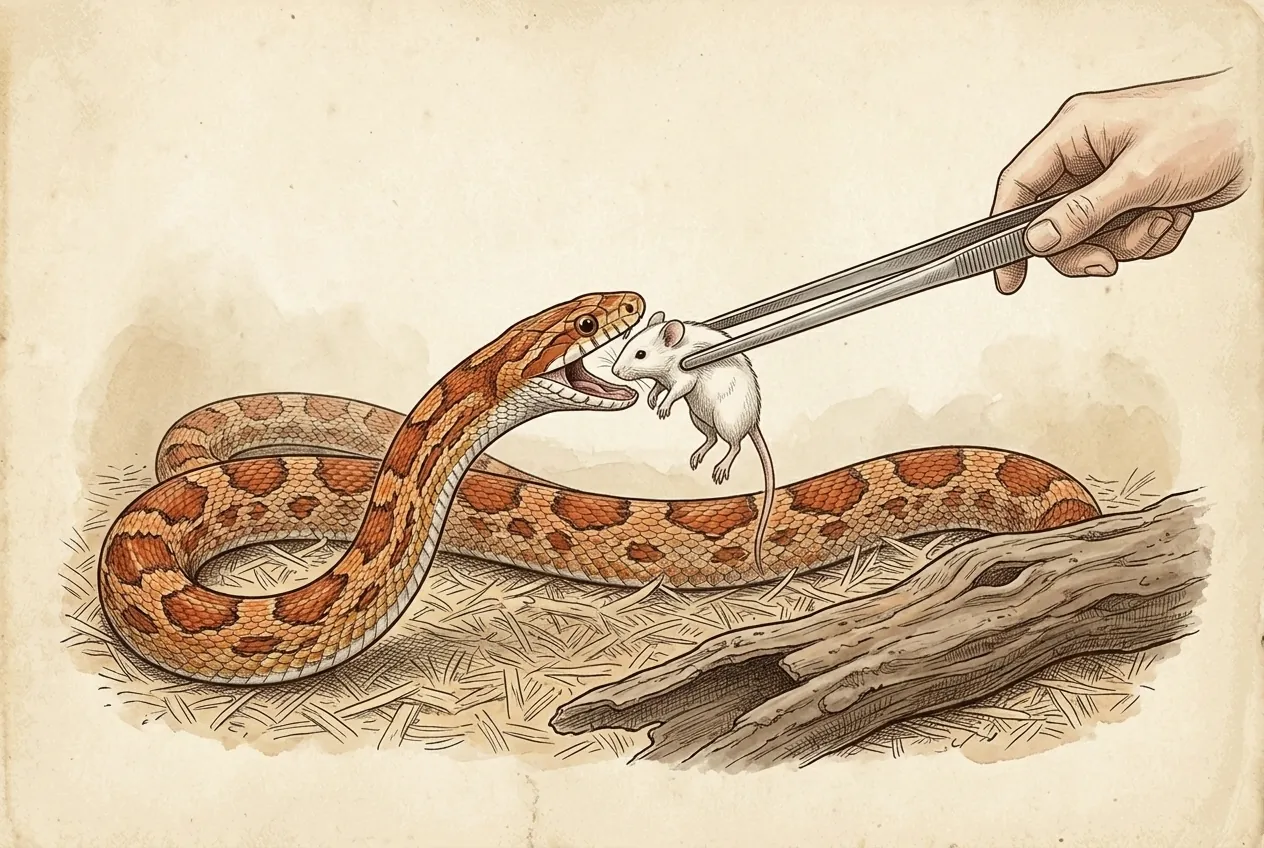
- Use long feeding tongs. Tongs teach your snake that hands mean handling and tongs mean food. They keep your fingers out of the strike.
- Hold it by the tail or scruff at the tip of the tongs, a little to one side of the head, not straight above it.
- Give it a slow wiggle. Movement and warmth trigger the strike.
- Let go once your snake grabs and wraps. Don't pull back.
- Feed one snake at a time, in its own enclosure.
Shy eater? Some snakes, ball pythons especially, eat better if you leave the thawed rodent near the hide and walk away. Your care sheet explains how.
After the meal
Leave your snake alone for at least 48 hours.
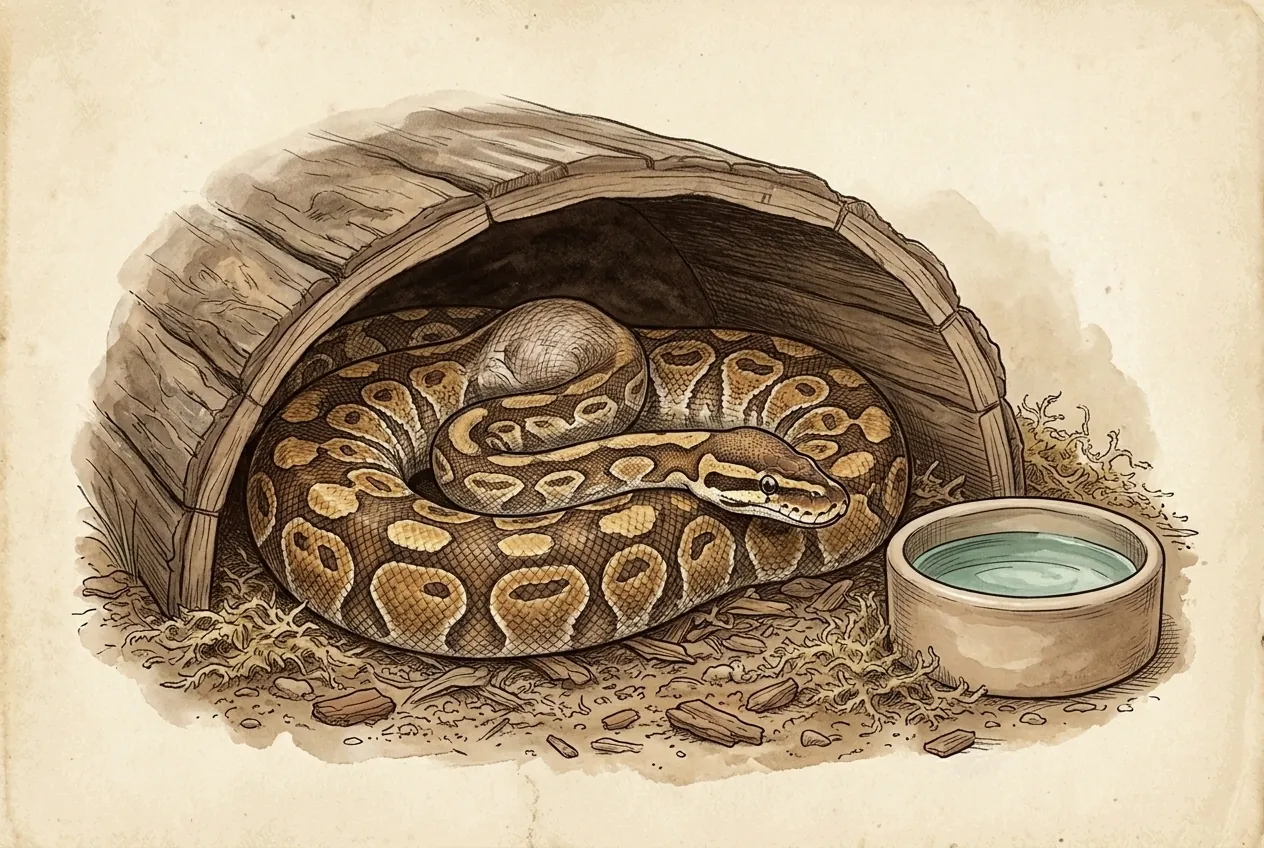
- At least 48 hours of no handling.
- 48 to 72 hours is best for ball pythons, corn snakes and boas.
- Handling too soon is one of the top reasons a snake brings its meal back up.
- Regurgitated? It needs a longer break before the next meal. Check your care sheet for how long.
Is your snake the right weight?
Seen end on, a healthy snake is shaped like a loaf of bread: rounded on top, a little flat on the sides.
Overfeeding is a common problem, especially with boas and pythons.
Underweight
The backbone shows as a ridge and the body looks like a triangle.
Healthy
Rounded and firm, with no ridge along the spine.
Overweight
The body looks swollen and you can see skin between the scales.
- Getting heavy? Feed a size smaller or space meals out the way your care sheet says.
Keeping you safe, too
Frozen rodents can carry Salmonella. Wash your hands and keep them away from your food.
The CDC has tracked outbreaks linked to frozen rodents. A few simple habits keep your family safe:
- Wash your hands with soap and water right after touching frozen rodents or anything they touched.
- Keep them away from your food. Store the bags in a sealed tub in the freezer.
- Feeding gear only. Use a container and tongs only for feeding, never kitchen dishes, sinks or utensils.
- Clean up with a bleach solution: 1 tablespoon of bleach in 1 quart (4 cups) of water, per the CDC.
Storing them
Keep the bag sealed, and reseal it after each use.
- One maker says frozen rodents usually last 12 months or longer if you reseal the bag after each use.
- Vacuum packs help stop freezer burn.
Quick answers
Can I feed live instead? We recommend frozen-thawed. Live rodents can bite and badly hurt a snake, and vets see those injuries often. Our snake care sheets all call for frozen-thawed.
My snake won't take frozen. What now? Usually the prey is too cold, too still or too big. Warm it longer, wiggle it on the tongs and try a size smaller. Check enclosure temperatures too: a cool warm side is a common reason snakes won't eat.
Can I refreeze a mouse my snake didn't eat? No. Throw it away.
How do I know what size to buy? Match the thickest part of your snake's body and check the grams on the bag. Bring your snake's weight or a photo and we'll help you pick.
Do I need calcium powder or vitamins? No. A whole rodent is complete food for a snake.
Can I keep them in my kitchen freezer? Yes, in a sealed tub of their own, away from food. Wash your hands after.
Shop this
Pick up in store or have it shipped.
Reviewed by our team 2026-11-06. Nutrition figures are each maker's published guaranteed analysis.