
What to Feed a Grassland Tortoise
Sulcata, Russian, Greek and Hermann's tortoises live on weeds, hay and greens. Where pellets fit, why fruit is out, and how to keep the shell smooth.
Sulcata, Russian, Greek and Hermann's tortoises are grazers. In the wild they eat grasses, dry hay-like plants and broadleaf weeds. That means lots of fiber and very little protein or sugar.
A tortoise pellet can help, but it's a side dish next to weeds, greens and hay, never the whole meal.
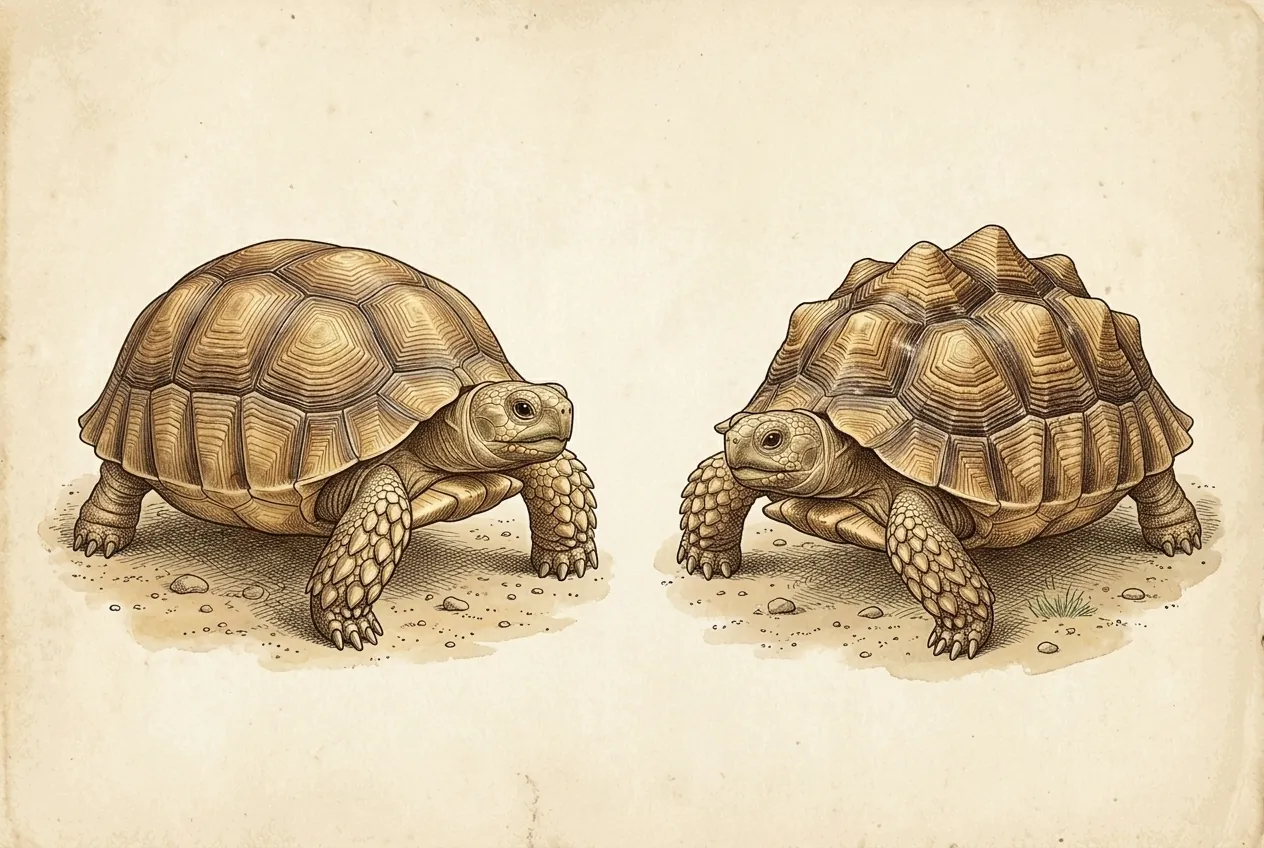 Smooth growth
At a glance
- Best staple Grass hay and broadleaf weeds, plus store greens
- Pellets A small, moistened side, never the whole meal
- Supplements Calcium powder on greens 2-3 times a week
- Soaking Babies several times a week, adults about once a week
- Avoid Fruit, dog or cat food, animal protein
- UVB Calcium only works with good UVB
What a grassland tortoise eats
Build meals on grass hay and broadleaf weeds, plus store greens. Never animal protein.
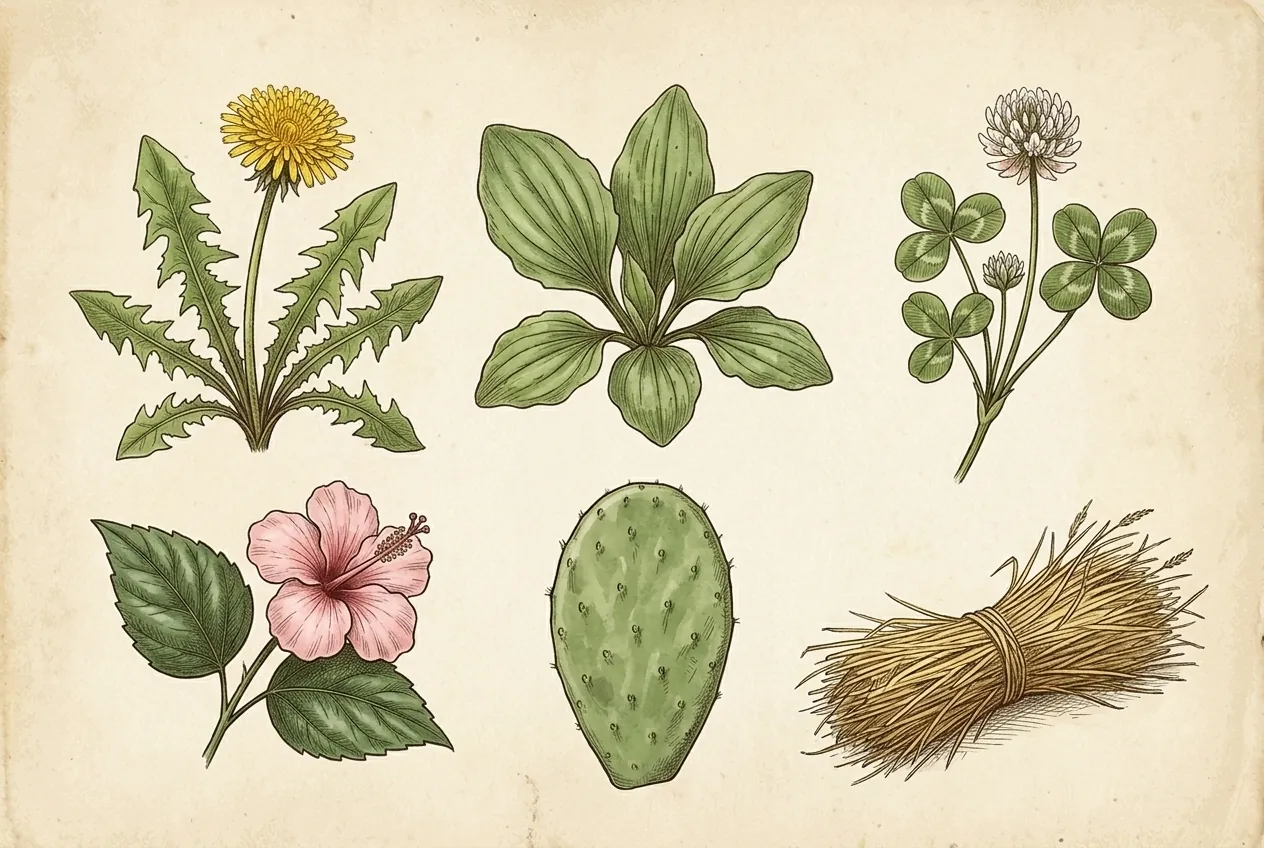
- Grass hay: timothy or orchard grass. Pesticide-free lawn grass counts too.
- Broadleaf weeds: dandelion, broadleaf plantain, clover and sow thistle.
- Flowers and pads: hibiscus leaves and flowers, spineless prickly pear pads.
- Store greens: endive, escarole, turnip, mustard and collard greens.
Go easy on
Spinach and kale, which bind calcium. Iceberg lettuce has almost no nutrition.
Never feed
Dog or cat food, insects or other animal protein.
Hay or weeds by species
Sulcatas eat mostly grass and hay. Hermann's, Russians and Greeks eat mostly weeds and leafy greens.
How the plate splits up depends on the species. These numbers come from our care sheets:
| Tortoise | Grass & hay | Weeds & leafy greens |
|---|---|---|
| Sulcata | about 80% | about 20% |
| Hermann's | about 20% | about 80% |
Russian and Greek tortoises eat a lot like Hermann's: mostly weeds and leafy greens, with some dry grass.
Fiber, not fruit
Skip fruit. Grassland tortoises don't handle sugar well.
- Fruit can upset their gut and cause diarrhea.
- Our Russian and Hermann's care sheets say no fruit at all.
- Vets cap it at 5% at most for plant-eating tortoises.
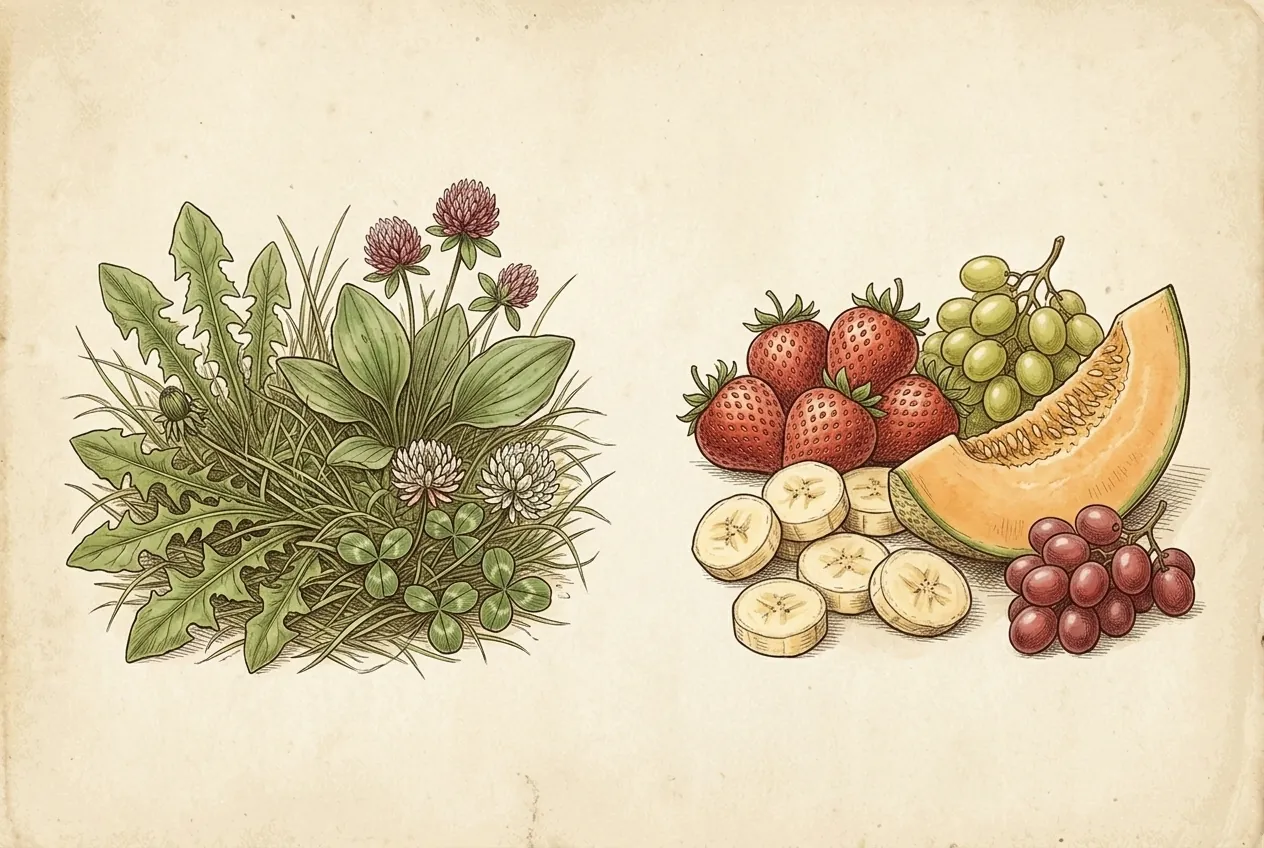
- Every day
- Skip it
- Every day
- Grass hay, dandelion and clover.
- Skip it
- Strawberries, melon, banana and other fruit.
Comparing prepared foods
For an adult, we lean toward a high-fiber, low-protein pellet.
Protein varies
The makers don't agree: it runs from 8.5% to 20%.
For an adult
A high-fiber, low-protein pellet like the Zoo Med Grassland our care sheets use.
At one year
Mazuri moves young tortoises to its adult formula, per the maker's label.
A gel is not a staple
Repashy names tortoises but no species or age, per the maker's label. Use it beside hay and weeds, not on its own.
Compare all 7 foods: protein, fiber, calcium and how to feed
| Food | Life stage | Protein | Fat | Fiber | Calcium | Phosphorus | How to feed, per the maker's label |
|---|---|---|---|---|---|---|---|
| Zoo Med Grassland Tortoise Food | 6 months and up | 8.5% min | 1.9% min | 25.0% max | 0.9-1.3% | 0.4% min | Moistened, three times a week |
| Zoo Med Grassland Tortoise Food Crumbles | Hatchling | 8.5% min | 1.9% min | 25.0% max | 0.9-1.3% | 0.4% min | Moistened, daily for hatchlings |
| Mazuri Tortoise LS Diet | Adult | 12.0% min | 4.0% min | 18.0-22.0% | not listed | not listed | 1-4% of body weight a day |
| Mazuri Small Tortoise Diet LS | Under 1 year | 20% min | 4% min | 10-15% | 1.75-2.25% | 1% | 1-4% of body weight a day, dry, soaked or with greens |
| Exo Terra Soft Pellets, Adult European | Adult | 9.0% min | 2.0% min | 26.0% max | 0.9-1.3% | 0.4% min | Each morning, a little more than it eats |
| Exo Terra Soft Pellets, Juvenile European | Juvenile | 11.0% min | 2.0% min | 24.0% max | 0.9-1.3% | 0.4% min | Each morning, a little more than it eats |
| Repashy Grassland Grazer (gel) | not listed | 15% min | 3% min | 13% max | 1.5% min | not listed | 1 part powder to 2-3 parts boiling water, offered freely |
Figures are each maker's guaranteed analysis. Moisture is listed only for the Exo Terra juvenile pellet (13% max). Fluker's doesn't publish an analysis we could read, so it isn't in the table.
What's in them, per the makers' labels:
- Zoo Med Grassland has wheat and soybean meal.
- Both Exo Terra European pellets have fish meal (the juvenile adds corn meal).
- Mazuri's young-tortoise food has apple pomace.
- Repashy has molasses and dried watermelon.
How to feed
Weeds, greens and hay most days. Pellets stay a small, moistened side.
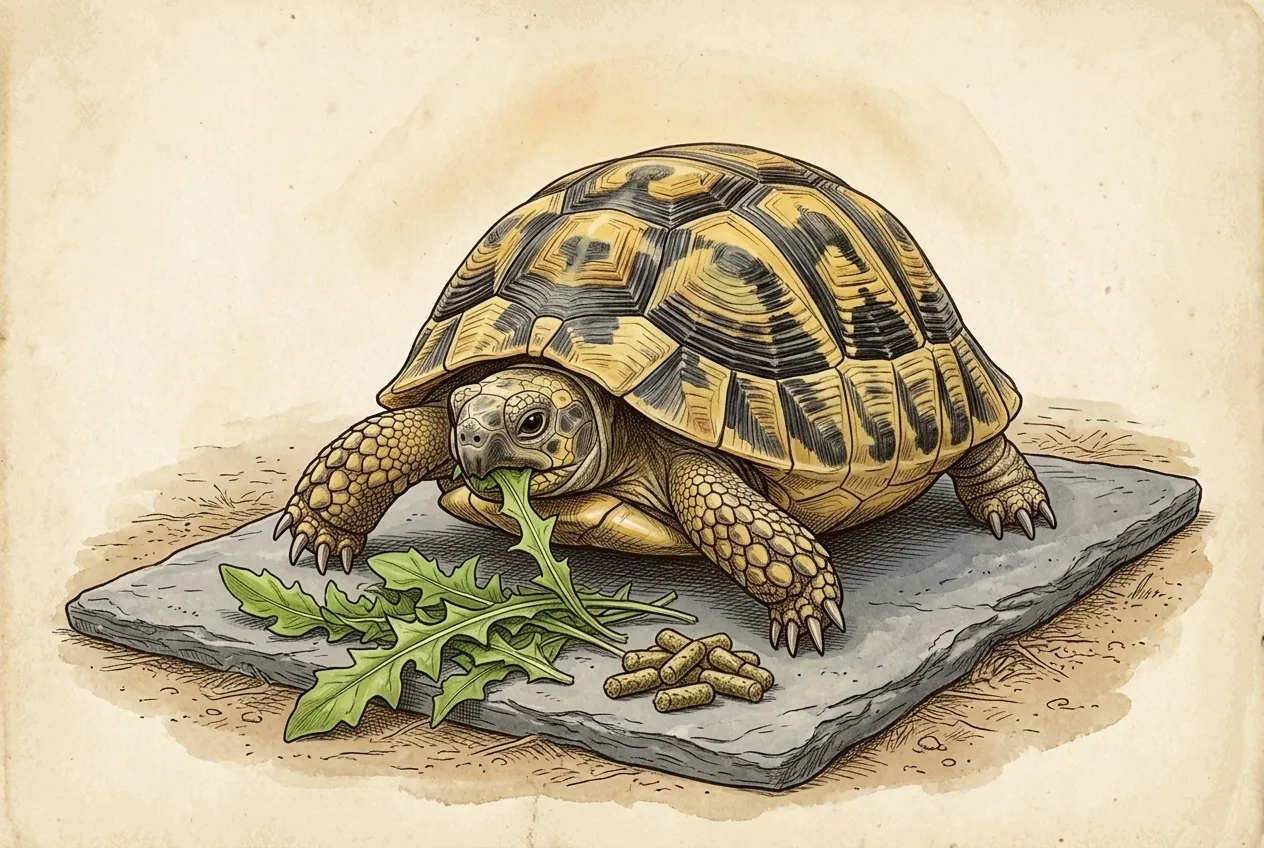
- Fresh weeds and greens most days, plus grass hay. A Sulcata should have hay in front of it all the time.
- Keep pellets a small part of the meal. For an adult, we start at the lighter end.
- Serve on a flat slate tile or heavy shallow dish, never loose on the substrate.
- Take out leftovers at the end of the day.
- Dust greens with calcium powder 2-3 times a week. Whether to use one with D3 depends on your UVB setup; your species care sheet says which.
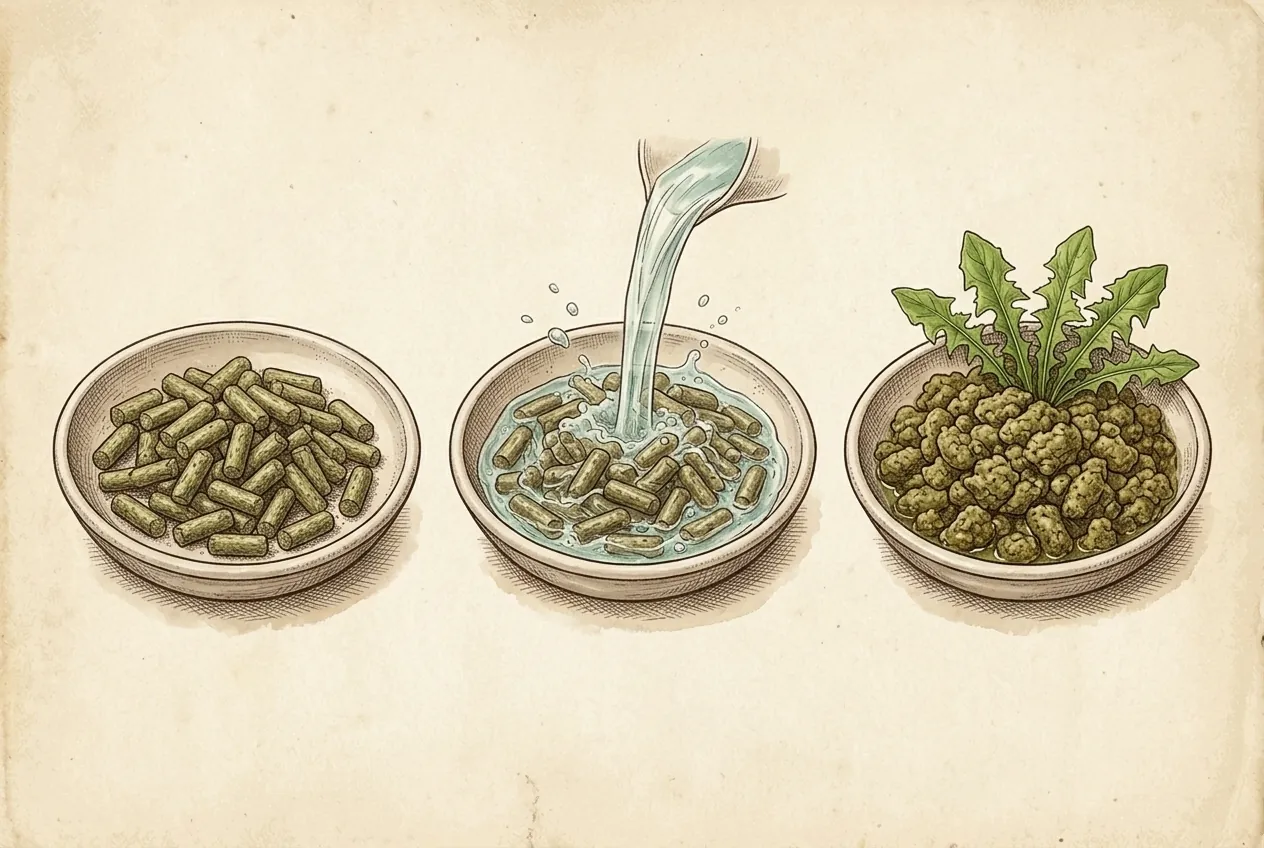
Dry pellets. Keep them a small part of the meal.
Add water. Moisten dry pellets in a little water until soft.
Ready to serve. Top with fresh weeds.
Soak pellets until soft, then serve with fresh weeds on top.
Dry pellets keep
in a cool, dry spot with the lid closed. Mazuri says use within a year and keep it at 75°F or colder.
Mixed gel keeps
two weeks in the fridge or six months in the freezer, per the maker.
Soaking and water
Soak babies several times a week and adults about once a week. Water dish every day.
A sample week
Baby / young tortoise
Adult
Feed Optional Rest day
Show as a table
| Age | Soak | Water dish |
|---|---|---|
| Baby / young tortoise | Several times a week, about 15 minutes | Every day |
| Adult | About once a week | Every day |
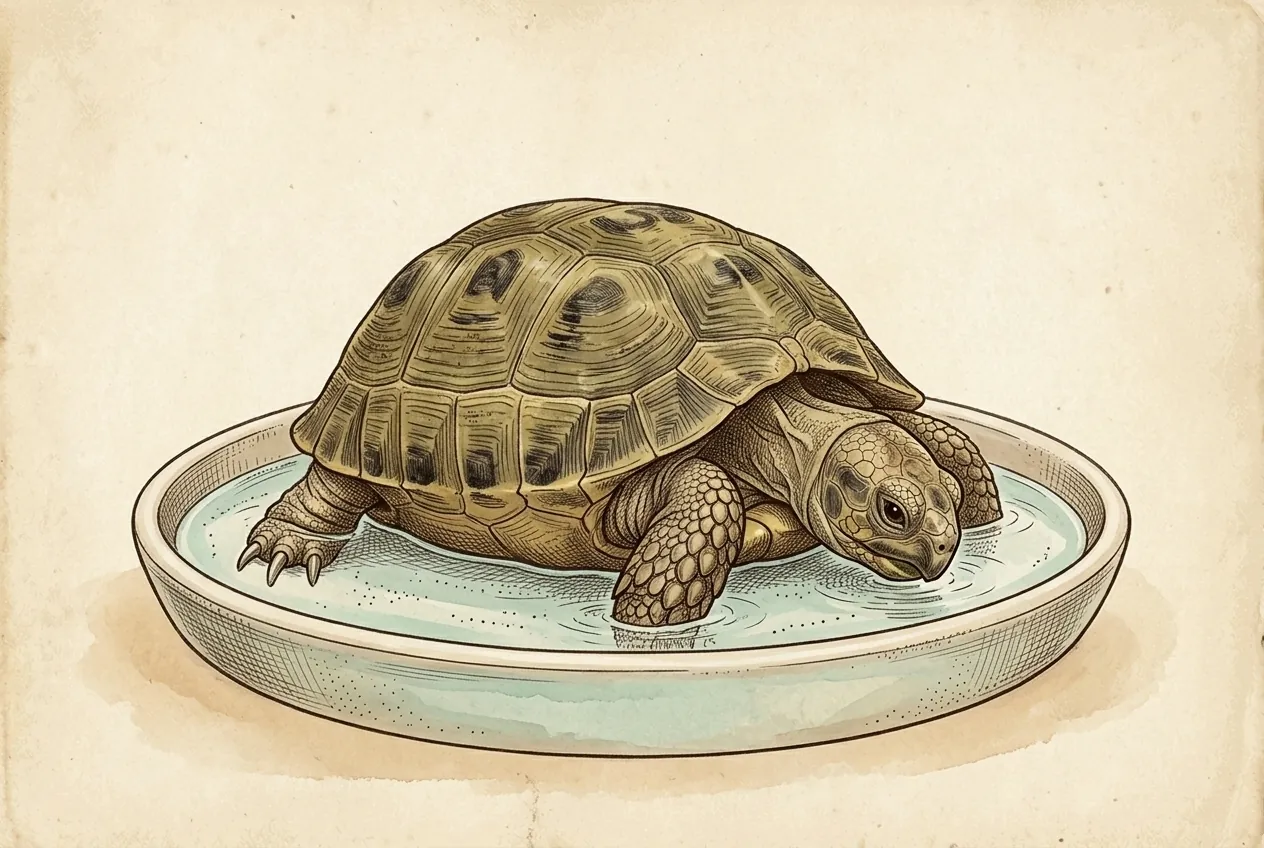
- Many tortoises are poor drinkers.
- A dry baby is at risk for a bumpy shell.
- A soak in shallow, lukewarm water helps them drink and pass waste.
- The water dish should be shallow enough to climb into without tipping.
Shell and beak warning signs
Watch for a bumpy shell, a soft shell and an overgrown beak.
- Smooth growth
- Pyramided shell
- Smooth growth
- An even shell.
- Pyramided shell
- Each scute grows up into a cone. The damage is permanent.
Pyramiding
Each shell scute grows up into a cone. Dry air and too little water in the first few years are big causes, along with poor UVB, low calcium and too much rich food.
It can't be undone
The damage is permanent, but fixing the setup stops it getting worse. Young tortoises need a humid hide.
Metabolic bone disease
Comes from too little UVB or calcium.
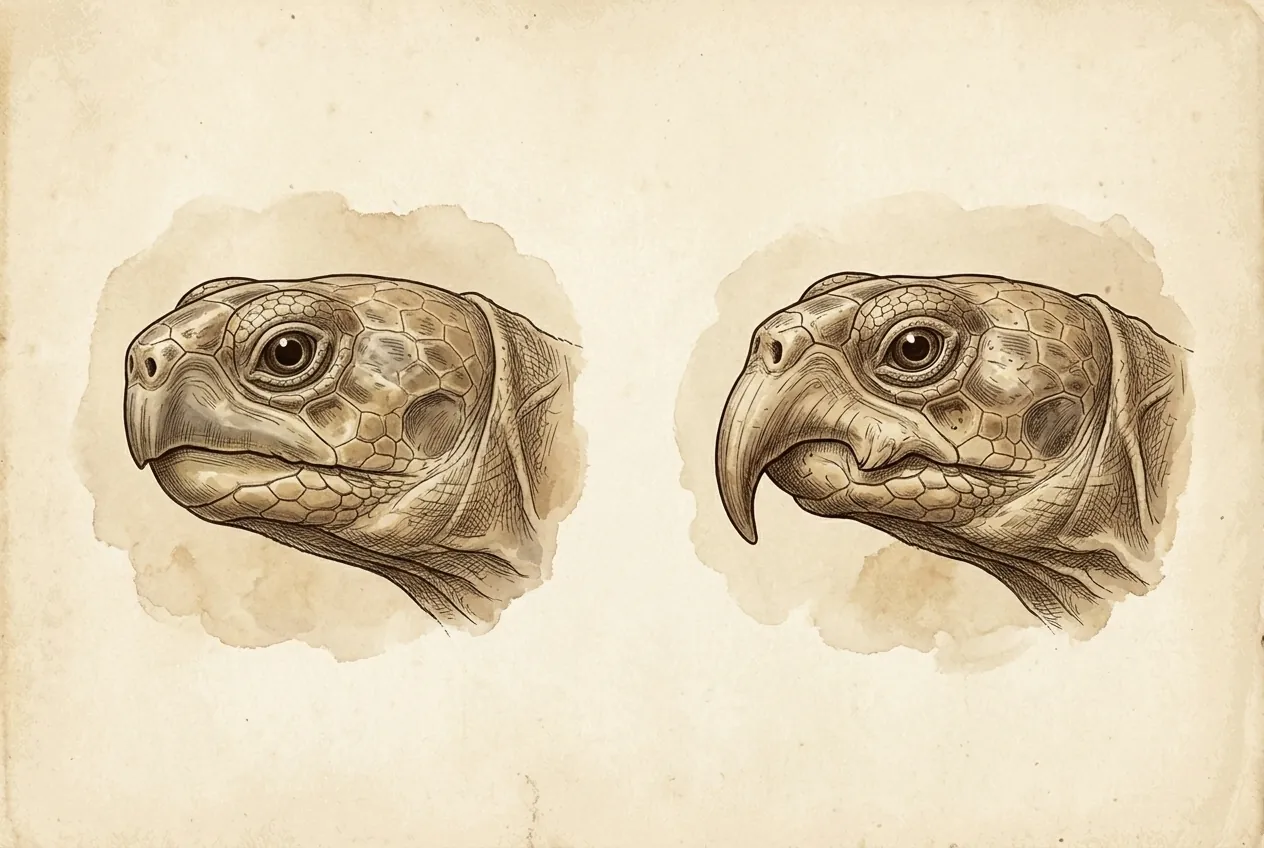
- Normal beak
- Overgrown beak
- Normal beak
- Short and neat.
- Overgrown beak
- Hooked like a parrot's. Tough weeds and rough feeding surfaces help prevent it.
Watch for:
- a soft shell
- weak legs
- a tortoise that stops eating or moving much
Keep it clean
Wash your hands right after touching or feeding your tortoise.
- Tortoises can carry Salmonella.
- Wash your hands right after touching or feeding your tortoise or anything in its enclosure.
- Keep the tortoise and its dishes out of the kitchen.
- Health agencies advise extra care with young children, older adults and anyone with a weak immune system.
What else you'll need
Calcium, UVB, hay, a slate tile, a soaking tub and a cuttlebone.
- Calcium powder and a reptile multivitamin.
- UVB lighting and a basking spot. Calcium only works with good UVB. See your care sheet.
- Grass hay, timothy or orchard.
- A flat slate tile or heavy, shallow dish.
- A soaking tub and a shallow water dish.
- A cuttlebone to chew on.
Quick answers
Can my tortoise live on pellets? No. Pellets are one part of the diet, beside weeds, greens and hay.
How often do I feed pellets? The makers disagree. For an adult, a few times a week is a safe start. Watch weight and growth.
Can tortoises eat fruit? Grassland tortoises are better off without it. Red-foots are the exception, and they need a forest diet.
Can I feed weeds from my yard? Yes, if you know the plant and the yard is never sprayed. Skip roadsides.
What causes pyramiding? Mostly low humidity and too little water while young, plus poor UVB, low calcium and overfeeding.
Do I need to soak my tortoise? Yes. Babies several times a week, adults about once a week.
Shop this
Pick up in store or have it shipped.
Reviewed by our team 2026-11-06. Nutrition figures are each maker's published guaranteed analysis.