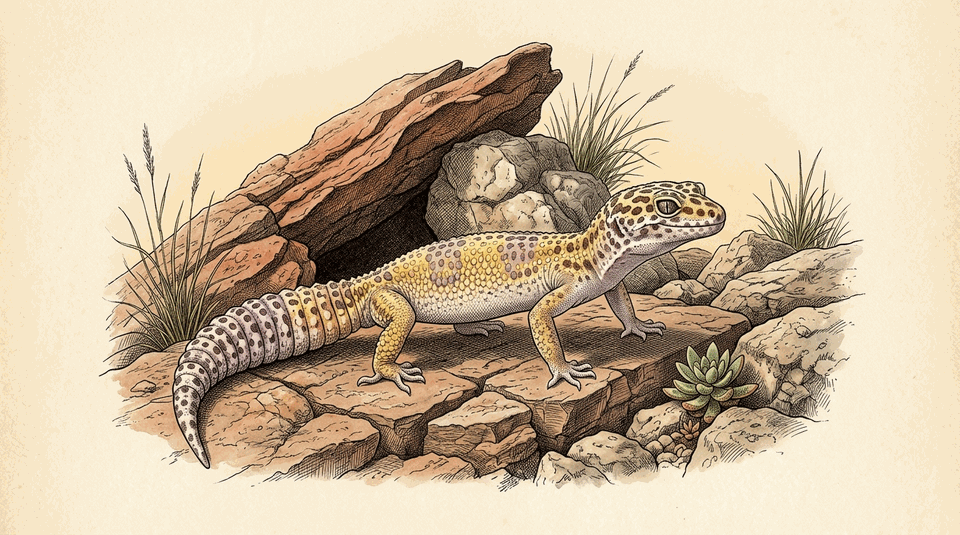
African Fat-Tailed Gecko
Hemitheconyx caudicinctus
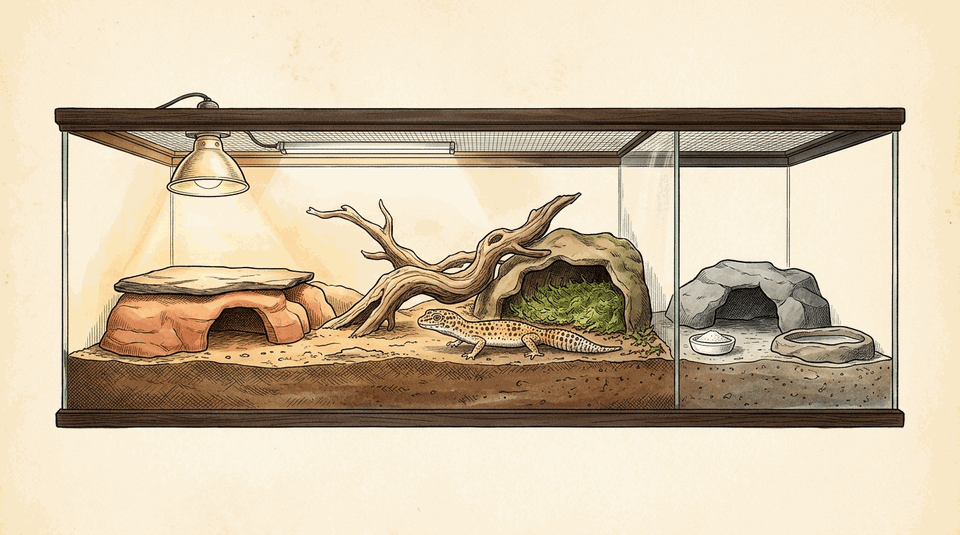
1. Habitat Layout & Temperature Gradient
Species: Hemitheconyx caudicinctus | Difficulty: 2/5 — Easy | Hardiness: 4/5 — Hardy

Critter Cabana & Gresham Pet Supply — Keeping Your Pet Healthy & Thriving
At a Glance

| Common Name | African Fat-Tailed Gecko (AFT) |
| Species | Hemitheconyx caudicinctus |
| Origin | West Africa (Savannahs and scrublands near water sources) |
| Adult Size | 7 to 9 inches |
| Lifespan | 15 to 20 years |
| Diet Type | Insectivore (Crickets, roaches, worms) |
| Activity | Crepuscular / Nocturnal |
| Temperament | Incredibly docile and calm. They are slower and less jumpy than Leopard Geckos, but also shyer and spend more time hiding. |
| Handleability | Excellent. They are very slow and tolerate handling extremely well. |
| Difficulty | 2/5 — Easy |
| Hardiness | 4/5 — Hardy |
Why We Love Them: African Fat-Tailed Geckos are the calm, quiet cousins of the Leopard Gecko. They have massive, adorable black eyes and incredibly thick, pudgy tails where they store fat and water. If you want a reptile that will just sit happily in your lap while you watch TV, the AFT is one of the best choices in the entire hobby.
African Fat-Tailed vs. Leopard Gecko
HUMIDITY IS KEY: While AFTs look very similar to Leopard Geckos, they do not live in dry deserts. They live in West African scrublands and require significantly higher humidity (50% to 70%). If you keep them bone-dry like a Leopard Gecko, they will suffer from severe stuck shed, respiratory issues, and dehydration.
Housing & Enclosure
Enclosure Type & Size
- Type: Terrestrial (Ground-dwelling). They do not have sticky toe pads and cannot climb glass. Floor space is more important than height.
- Minimum Size: A 20-gallon "Long" terrarium (30" x 12" x 12"). A 40-gallon breeder is ideal for an adult.
- Solitary: They should be housed individually. Males will fight to the death, and cohabitating females can lead to bullying and starvation.
Substrate
- Recommended: Because they need higher humidity, a dirt-based substrate is best. Use a 70/30 mix of organic topsoil and play sand, or coconut fiber (EcoEarth).
- Avoid: Calcium sand (causes fatal impaction), walnut shells, and pine/cedar shavings.
Décor & Enrichment
- Hides (CRITICAL): You must provide at least three hides:
- A warm hide on the basking side.
- A cool hide on the opposite end.
- A Humid Hide filled with damp sphagnum moss. This is essential for perfect sheds.
- Climbing: Provide low cork bark flats for them to explore.
Heating & Lighting

Temperature Requirements
| Zone | Temperature |
|---|---|
| Basking Surface | 90°F (32°C) |
| Warm Ambient | 85°F (29°C) |
| Cool End | 75°F (24°C) |
| Nighttime Drop | 70°F (21°C) |
- Heating: They absorb heat through their bellies to digest food. A heat mat on the bottom of the tank (plugged into a thermostat) is the most traditional method. A low-wattage deep heat projector (DHP) is also excellent.
- Thermostat (Mandatory): Unregulated heat mats will burn the gecko's belly. Always use a thermostat.
Lighting & UVB
- UVB: Not strictly required since they are nocturnal, but highly recommended (Arcadia ShadeDweller 7% UVB) to synthesize Vitamin D3 naturally and prevent Metabolic Bone Disease (MBD).
Humidity & Water
- Target Range: 50% to 70%.
- Misting: Mist the enclosure lightly once a day (usually in the evening) to boost humidity, and ensure the humid hide moss is always damp.
- Water Bowl: Provide a shallow water dish with fresh, dechlorinated water daily.
Diet & Nutrition
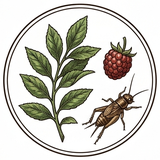
Prey Items
- Staples: Gut-loaded crickets and small Dubia roaches.
- Treats: Mealworms and waxworms. Note: AFTs are notoriously picky eaters and often refuse worms entirely, preferring fast-moving crickets.
- Size: Insects should be no wider than the space between the gecko's eyes.
Feeding Schedule
- Babies: Feed 5 to 7 appropriate-sized insects every single day.
- Adults: Feed 6 to 8 insects every other day.
Supplements (Mandatory)
Because they do not eat whole rodents (which have bones), you must provide artificial calcium.
- Dust all insects with Calcium without D3 and a multivitamin.
- If you do not have a UVB light, use Calcium with D3 so they can process the calcium.
- Keep a tiny bottle cap of pure calcium (no D3) in the enclosure at all times. They will lick it when they feel they need it.
What We Stock & Use in Our Stores
These are products we carry and recommend for this species. Ask any associate for help finding them in-store.
| Category | Product | Notes |
|---|---|---|
| Housing | Exo Terra 20-Gallon Long | Perfect starting size |
| Heating | Zoo Med Under Tank Heater & Thermostat | Essential for belly heat and digestion |
| Substrate | Zoo Med Eco Earth (Coconut Fiber) | Holds the higher humidity AFTs require |
| Enrichment | Zoo Med Sphagnum Moss | Mandatory for the humid hide |
Care sheet compiled by Critter Cabana & Gresham Pet Supply. For questions, ask any livestock specialist in-store.
Last updated: 2026-08-04
How We Keep Them at Critter Cabana & Gresham Pet Supply
- Beating Dry Oregon Furnace Air (and Summer Heat Spikes): Across the Willamette Valley and Portland Metro, running the house furnace all winter drops indoor humidity to 25–35%, which quickly causes stuck sheds and dehydration in screen-top tanks. To hold
50-70% (Mist daily)reliably for African Fat-Tailed Gecko, our crew uses a deep 3–5" substrate bed (or our store-shelf 10-Part Bioactive Mix of ReptiSoil, Coco Fiber, Orchiata Bark, Sphagnum Moss, and Leaf Litter), a dedicated humid hide packed with damp sphagnum moss, and partial screen cover when needed. - Thermostat & Linear UVB Standard: Every heating element in our Newberg and Gresham reptile rooms runs on a thermostat probe set to
Basking 90°F / Cool 75°Fon the warm side with acomfortable room temperaturecool retreat, paired withfalseon a 12-hour day/night timer. In summer, if an upstairs room climbs above 82°F, a dimming thermostat automatically backs down the basking lamp so the cool side never overheats. - Stocked at Newberg & Gresham: We stock reptile enclosures, thermostats, Arcadia & Zoo Med UVB lighting, bioactive substrate ingredients, live Springtails, Dwarf White, Powder Blue/Orange, Dairy Cow, and Giant Canyon isopods, and gut-loaded crickets, dubia roaches, hornworms, and frozen-thawed rodents at Critter Cabana (Newberg) and Gresham Pet Supply.
Common Questions (FAQ)
What size tank does an adult African Fat-Tailed Gecko actually need?
An adult African Fat-Tailed Gecko needs at least 20-Gallon Long (30x12x12) so you can maintain a true thermal gradient from Basking 90°F / Cool 75°F on the warm/basking side down to comfortable room temperature on the cool side.
How do I keep African Fat-Tailed Gecko humidity at 50-70% (Mist daily) during dry Oregon winters?
Oregon winter furnace heat dries out thin bedding fast. Use a 3–5 inch moisture-retaining substrate mix (such as Zoo Med ReptiSoil blended with coco fiber, Orchiata bark, and sphagnum moss), provide an enclosed humid hide, and cover 50–70% of an open screen top with HVAC foil tape or a PVC panel if ambient humidity drops too low.
What is the best bioactive clean-up crew for a African Fat-Tailed Gecko?
Pair Temperate White Springtails with a humidity-matched isopod species (such as Powder Blue/Orange for semi-arid setups or Dwarf White / Dairy Cow isopods for humid forest setups) in a 3–5 inch bioactive soil and leaf-litter bed. You can pick up our 1-Page or Tri-Fold Bioactive Substrate Recipe Guide and live cultures at Critter Cabana (Newberg) or Gresham Pet Supply.
Where can I get African Fat-Tailed Gecko setup supplies, live feeders, and thermostats in Oregon?
We stock our full reptile, amphibian, and bioactive setup supplies—including enclosures, thermostats, Arcadia and Zoo Med UVB lighting, bioactive substrates, live isopods/springtails, and live or frozen feeders—at Critter Cabana in Newberg (514 E First St, 503-537-2887) and Gresham Pet Supply (2185 NW Burnside Rd, 503-665-7606).