
Gut-Loading & Hydration for Feeder Insects
Feed your crickets and roaches well before your gecko or dragon eats them, keep them hydrated without drowning, and still dust with calcium.
An insect is only as good as its last meal. Crickets, dubia roaches and worms often arrive hungry, and an empty insect is mostly shell.
Gut-loading means feeding them well for a day or two before they become dinner, so your pet gets the food inside the insect too. Hydration means water they can drink without drowning. Calcium dust is the other half of the job. You need both.
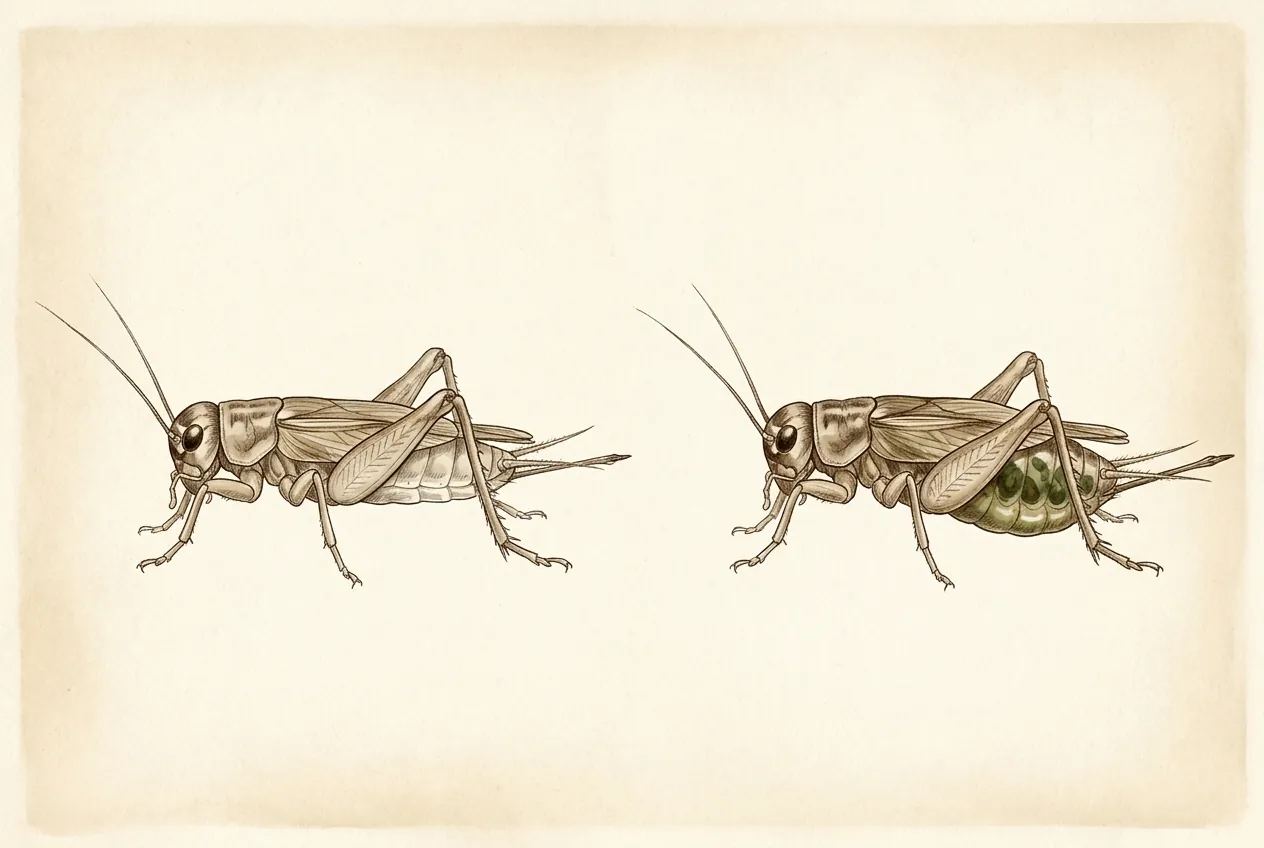 Gut-loaded
At a glance
- When 24 to 48 hours before you feed your pet
- Best foods Dark leafy greens and orange vegetables, plus a dry base
- Water Water gel or crystals, never an open dish
- In the bin Low-calcium everyday food; high-calcium for the last days
- Calcium Gut-load and dust, every time
- Avoid Spinach, dog or cat food, open water dishes
Who needs it
Anyone feeding live crickets, roaches, mealworms or superworms to an insect-eating pet.
Feeders
Live crickets, dubia roaches, mealworms or superworms.
Pets
Leopard geckos, African fat-tailed geckos, bearded dragons, chameleons, tree frogs and more.
Set up the bin
Dry food, a fresh vegetable and water gel. Never an open dish of water.
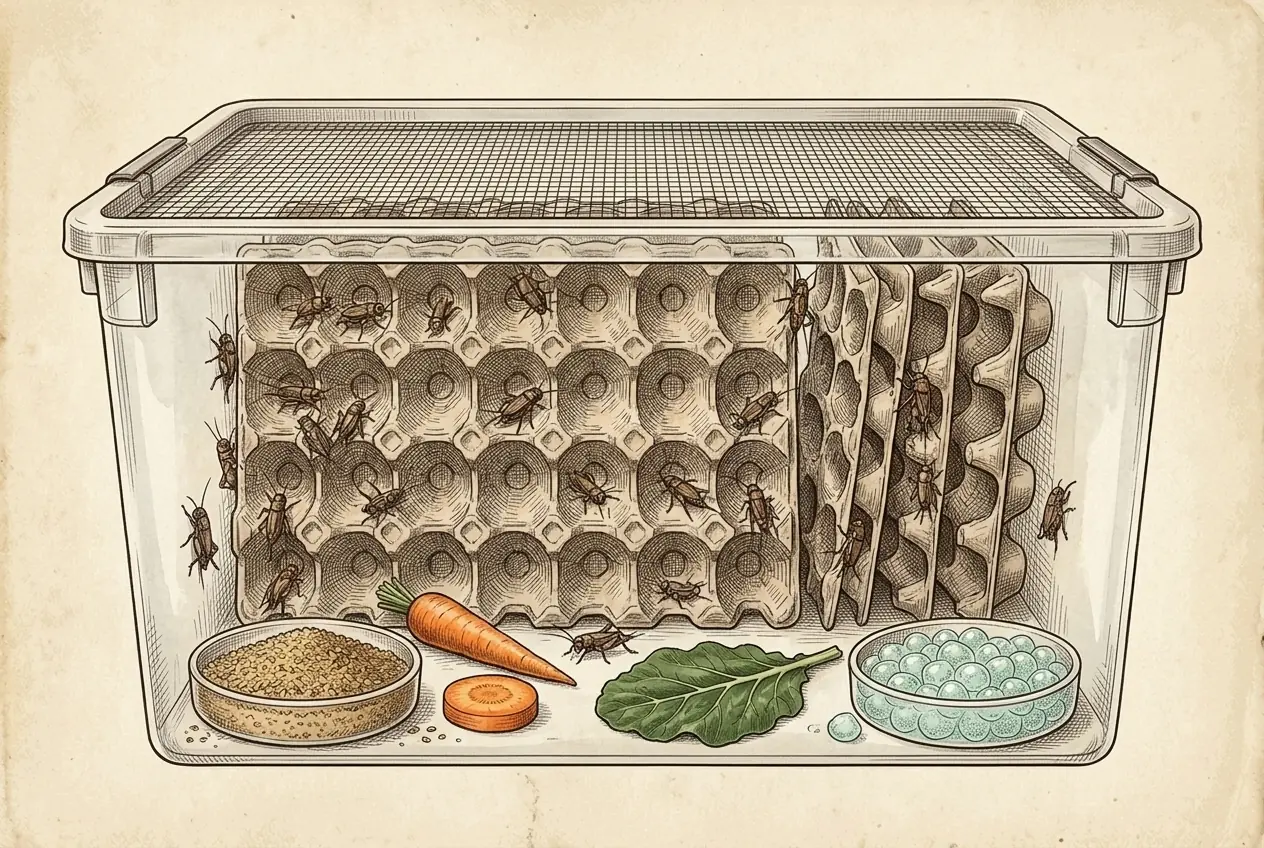
- Egg crate flats: stand them on edge so crickets can climb and hide.
- Dry gut-load: a shallow dish they can pick at.
- Carrot or collard greens: a slice or a piece, for extra food and moisture.
- Water gel or crystals: in a shallow dish. Crickets fall into open water and drown, and standing water grows bacteria.
- A screened lid for air flow.
- A bare floor. Damp substrate makes crickets die and smell.
- One maker's tub says to set out a water dish. We use the gel anyway.
When to gut-load
Start 24 to 48 hours before you feed your pet.
- Empty
- Gut-loaded
- Makers give windows from 24 to 72 hours. A day or two before feeding fits all of them.
- If the label on your tub gives a different time, follow the label.
Fresh foods that work
Dark leafy greens and orange vegetables, with a dry base.
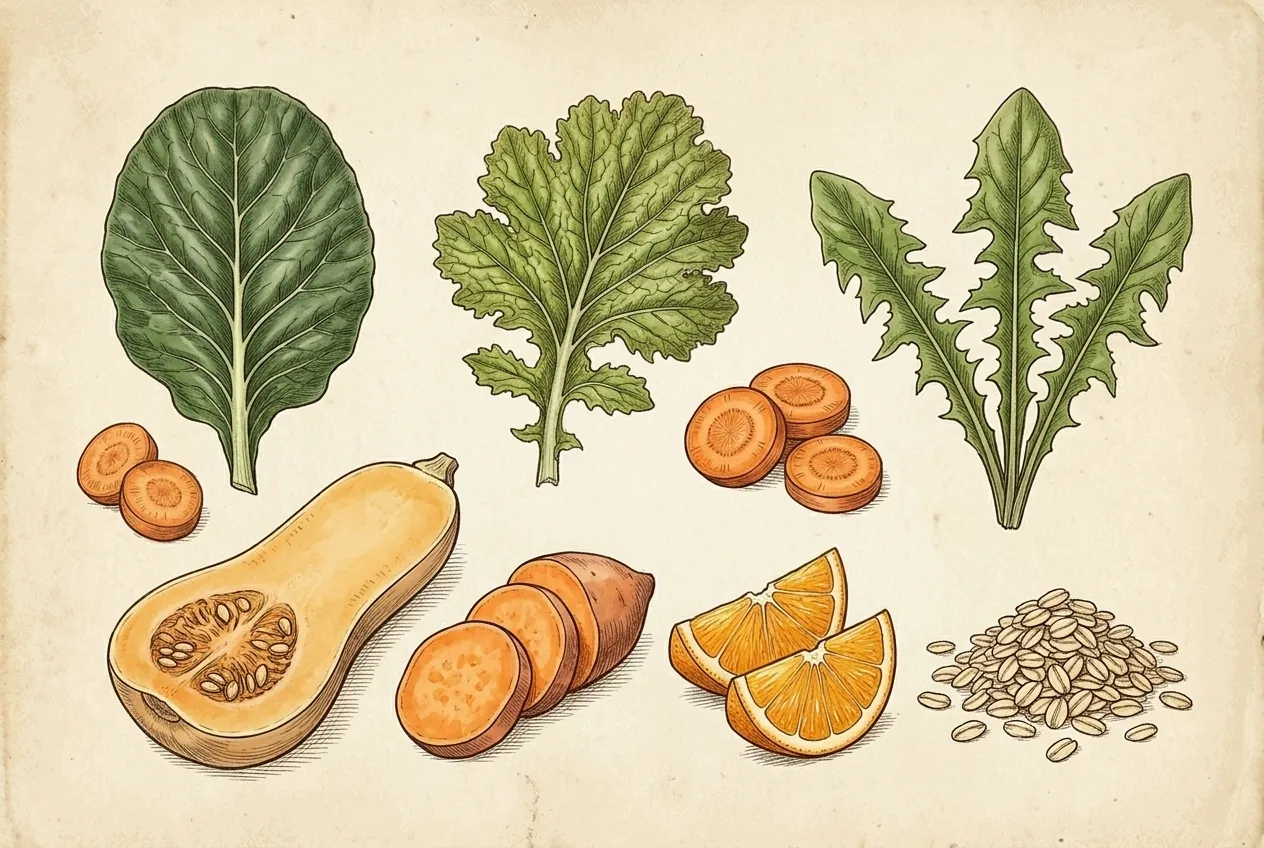
Greens
Collard greens, mustard greens, dandelion greens.
Orange vegetables
Carrot, butternut squash, sweet potato.
Dry base
A commercial gut-load, or a little plain rolled oats.
Fruit
A thin slice of orange now and then adds moisture. Keep it occasional, and leave it out if your vet has told you to avoid citrus.
Do
- swap out fresh food every day or two. Wet food in a warm bin molds fast, and moldy food can make insects sick.
Don't
- use spinach. It binds calcium.
- use dog or cat food.
Comparing gut-load foods
Keep a low-calcium food in the bin. Save the high-calcium load for the last day or two.
Everyday
Low-calcium, made to keep a bin of insects healthy day to day.
High-calcium load
Made for the last day or two before feeding.
Compare all 9 gut-load foods: calcium, protein and load time
| Food | Type | Calcium | Protein | Fat | Fiber | Moisture | Gut-load time, per the maker's label |
|---|---|---|---|---|---|---|---|
| Zoo Med Cricket Care | Everyday | 0.8% min, 1.2% max | 24.0% min | 2.0% min | not listed | not listed | 1–2 days |
| Repashy Bug Burger (gel) | Everyday | 4% min | 13% min | 4% min | 10% max | 8% max | not listed |
| Arcadia EarthPro InsectFuel | Everyday | not listed | 16% | 4% | 19% | under 8% | not listed |
| Zoo Med Bug Balance | High-calcium load | 8% min, 10% max | 20% min | not listed | not listed | not listed | 1–3 days |
| Repashy SuperLoad (gel) | High-calcium load | 9% min | 16% min | 5% min | 12% max | 8% max | 24–72 hours |
| Zoo Med Cricket Block | High-calcium load | 19.0% min, 24.0% max | not listed | not listed | not listed | not listed | 1–2 days |
| Fluker's High-Calcium Cricket Diet | High-calcium load | not listed | not listed | not listed | not listed | not listed | Feed the day after |
| Fluker's Orange Cube | Food and water | not listed | not listed | not listed | not listed | not listed | At least 24 hours |
| Zoo Med Cricket Boost (jelly cup) | Food and water | 1% min, 1.5% max | 0.2% min | not listed | 1.5% max | 78% max | Used alongside a dry gut-load |
Figures are each maker's guaranteed analysis. "Not listed" means we couldn't find a published number.
SuperLoad gel
Per the maker's label, one part powder to two or three parts boiling water, stirred in and left to set at room temperature.
Bug Burger gel
One part powder to no more than three parts water.
Storing mixed gel
About two weeks in the fridge or six months in the freezer.
Water gel
Cricket Quencher style crystals are a water-holding gel, per the maker's label, and they replace the water dish. Put a small amount in a shallow dish and top it up as it's used.
Then dust with calcium
Gut-load fills the inside of the insect. Dust coats the outside. Do both.
No gut-load maker says their food replaces calcium powder.
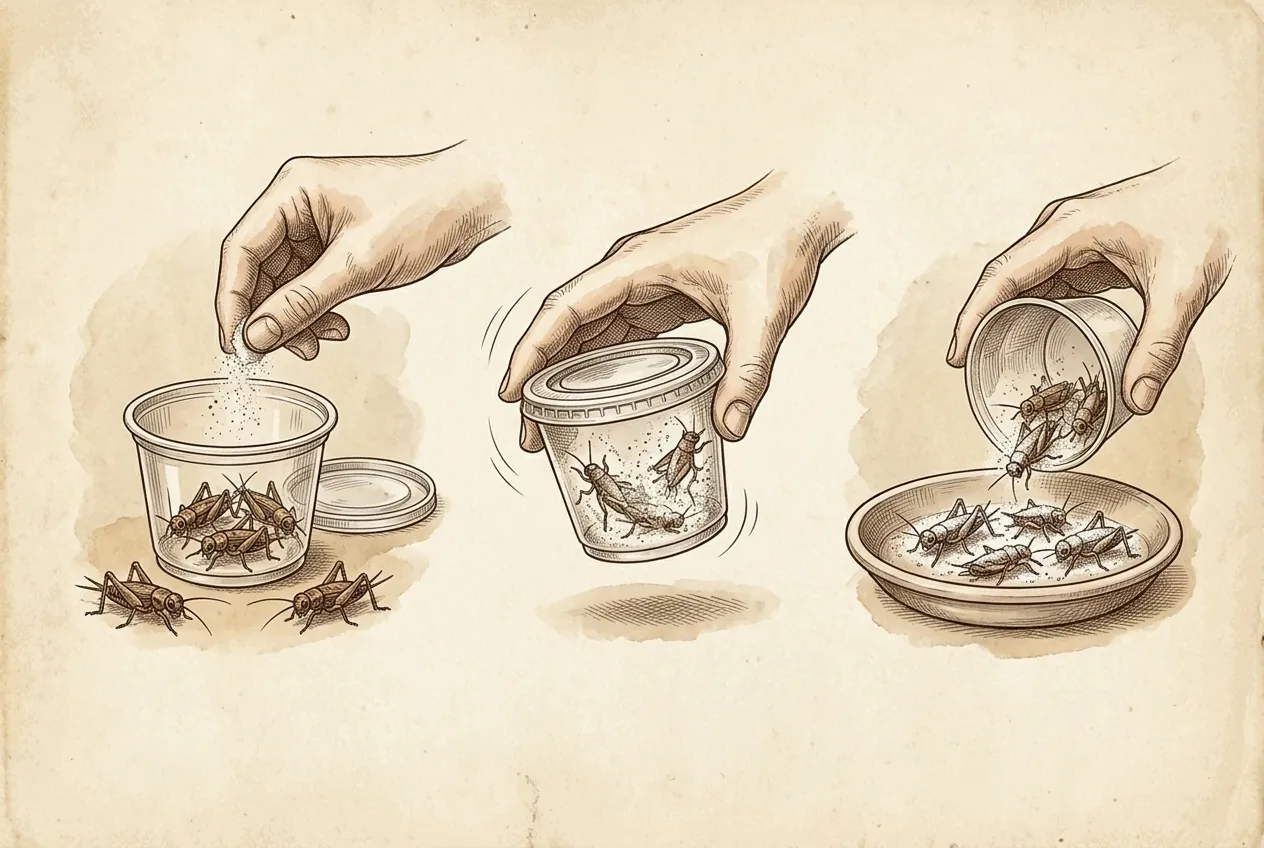
Add a pinch. Put just the insects you'll feed this meal into a cup or bag, then add a small pinch of calcium powder.
Swirl gently until they look lightly dusted, not white.
Feed right away, before they groom it off.
A light coat is all you need.
Feed the right size
Each insect no longer than the space between your animal's eyes.
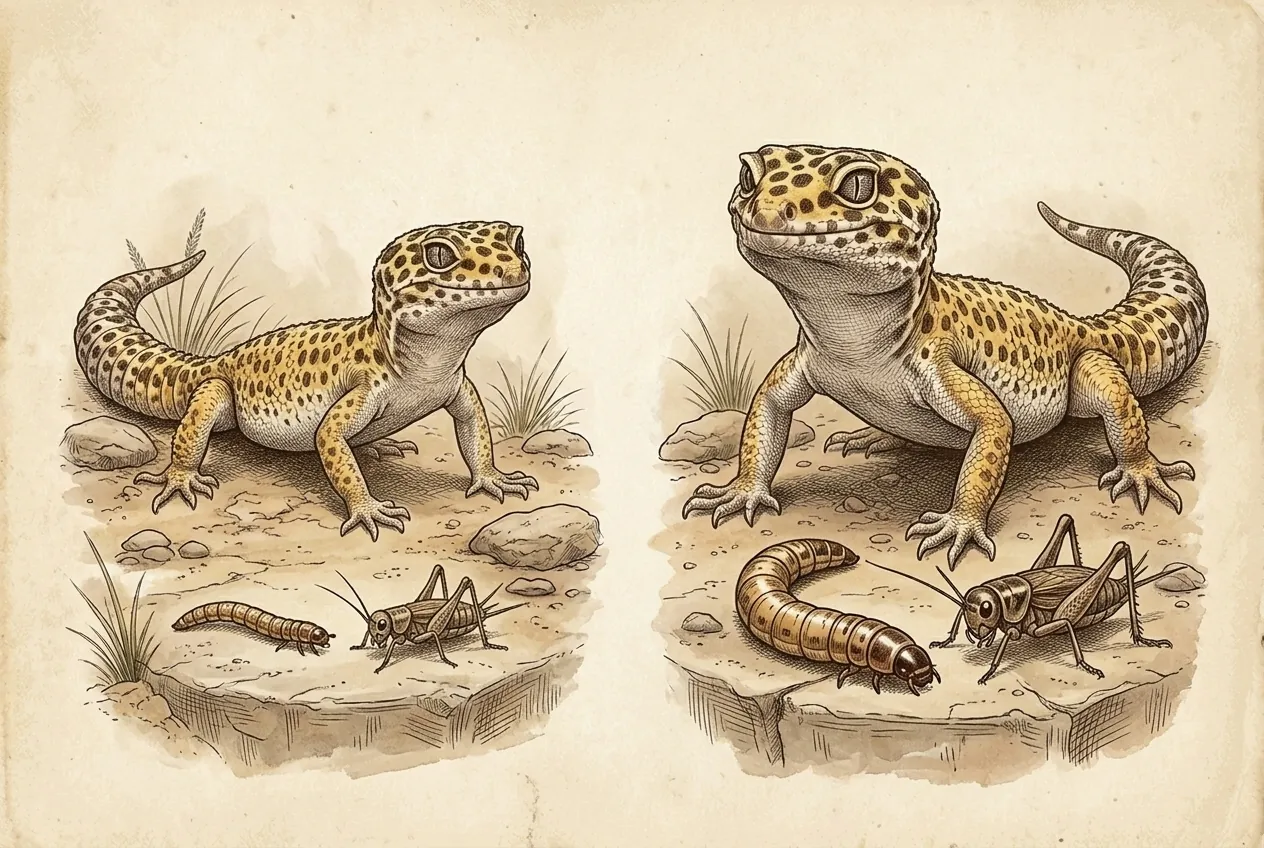
- Right size
- Too big
- Right size
- No longer than the space between the eyes.
- Too big
- Can cause choking or impaction.
A well-loaded insect only helps if your pet can eat it safely.
Is it working? Check the tail
Aim for a plump tail about as wide as the neck.
Leopard geckos and African fat-tailed geckos store fat in their tails, so the tail is an easy health check.
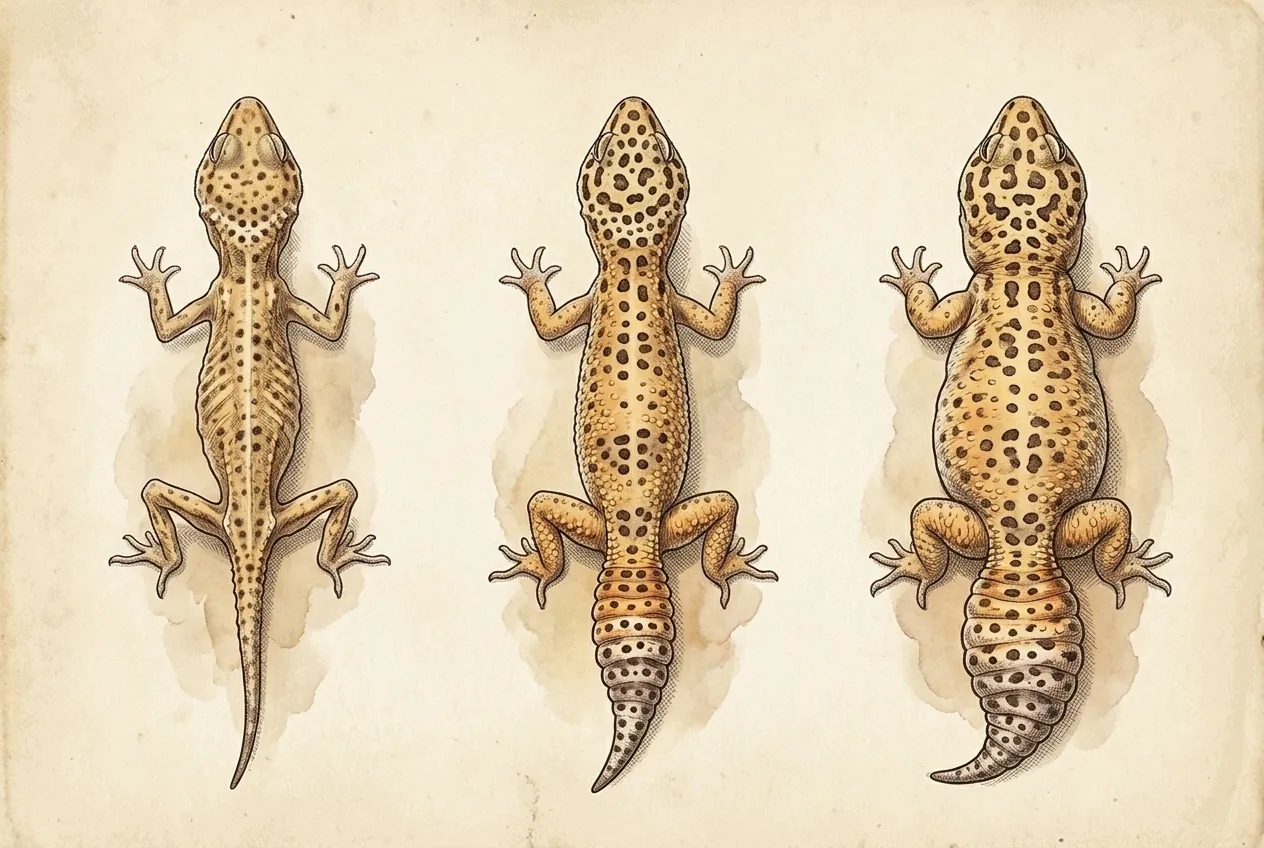
- Too thin
- Healthy
- Overweight
- Too thin
- May be underfed, or sick.
- Healthy
- Plump, about as wide as the neck.
- Overweight
- Tail much wider than the body, fat bulges in the armpits.
Thin tail
Your gecko may be underfed, or it may be sick.
Healthy tail
Plump, about as wide as the neck.
Overweight
A tail much wider than the body and fat bulges in the armpits. Feed fewer insects, and use fatty worms only as treats.
Don't leave crickets loose
Take out any crickets left after 10 to 15 minutes.
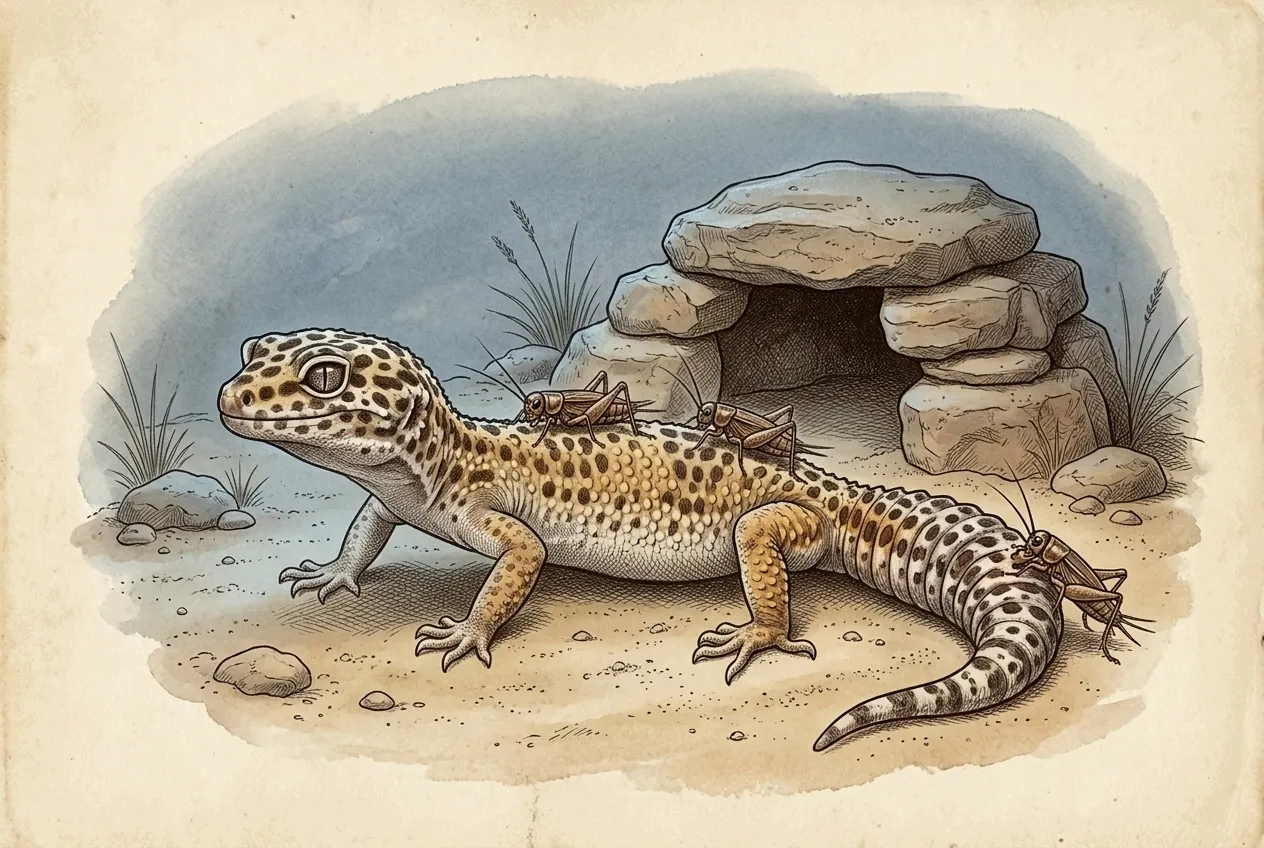
- Hungry crickets will chew on a resting reptile, especially at night.
- Feed a few at a time, or feed from a dish or tongs.
- Take out any left after 10 to 15 minutes.
- That also keeps the gut-load fresh: a cricket that wanders for days is back to empty.
Quick answers
If I gut-load, do I still need calcium powder? Yes. Gut-load and dust, every time. Calcium works best with the right lighting, so check your pet's care sheet too.
How long before feeding should I gut-load? 24 to 48 hours. If your tub's label says something different, follow the label.
My crickets keep drowning. What do I do? Take out the water dish and use a water gel or crystals instead.
Which food should live in the bin all week? A low-calcium everyday food. Save the high-calcium load for the last day or two before feeding.
Do I gut-load waxworms? No. They've stopped eating by the time they're sold as feeders.
How long does an opened tub last? No maker prints a date. Keep it cool, dry and sealed, and throw it out if it smells off, molds or gets bugs in it.
Shop this
Pick up in store or have it shipped.
Reviewed by our team 2026-11-06. Nutrition figures are each maker's published guaranteed analysis.