
Crickets
Acheta domesticus / Gryllodes sigillatus
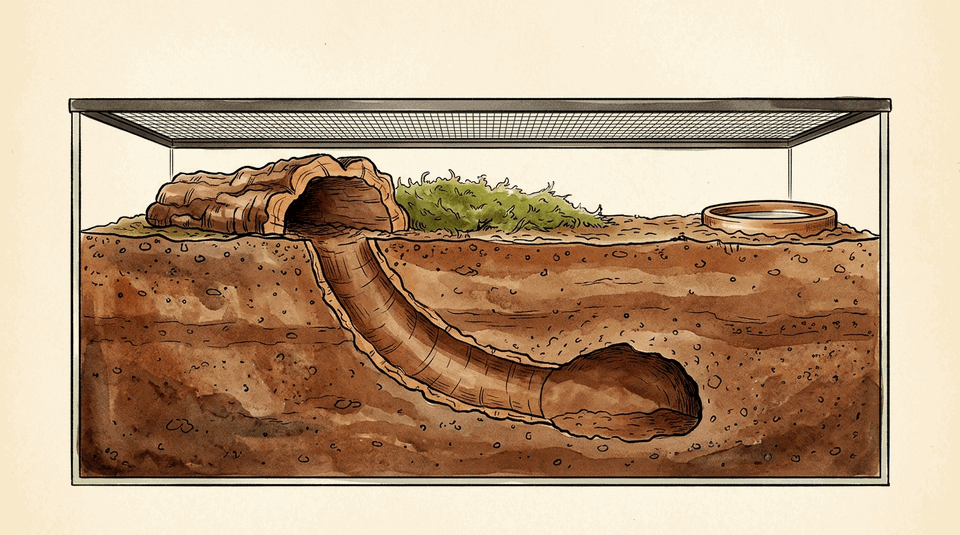
1. Habitat Layout & Temperature Gradient
Species: Acheta domesticus (House Cricket) & Gryllodes sigillatus (Banded Cricket) | Care Difficulty: 2/5 | Breeding Difficulty: 4/5

Critter Cabana & Gresham Pet Supply — Keeping Your Pet Healthy & Thriving
At a Glance

| Common Name | Crickets (House Crickets / Banded Crickets) |
| Species | Acheta domesticus & Gryllodes sigillatus |
| Primary Use | Staple Feeder |
| Nutrition Profile | High protein. Must be gut-loaded and dusted with calcium. |
| Lifespan | 8 to 10 weeks maximum |
| Climbing Ability | No. They cannot climb smooth glass or plastic. |
| Flying Ability | No. Adults have wings and use them to "chirp," but they jump rather than fly. |
| Care Difficulty | 2/5 — Easy (But they are fragile and die off easily if kept damp) |
| Breeding Difficulty | 4/5 — Hard (Smelly, noisy, and difficult to incubate eggs) |
Why We Love Them: Crickets are the classic, universal staple feeder insect. While they require a bit more maintenance than Dubia roaches (and certainly smell worse if not kept clean), their erratic, jumpy movements are incredible at triggering the feeding response in picky reptiles and amphibians that refuse to eat slower-moving prey.
Nutrition & Gut-Loading

The Golden Rule of Feeders: An insect is only as nutritious as what it just ate. If you feed your reptile an empty insect, you are starving your reptile.
What is Gut-Loading?
Gut-loading is the process of feeding your insects a highly nutritious diet 24-48 hours before feeding them to your pet. When your pet eats the cricket, they digest the nutritious food inside the cricket's stomach.
Best Gut-Loading Foods
- Commercial Diets: Fluker's High-Calcium Cricket Diet, Repashy Bug Burger.
- Vegetables: Carrots, sweet potatoes, squash.
- Dark Leafy Greens: Collard greens, mustard greens.
Foods to Avoid
- Avoid: Dog/Cat food: Too high in animal protein; can cause fatal gout in reptiles.
- Avoid: Iceberg Lettuce: Completely devoid of nutrition (it is essentially just crunchy water).
- Avoid: Spinach: High in oxalates which bind calcium and prevent your reptile from absorbing it.
Hydration
- Water Source: Use Water Crystals (polyacrylamide gel) like Fluker's Cricket Quencher, or wet vegetables.
- WARNING: Crickets are incredibly prone to drowning. If you put a water bowl in their enclosure, they will immediately jump into it and die.
Housing & Storage (Short Term)
If you are buying a bag of crickets and keeping them alive to feed off over a week or two:
Enclosure
- Type: A standard Critter Keeper (plastic terrarium with a slotted lid). They require massive amounts of ventilation.
- Substrate: None. Keep the floor bare plastic. Substrate holds moisture, which causes bacteria and kills crickets rapidly.
- Hides/Surface Area: Cardboard egg crates or toilet paper tubes. Crickets are cannibalistic; if you do not give them dark places to hide from each other, they will eat each other.
Environment & The "Smell"
- Temperature: Room temperature (70-75°F).
- Humidity: Keep them BONE DRY.
- Odor Prevention: The infamous "cricket smell" is caused by dead crickets rotting in a damp environment. Keep their enclosure dry, provide massive ventilation, and remove dead crickets immediately, and they will not smell.
Culturing & Breeding (Long Term)
Retail Note: We generally do not recommend customers breed their own crickets. The odor, the constant loud chirping of the adult males, and the difficulty of incubating the eggs make them far more trouble than they are worth. We recommend breeding Dubia Roaches instead!
If you absolutely want to breed them:
- The Setup: Keep adults at 85-90°F.
- Egg Laying: Place a small tub of damp coconut fiber in the bin. The females (which have a long, needle-like ovipositor on their rear) will stab the dirt and lay eggs.
- Incubation: Remove the dirt tub after 3 days, keep it warm and damp, and wait 2 weeks for microscopic "pinhead" crickets to hatch.
Maintenance & Cleaning
- Daily: Remove any dead crickets immediately. One rotting cricket will cause a bacterial cascade that kills the entire bin.
- Cleaning: Wash the Critter Keeper with hot water and dish soap every time you buy a new batch of crickets. Do not mix new, healthy crickets with an old, dying batch.
What We Stock & Use in Our Stores
These are products we carry and recommend for this feeder. Ask any associate for help finding them in-store.
| Category | Product | Notes |
|---|---|---|
| Housing | Zilla / Exo Terra Critter Keeper | Slotted lids provide the massive ventilation they need |
| Gut-Load Food | Fluker's High-Calcium Cricket Diet | A staple for boosting their calcium profile |
| Hydration | Fluker's Cricket Quencher | Prevents drowning |
| Hides | Cardboard Egg Flats | Prevents cannibalism |
Care sheet compiled by Critter Cabana & Gresham Pet Supply. For questions, ask any livestock specialist in-store.
Last updated: 2026-08-04
How We Keep Them at Critter Cabana & Gresham Pet Supply
- Oregon Winter Furnace Air vs. Molting Humidity: When Pacific Northwest furnaces kick on from October through April, indoor room humidity drops fast and dries out small enclosures from the top down. Rather than misting the spider or invert directly (which stresses terrestrial species and invites stagnant mold), we keep Crickets at
Low (Keep them dry!)by using a deep moisture-retaining substrate bed (ReptiSoil + Coco Fiber + Sphagnum Moss), overflowing the water dish slightly into one corner, and maintaining cross-ventilation. - Safe Room Heating in the Willamette Valley: If your house drops below 65°F on winter nights, never stick a heat pad on the bottom of a burrowing invertebrate tank—they dig down to escape heat and will cook themselves. Use a low-wattage side-mounted heat mat on a digital thermostat or warm the room ambiently to
75-90°F. - Stocked at Newberg & Gresham: At Critter Cabana (Newberg) and Gresham Pet Supply, we stock acrylic and glass invertebrate enclosures, cork bark flats and tubes, bioactive substrates, flightless fruit flies (D. melanogaster and D. hydei), pinhead to adult crickets, dubia roaches, and live Temperate White Springtail and Isopod cultures.
Common Questions (FAQ)
How do I keep my Crickets warm and humid enough during an Oregon winter?
Target 75-90°F and Low (Keep them dry!). When Oregon winter furnaces dry out the air, use a deep 3–5 inch substrate mix of Zoo Med ReptiSoil and coco fiber, keep a shallow water dish filled, and dampen one corner of the substrate rather than misting the animal directly. Never put a heat mat underneath a burrowing invertebrate enclosure.
What size enclosure does a Crickets need?
An adult Crickets thrives in Critter Keeper / Plastic Bin with secure ventilation. For terrestrial tarantulas and scorpions, floor space and deep substrate matter most (keep open fall height low so heavy-bodied species cannot rupture their abdomen); for arboreal species, prioritize vertical cork bark tubes and cross-ventilation.
Can I put isopods in a Crickets bioactive enclosure?
Around molting tarantulas and scorpions, skip protein-hungry large isopods and stick to Temperate White Springtails (or gentle Dwarf White isopods in humid detritivore setups) so a soft, newly molted animal is never nibbled.
Where can I find Crickets, cork bark, and feeder insects in Oregon?
We stock live invertebrates, tarantulas, jumping spiders, cork bark flats and tubes, bioactive substrates, and gut-loaded feeder insects at our two exotic animal stores: Critter Cabana in Newberg (514 E First St, 503-537-2887) and Gresham Pet Supply (2185 NW Burnside Rd, 503-665-7606).