Guinea Pig
Cavia porcellus
1. Wide Flat-Floor Habitat & Climate Setup
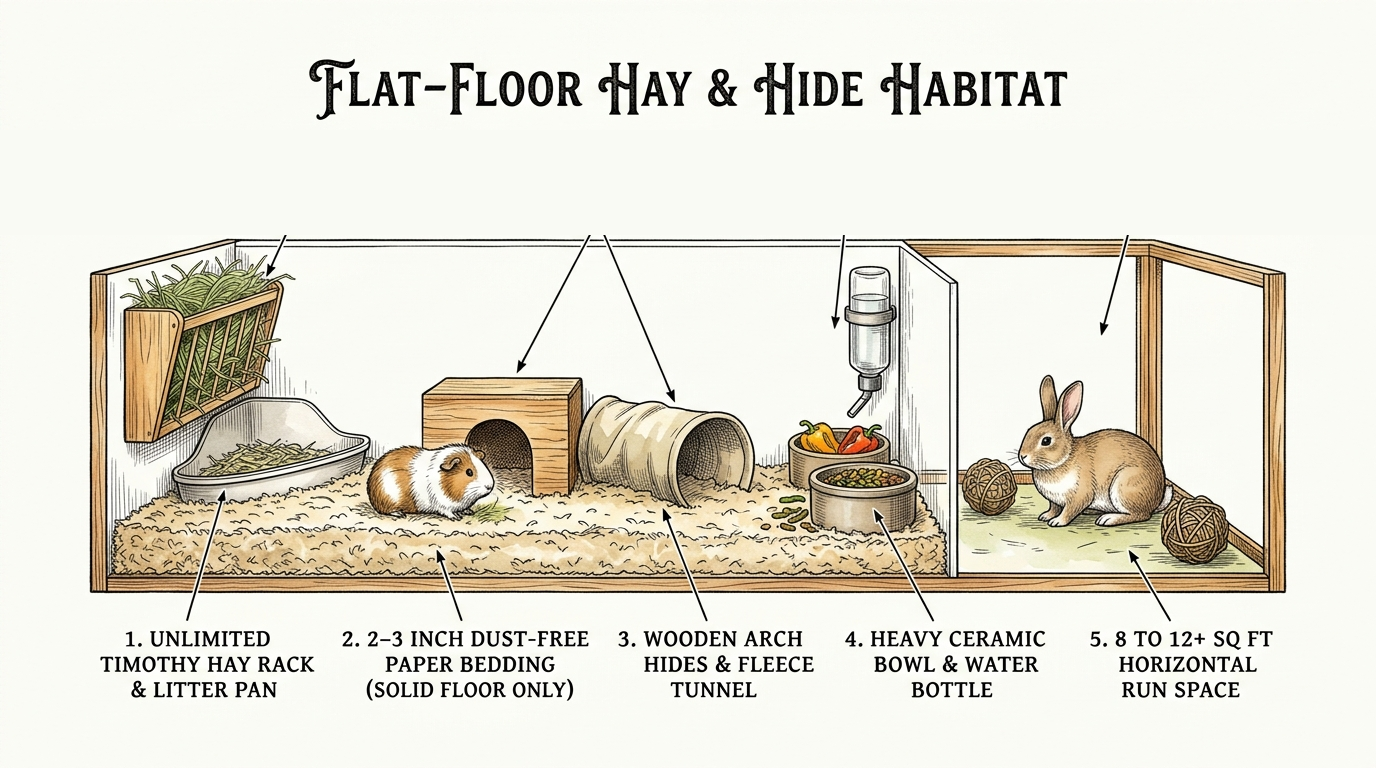
2. Two Great Ways to Set Up Your Habitat
Enclosure: Midwest Habitat / C&C Grid Pen vs. Starter Pet Store Cage
Guinea pigs are built like little potatoes with delicate spines—they need horizontal running room, not steep ramps:
Option A: Midwest Guinea Habitat Plus or 2×4 C&C Grid Cage (Our Top Pick!)
Gives a pair 8 to 10.5+ sq ft of flat running room for zoomies and popcorning! Connect two Midwest cages end-to-end for a dream 16 sq ft herd setup.
Option B: Large Solid-Bottom Playpen + Daily Floor Time
Skip tiny 'starter cages'—they force pigs to stand in their own waste and cause fights. Always use a solid bottom (never wire grates, which cause painful bumblefoot).
Bedding: Dust-Free Paper Bedding vs. Fleece Cage Liners
Big No-No: Never use cedar shavings, raw pine, or clumping cat litter—phenols and dust damage sensitive guinea pig lungs!
Option A: Carefresh or Kaytee Clean & Cozy Paper Bedding (2–3" Deep)
Ultra-soft on sensitive footpads, absorbs ammonia fast, and makes daily spot-cleaning of their favorite bathroom corners easy.
Option B: Washable Absorbent Fleece Liners + Corner Hay Litter Pan
Reusable and zero dust! Guinea pigs naturally poop where they munch hay—hang your hay rack right over a paper-pellet litter pan to catch 70% of droppings.
Companionship & Spine Safety (Zero Wheels or Balls!)
In the wild, a lone guinea pig is an easy meal—living alone causes chronic stress and depression:
Option A: Same-Sex Bonded Pair (2 Females or 2 Young Brothers)
Two females or two littermate males raised together in a roomy cage with 2 open-ended hides will groom, wheek, and popcorn together all day.
Option B: Strict Spine Rule — Never Use Wheels, Balls, or Harnesses
Guinea pig backs do not bend upward! Exercise wheels, run-about balls, and figure-8 leashes will severely injure their spine—give them flat floor playpen time instead.
3. Daily Diet: 80% Hay + Daily Vitamin C + Plain Pellets
Vitamin C Rich Veggies vs. High-Calcium Greens to Limit:
Bell pepper (red/yellow/green), Romaine, Green Leaf, Cilantro
1 Oxbow Natural Science Vitamin C hay wafer per day
Kale, Parsley, Spinach (high calcium can cause bladder stones)
Iceberg lettuce, onions, garlic, potatoes, dairy, seeds, or yogurt drops

4. Four Keys to a Happy, Thriving Guinea Pig
Never Use Water Drops for Vit C
Vitamin C liquid drops degrade fast in light, turn the water bitter, and make guinea pigs stop drinking! Give an Oxbow Vitamin C hay tablet by hand like a daily treat + fresh bell pepper.
GI Stasis Is an Emergency
A guinea pig's gut must keep moving 24/7. If your pig ever stops eating or pooping for 6–8 hours, or sits hunched with puffed fur, call an exotic vet immediately.
Two Hides with Two Doors
Always give at least one hide per pig—and choose wooden arches or fleece tunnels with two openings so a dominant pig can never trap a cagemate inside.
Monthly Nail Trims & Boar Care
Trim nails once a month so toes don't curl (putting a rough slate tile under the water bottle helps wear nails down!). Check long-haired breeds and older males weekly to keep bottoms clean.

Bring-Home Shopping Checklist
Tap items to check them off on your phone while you shop at Critter Cabana.
Spacious Flat-Floor Habitat
Hay, Vitamin C & Pellets
Bowls, Bottles & Grooming
Complete Reference Notes & Oregon Keeping Guide
Species: Cavia porcellus | Difficulty: 2/5 — Easy | Hardiness: 3/5 — Moderate
Critter Cabana & Gresham Pet Supply — Keeping Your Pet Healthy & Thriving
At a Glance
| Common Name | Guinea Pig, Cavy |
| Species | Cavia porcellus |
| Origin | Domesticated from wild cavies in the Andes Mountains (South America) |
| Adult Size | 8–12 inches |
| Weight | 1.5–2.5 lbs |
| Lifespan | 5–8 years |
| Diet Type | Strict Herbivore (Hay, Veggies, Pellets) |
| Activity | Diurnal / Crepuscular (active during the day, taking short naps rather than long sleeps) |
| Temperament | Very gentle, highly vocal, and incredibly social. |
| Handleability | Excellent. They are skittish when first picked up but settle down quickly to be pet. |
| Social Needs | MUST be kept in pairs or groups. |
| Odor Level | Moderate (Requires frequent cage cleaning due to high waste output) |
| Difficulty | 2/5 — Easy (Great family pets, but require large cages and daily diet prep) |
| Hardiness | 3/5 — Moderate (Prone to respiratory infections and scurvy if diet is poor) |
Why We Love Them: Guinea pigs are among the most interactive and vocal small pets you can own. They are famous for their vocabulary of sounds—including "wheeking" loudly when they hear you open the refrigerator, "purring" when happy, and "popcorning" (jumping straight up into the air) when they are excited. They rarely bite and make fantastic, long-lived companions.
Housing & Enclosure
Enclosure Size (Minimum)
- Minimum: 8 square feet (approx. 24" x 48") for one or two guinea pigs. Add 20% more space for each additional pig.
- Type: C&C Cages (Cubes and Coroplast) or large commercial habitats (like the Midwest Guinea Habitat).
- Avoid: Glass aquariums (poor ventilation causes fatal respiratory infections) and wire-bottom cages (causes a severe foot infection called Bumblefoot).
Bedding & Substrate
- Recommended: Washable fleece liners (highly recommended for cost savings and dust reduction) or unscented paper bedding (Carefresh, Kaytee Clean & Cozy).
- Avoid: Cedar shavings (highly toxic), pine shavings, and clumping cat litter.
- Cleaning Schedule: If using fleece, sweep up poops daily and wash the fleece every 3-4 days. If using paper bedding, spot clean daily and change entirely once a week.
Décor & Enrichment
- The Wheel Warning (CRITICAL): NEVER put a guinea pig in an exercise wheel or an exercise ball. Unlike hamsters, a guinea pig's spine is rigid and not designed to bend backward. A wheel will permanently damage their spine. They get their exercise by running laps ("zoomies") around a large, flat cage.
- Hideouts/Huts: Provide at least one hideout per guinea pig (plus one extra) so they can retreat if they want alone time. Plastic igloos, wooden houses, or fleece tunnels are excellent.
- Chewing: Provide plenty of wooden chew toys, apple sticks, and willow balls to keep their constantly growing teeth filed down.
Diet & Nutrition
The Vitamin C Requirement (CRITICAL)
Like humans, guinea pigs cannot manufacture their own Vitamin C. If they do not receive Vitamin C daily, they will develop Scurvy (a fatal disease causing joint pain, tooth loss, and internal bleeding).
- Supplements: Give them one Oxbow Vitamin C tablet daily as a treat.
- Avoid Water Drops: Do not use liquid Vitamin C drops in their water bottle. It degrades rapidly in the light and alters the taste of the water, which may cause them to stop drinking entirely.
Primary Diet (The 80/10/10 Rule)
- 80% Hay: Unlimited, fresh Timothy Hay or Orchard Grass must be available 24/7. Eating hay is how they file down their back molar teeth and keep their gut moving. (Note: Only feed Alfalfa hay to pregnant females or babies under 6 months; it is too high in calcium for adults).
- 10% Fresh Vegetables: About 1 cup of fresh veggies per pig, per day. Green bell peppers are the best staple, as they are very high in Vitamin C and low in sugar. Romaine lettuce and cilantro are also great daily staples. (Avoid iceberg lettuce and limit high-calcium greens like spinach to prevent bladder stones).
- 10% Pellets: 1/8 cup of high-quality, plain Timothy-based pellets per day (like Oxbow Essentials). Avoid mixes that contain seeds, nuts, or colorful dried fruits—these are choking hazards and too high in sugar.
Handling & Behavior
Taming & Handling
- Guinea pigs are prey animals and are naturally terrified of being scooped up from above. When picking them up, always support their chest with one hand and their heavy rear end with the other.
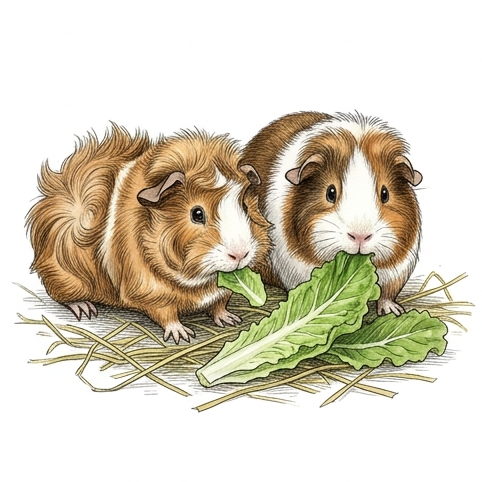
- Once in your lap, they usually relax immediately, especially if you offer them a piece of lettuce.
Social Needs
- Highly Social: In the wild, they live in herds of dozens of animals. Keeping a guinea pig solitary is considered cruel in many countries.
- Pairing: Keep them in same-sex pairs (two females or two males) to prevent breeding. If housing a male and female together, the male MUST be neutered. When introducing two males, they must be introduced in a neutral space, and their cage must be extra large to prevent territorial disputes.
Health & Husbandry

Common Health Issues
- Scurvy — Symptoms: Lethargy, swollen/stiff joints, reluctance to move, bleeding gums. / Cause: Lack of Vitamin C. / Prevention: Daily Vitamin C tablets and fresh bell peppers.
- Respiratory Infection (URI) — Symptoms: Sneezing, crusty eyes, runny nose, labored breathing. / Cause: Drafty rooms, dusty bedding, or poor ventilation (like living in a glass tank). / Treatment: Highly fatal if ignored. Requires immediate veterinary antibiotics.
- Bumblefoot — Symptoms: Swollen, red, or bleeding sores on the bottom of the feet. / Cause: Wire-bottom cages or sitting in wet, dirty bedding. / Prevention: Use solid floors and clean the cage frequently.
- Bladder Stones — Symptoms: Squeaking in pain while urinating, blood in urine. / Cause: Too much calcium in the diet (e.g., feeding alfalfa hay to adults or too much spinach).
What We Stock & Use in Our Stores
These are products we carry and recommend for this species. Ask any associate for help finding them in-store.
| Category | Product | Notes |
|---|---|---|
| Enclosure | Midwest Guinea Habitat | Provides exactly 8 sq ft of floor space (can be linked together) |
| Bedding | Carefresh Unscented Paper Bedding | Highly absorbent and dust-free |
| Pellets | Oxbow Essentials Adult Guinea Pig Food | A premium, timothy-based pellet with stabilized Vitamin C |
| Hay | Oxbow Western Timothy Hay | Essential for digestion and dental health; keep the rack full! |
| Supplements | Oxbow Natural Science Vitamin C Support | Give one tablet daily to prevent scurvy |
| Hideout | Living World Dome or Oxbow Timothy Club Bungalow | Safe, secure places for them to nap |
| Chew Toys | Oxbow Enriched Life Apple Sticks | Essential for keeping their front teeth trimmed |
Care sheet compiled by Critter Cabana & Gresham Pet Supply. For questions, ask any livestock specialist in-store.
Last updated: 2026-08-04
How We Keep Them at Critter Cabana & Gresham Pet Supply
- Pacific Northwest Seasonal Drafts & Indoor Air Quality: In Oregon, damp chilly winters and sudden August heatwaves are the two biggest environmental stressors for Guinea Pig. Keep their habitat (
8 square feet (for two)) away from drafty windows, exterior doors, and direct furnace vents, and maintain a steadyspecies-appropriate warm zonetemperature zone. - What Our Store Crew Uses Daily: In our Newberg and Gresham animal rooms, we use dust-extracted, scent-free bedding (never cedar or raw phenols), fresh Pacific Northwest grass hays or species-specific pelleted staples (Oxbow, Harrison's, Roudybush, or Higgins), and daily foraging enrichment so young animals are already hand-accustomed and eating a balanced diet before they go home with you.
- Local Exotic Vet Planning: Before an emergency ever happens, save the number of an experienced Oregon avian/exotic veterinarian in the Portland Metro or Willamette Valley area (such as Avian & Exotic Veterinary Care or Scales & Tails Exotic Pet Clinic).
Common Questions (FAQ)
What size cage or habitat does a Guinea Pig actually need?
Plan on at least 8 square feet (for two) as a true minimum—bigger horizontal floor space (or flight width for birds) is always better for daily exercise, mental health, and clean air quality.
How do I keep Guinea Pig comfortable through Oregon winters and summers?
Keep indoor temperatures steady around species-appropriate warm zone with balanced humidity humidity, well away from cold window drafts in winter and direct afternoon sun in summer.
What do you feed Guinea Pig at Critter Cabana and Gresham Pet Supply?
Our store crew feeds a balanced herbivore regimen built on high-quality pellets/hay and daily fresh produce or foraging items—never all-seed junk mixes that cause vitamin deficiencies and fatty liver disease.
Where can I meet Guinea Pig and talk to the animal care crew in Oregon?
Visit our live animal departments at Critter Cabana in Newberg (514 E First St, 503-537-2887) or Gresham Pet Supply (2185 NW Burnside Rd, 503-665-7606) to meet our animals and get hands-on setup advice.